Mineralpedia · open reference
A free reference encyclopedia of crystals and minerals.
Written by collectors for collectors. 27 species published so far — chemistry, formation, identification, market value and meaning. Every photo sourced from Wikimedia Commons under open licenses, with full attribution.
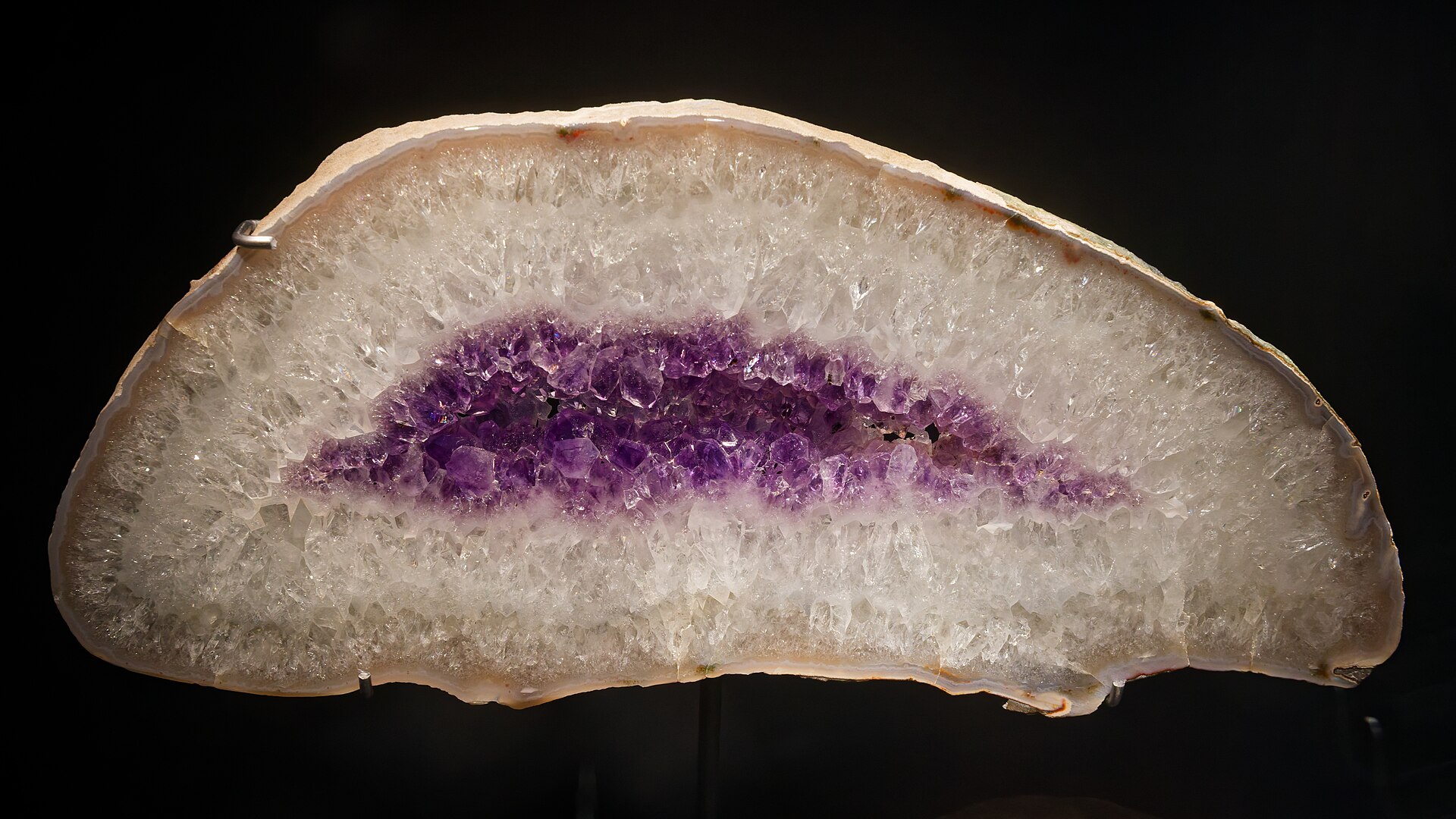 Mohs 7
Amethyst
SiO₂ · Silicates
Amethyst is the purple variety of quartz, colored by iron impurities and natural irradiation. Mohs 7, vitreous luster, found in geodes worldwide — especially Uruguay and Brazil.
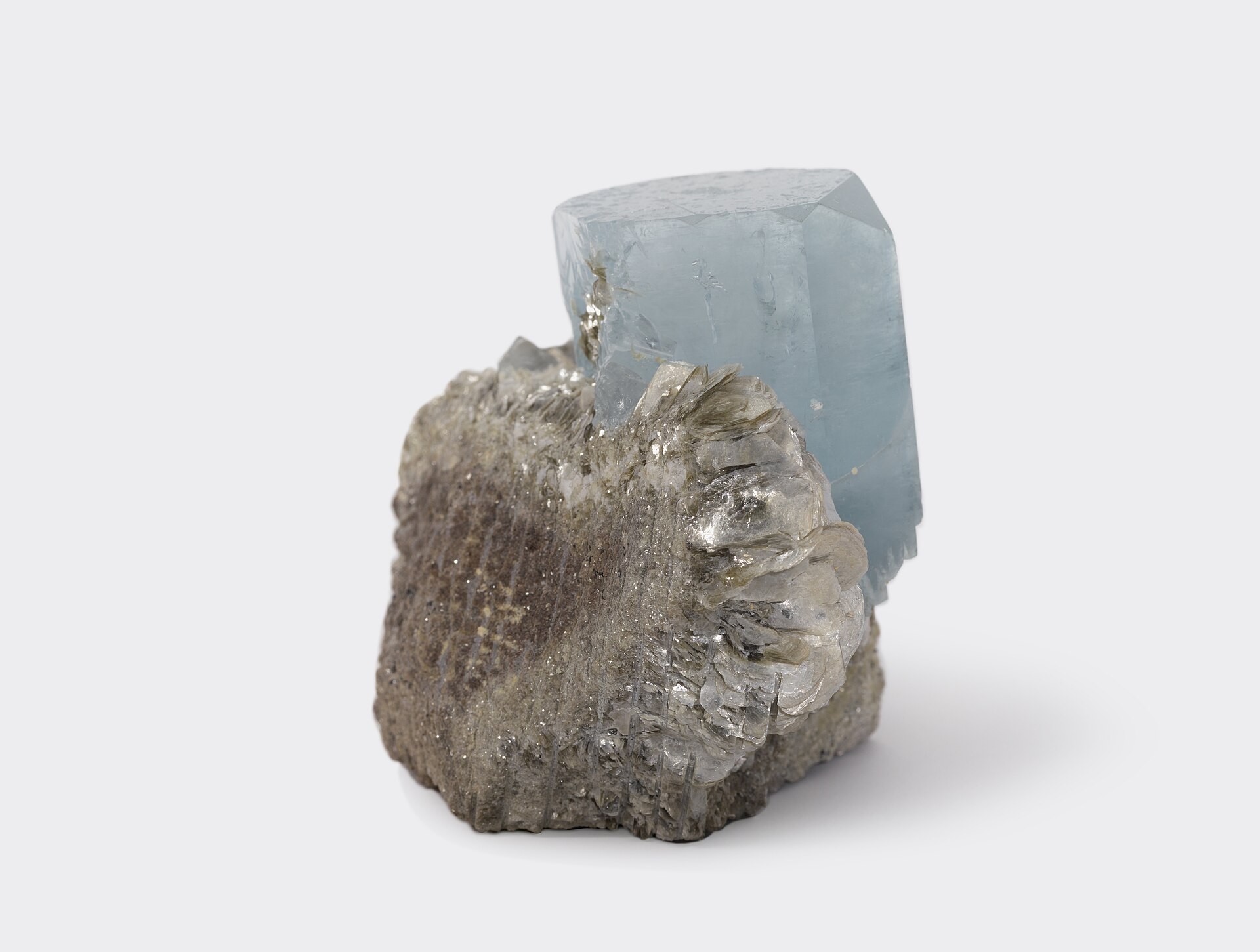 Mohs 7.75
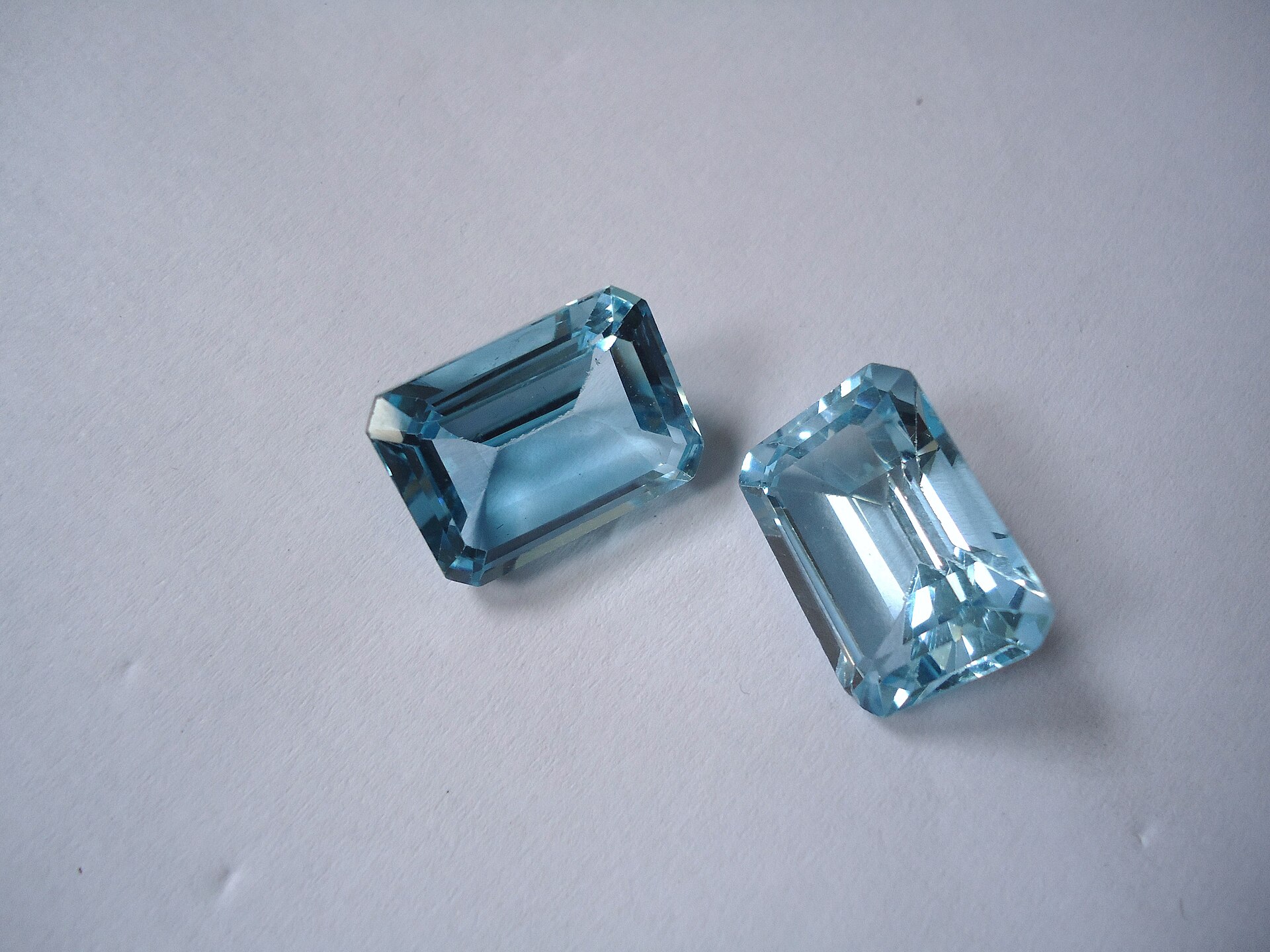
Aquamarine
Be₃Al₂Si₆O₁₈ (+ Fe trace) · Silicates
Aquamarine is the iron-coloured blue variety of beryl (same species as emerald). Mohs 7.5–8, hexagonal prisms. Brazilian 'Santa Maria' is the deep-blue benchmark.
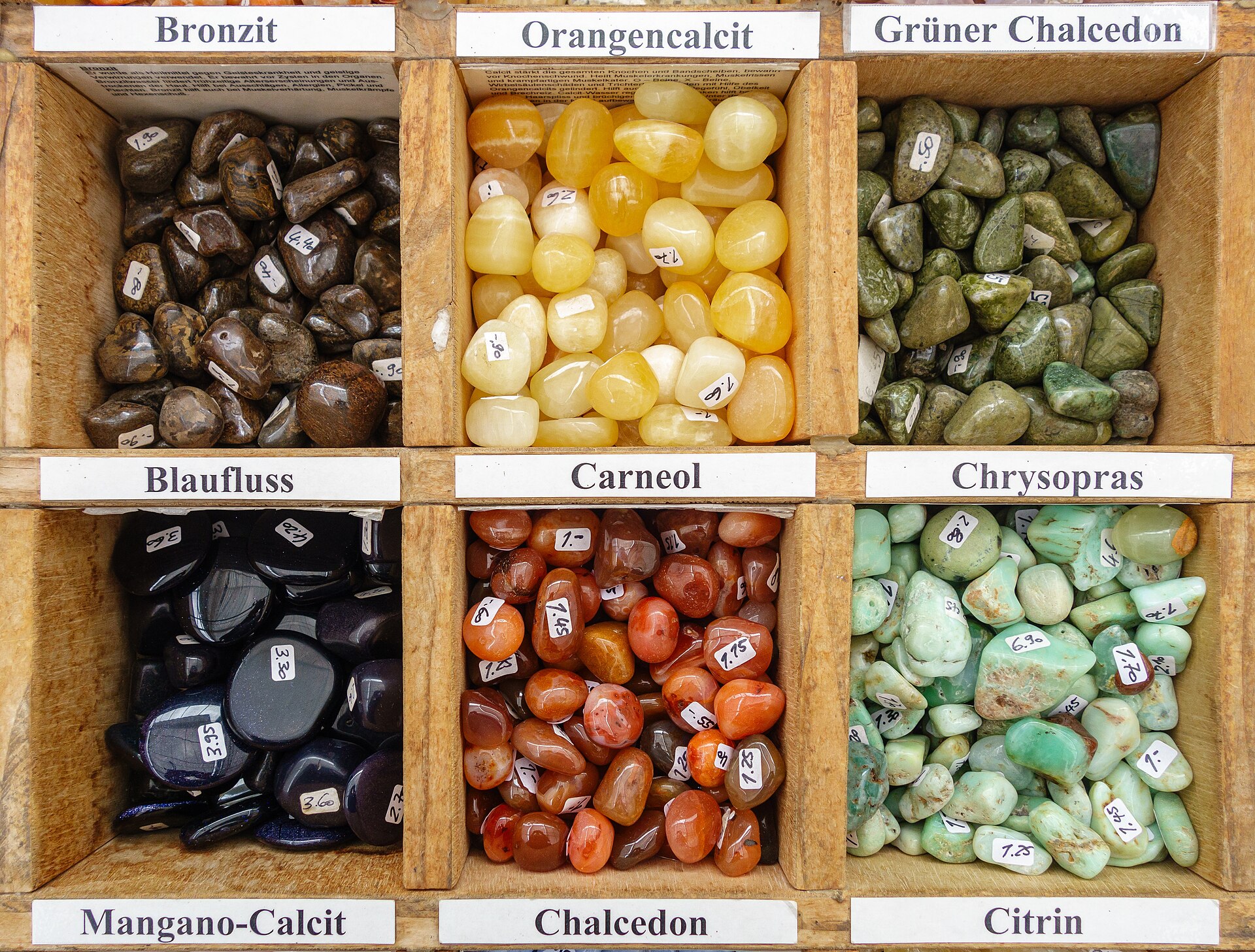 Mohs 7
Carnelian
SiO₂ (chalcedony) · Silicates
Carnelian is the orange to red translucent variety of chalcedony, coloured by iron oxide. Mohs 7. One of the oldest used gemstones — found in Sumerian and Egyptian tombs from 3000 BCE.
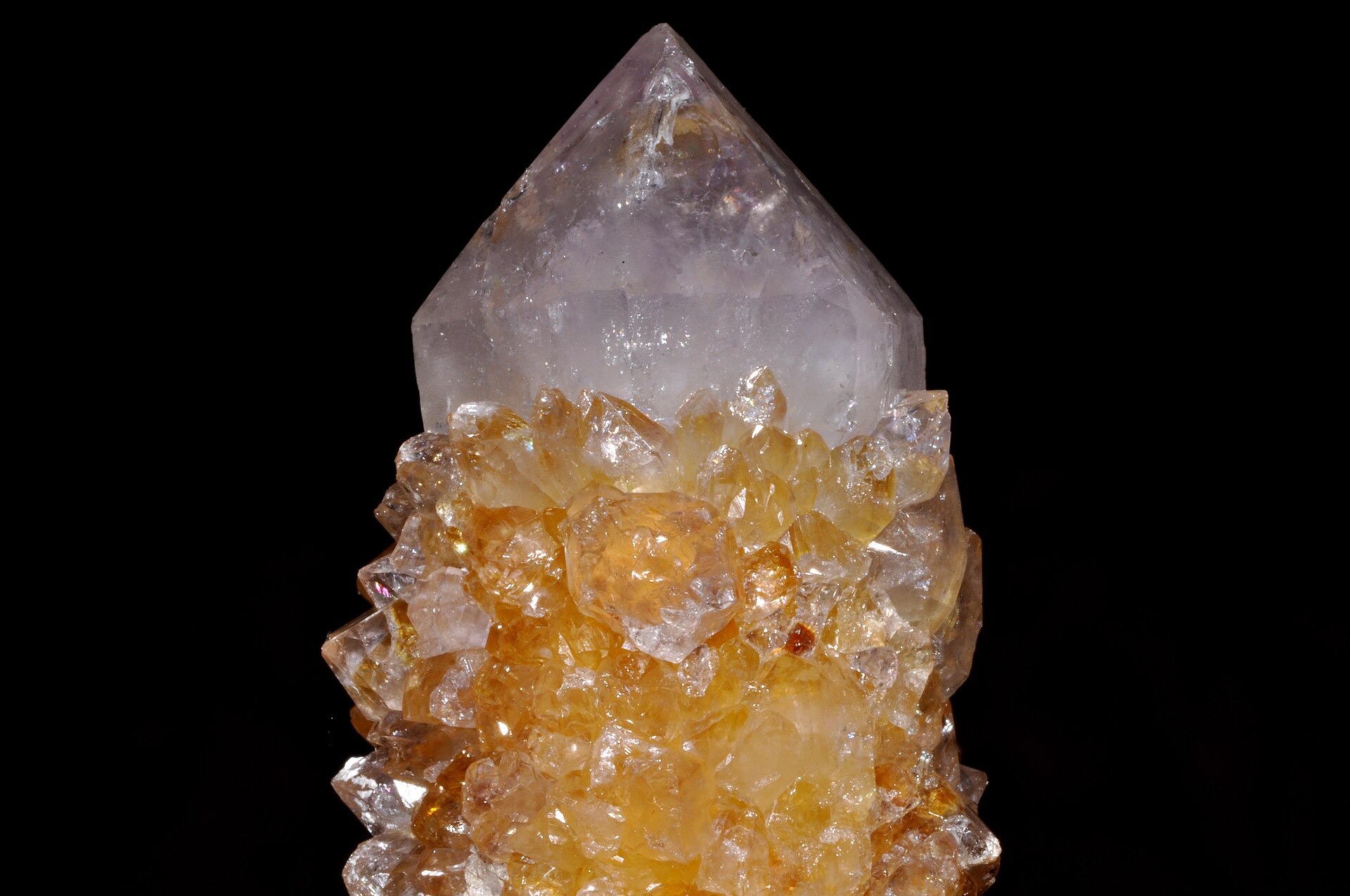 Mohs 7
Citrine
SiO₂ · Silicates
Citrine is the yellow to brown variety of quartz, coloured by aluminium impurities and natural radiation. Most commercial citrine is heat-treated amethyst from Brazil.
 Mohs 7.75
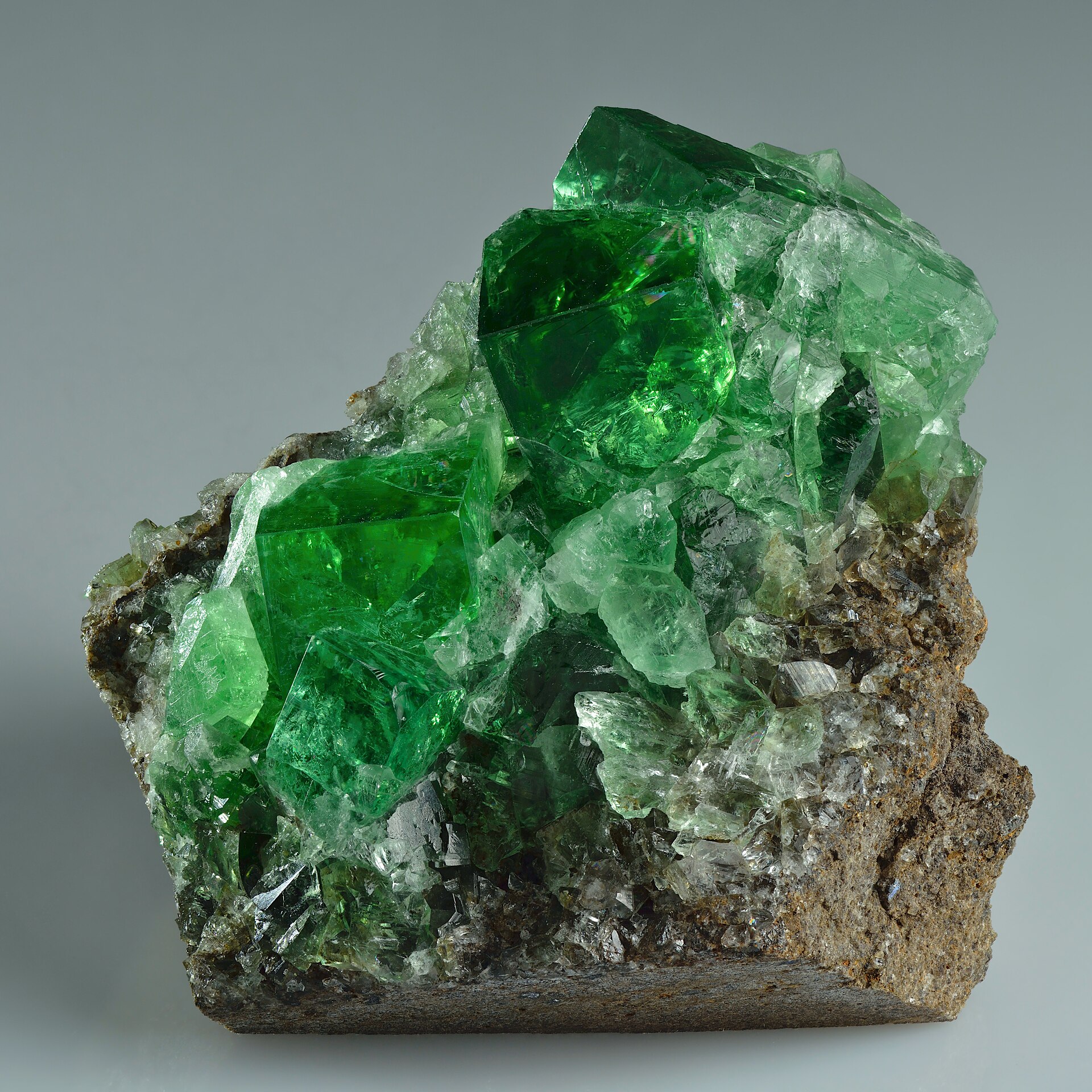
Emerald
Be₃Al₂Si₆O₁₈ (+ Cr/V trace) · Silicates
Emerald is the chromium- or vanadium-coloured green variety of beryl. Mohs 7.5–8, Colombia produces the world's reference gem; Zambia and Brazil dominate supply.
 Mohs 4
Fluorite
CaF₂ · Halides
Fluorite (CaF₂) is calcium fluoride — defines Mohs 4 on the hardness scale. Famous for cubic crystals in every colour of the rainbow and for fluorescence under UV light.
 Mohs 6.75
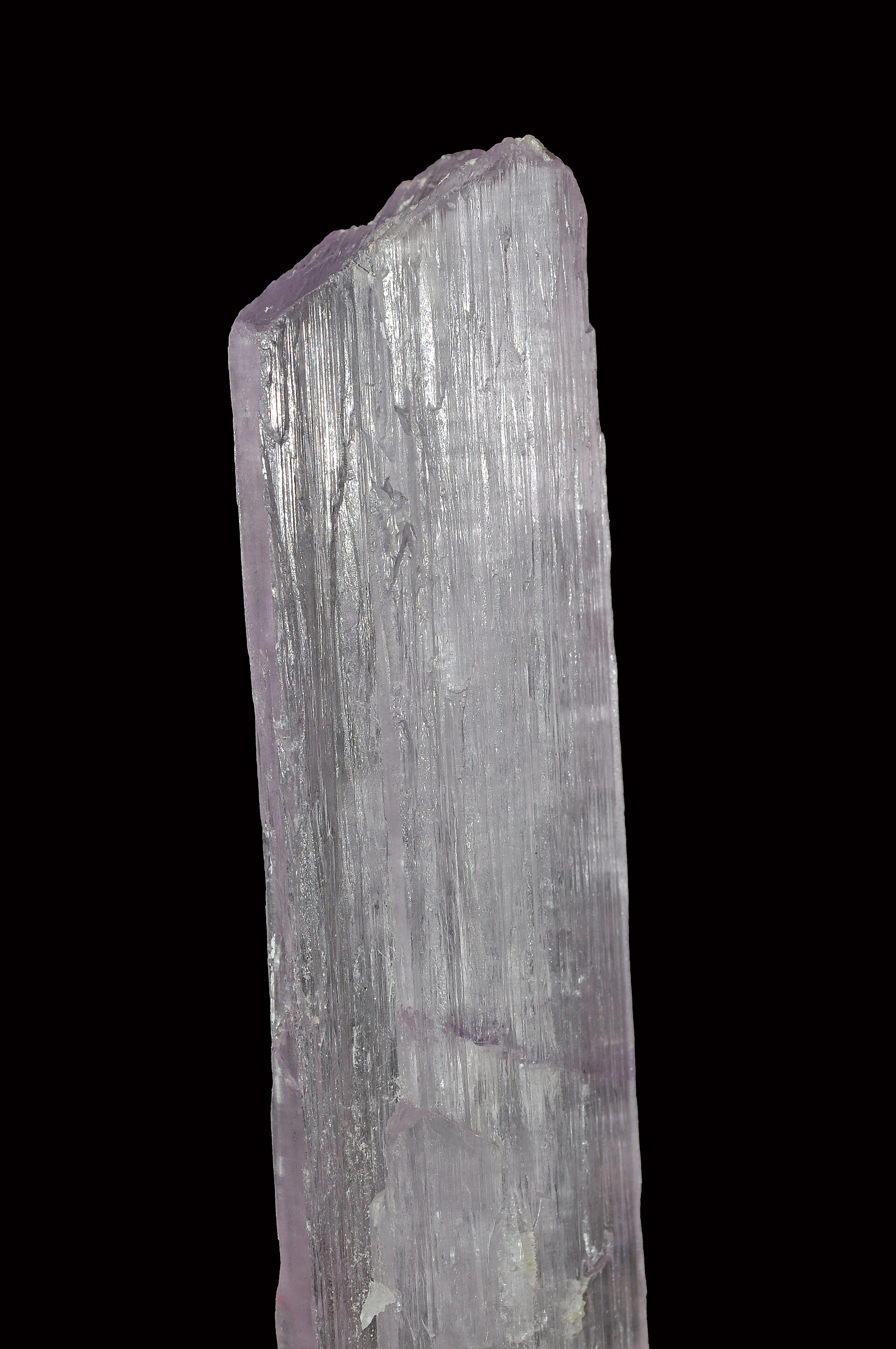
Kunzite
LiAl(SiO₃)₂ · Silicates
Kunzite is the pink lithium-bearing variety of spodumene, discovered in 1902. Mohs 6.5–7, strong pleochroism. Mawi (Afghanistan) and Pala (California) are the historic top sources.
 Mohs 6.25
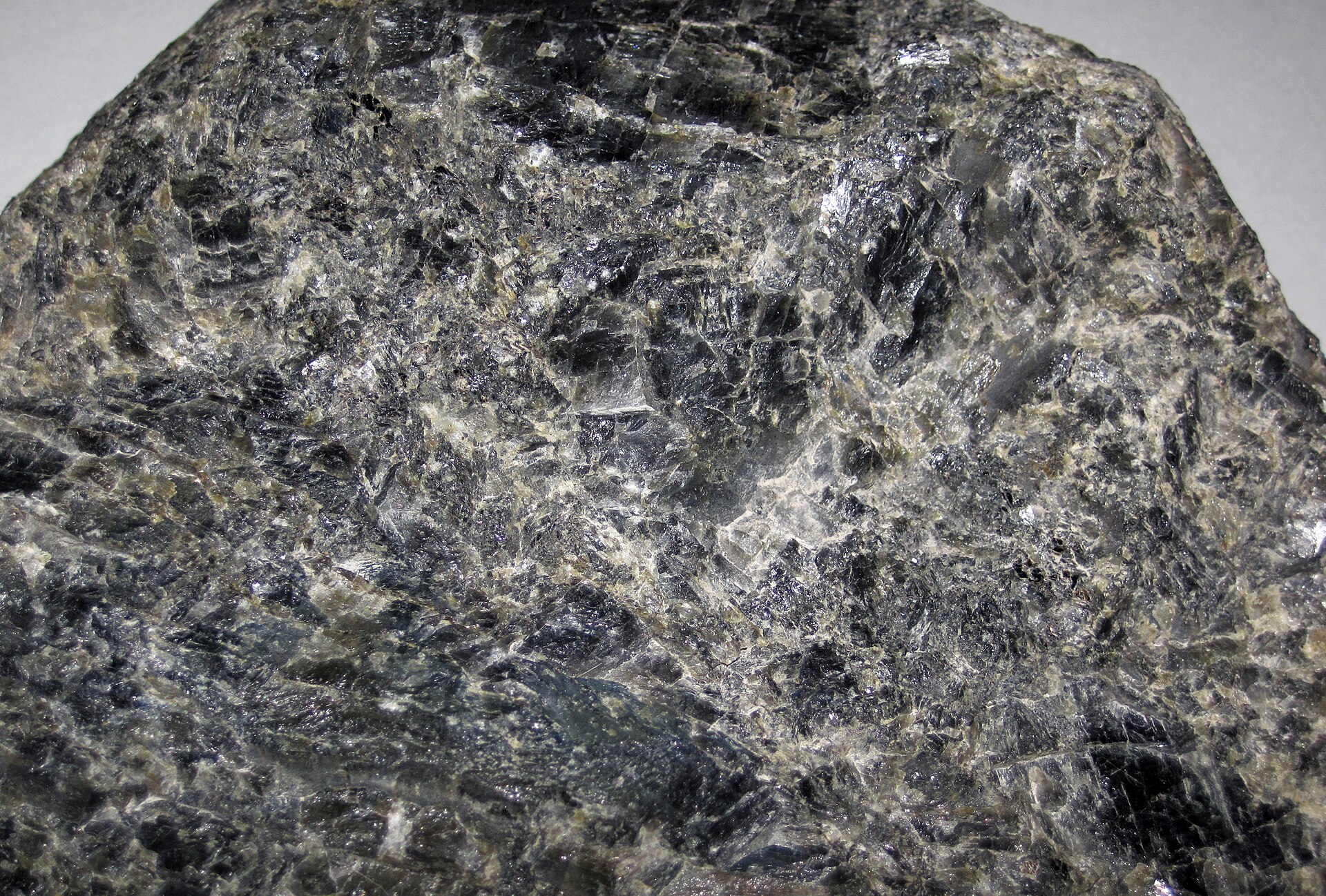
Labradorite
(Ca,Na)(Al,Si)₄O₈ · Silicates
Labradorite is a plagioclase feldspar showing 'labradorescence' — vivid iridescent flashes of blue/green/gold/violet. Discovered 1770 Labrador; Finnish 'Spectrolite' is the most spectacular variety.
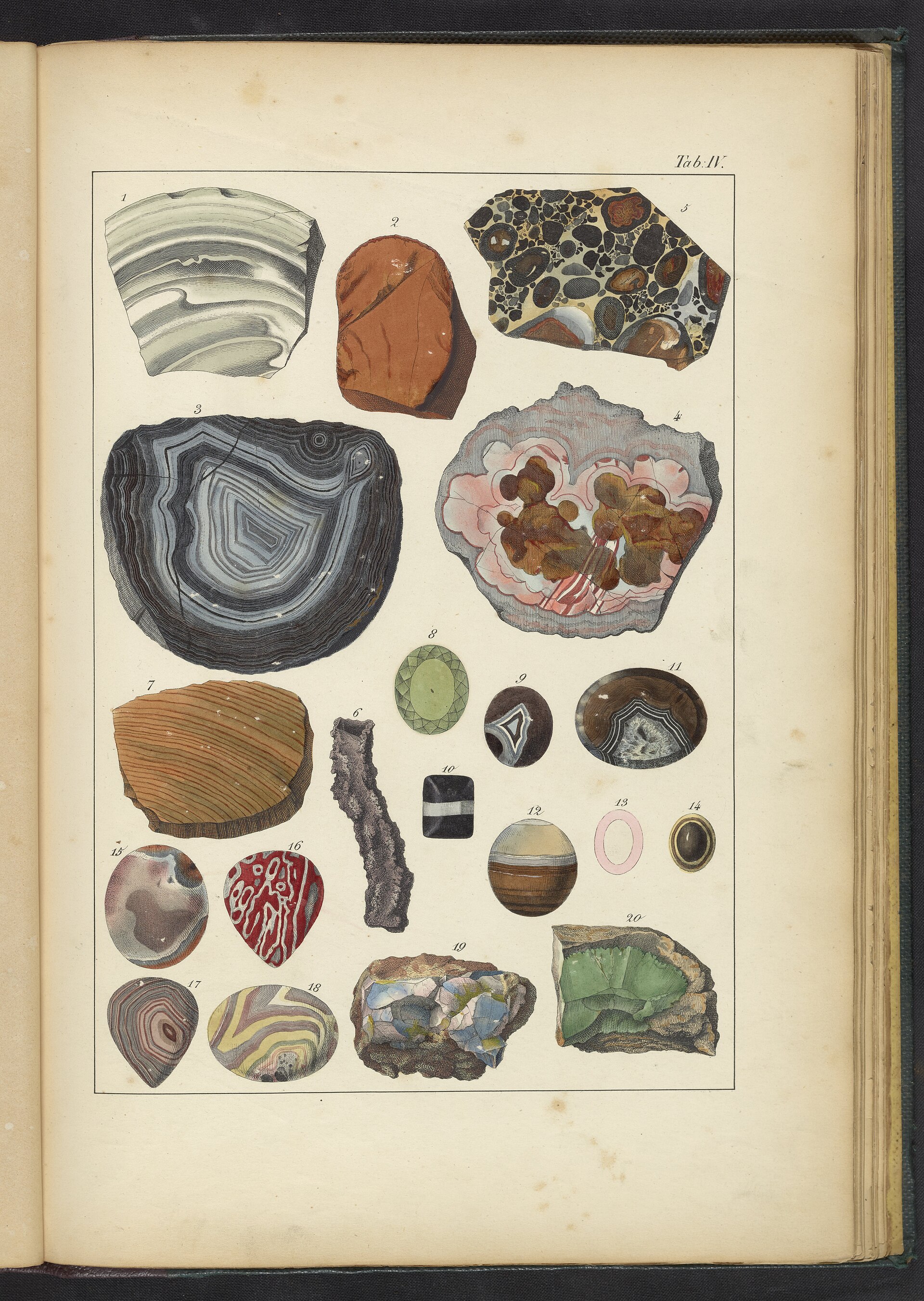
![Lapis lazuli mineral specimen — Figures 1-7. The Topaz. 1. Topaz 2. The same [Topaz] 3. Dark Yellow Topaz 4. Sea-green Topaz or Aqua](/minerals/img/lapis-lazuli-01.jpg) Mohs 5.5
Mohs 5.5Lapis Lazuli
(Na,Ca)₈(AlSiO₄)₆(SO₄,S,Cl)₂ (mainly lazurite) · Silicates
Lapis lazuli is a deep blue metamorphic rock dominated by lazurite, with pyrite flecks and calcite veins. Mined for 7,000 years; Afghanistan's Sar-i-Sang is the historic and finest source.
 Mohs 3.75
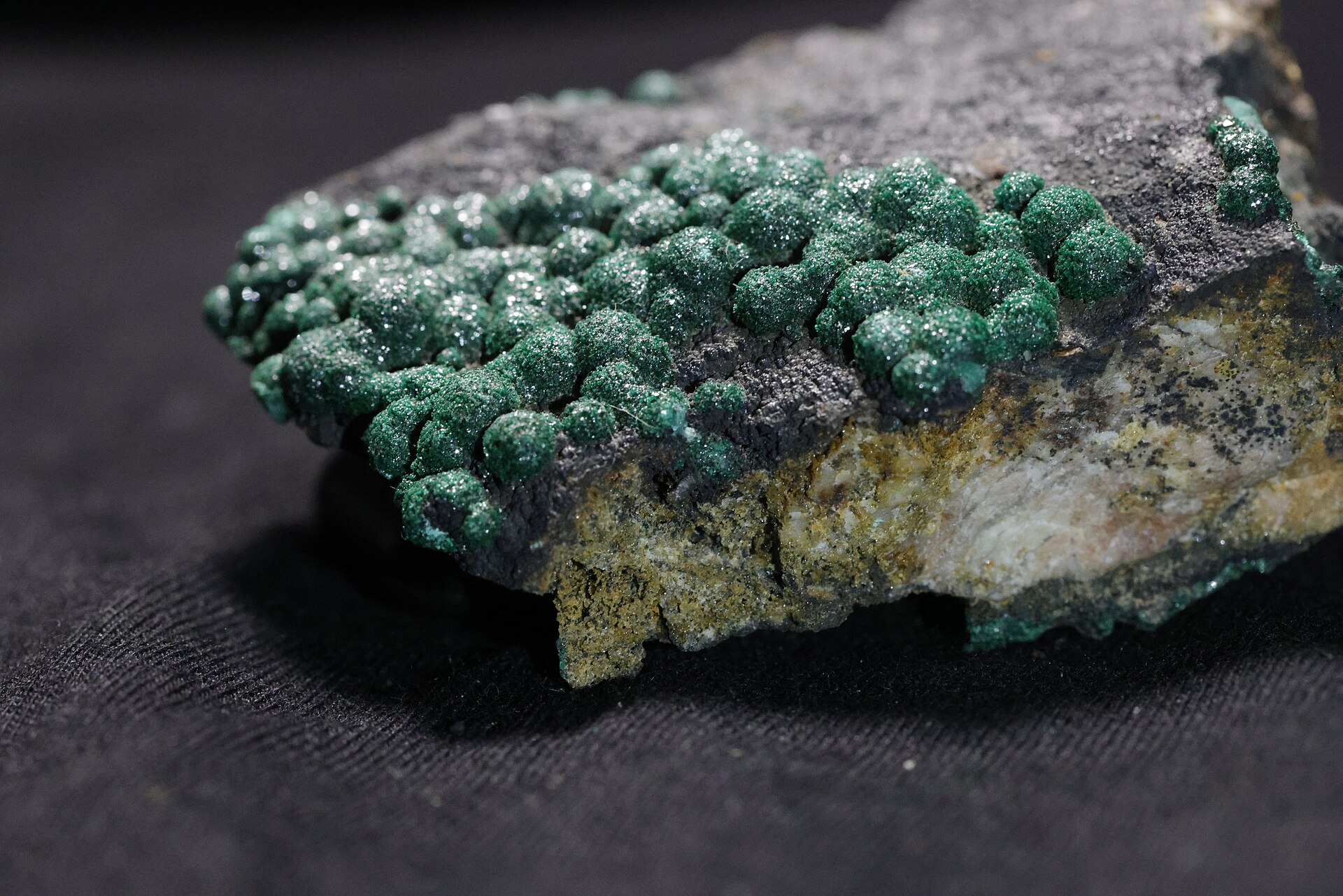
Malachite
Cu₂CO₃(OH)₂ · Carbonates
Malachite is a vivid green copper carbonate mineral (Cu₂CO₃(OH)₂) famous for concentric banded structure. Mohs 3.5–4 (soft). DRC produces 90%+ of commercial display material.
 Mohs 6.25
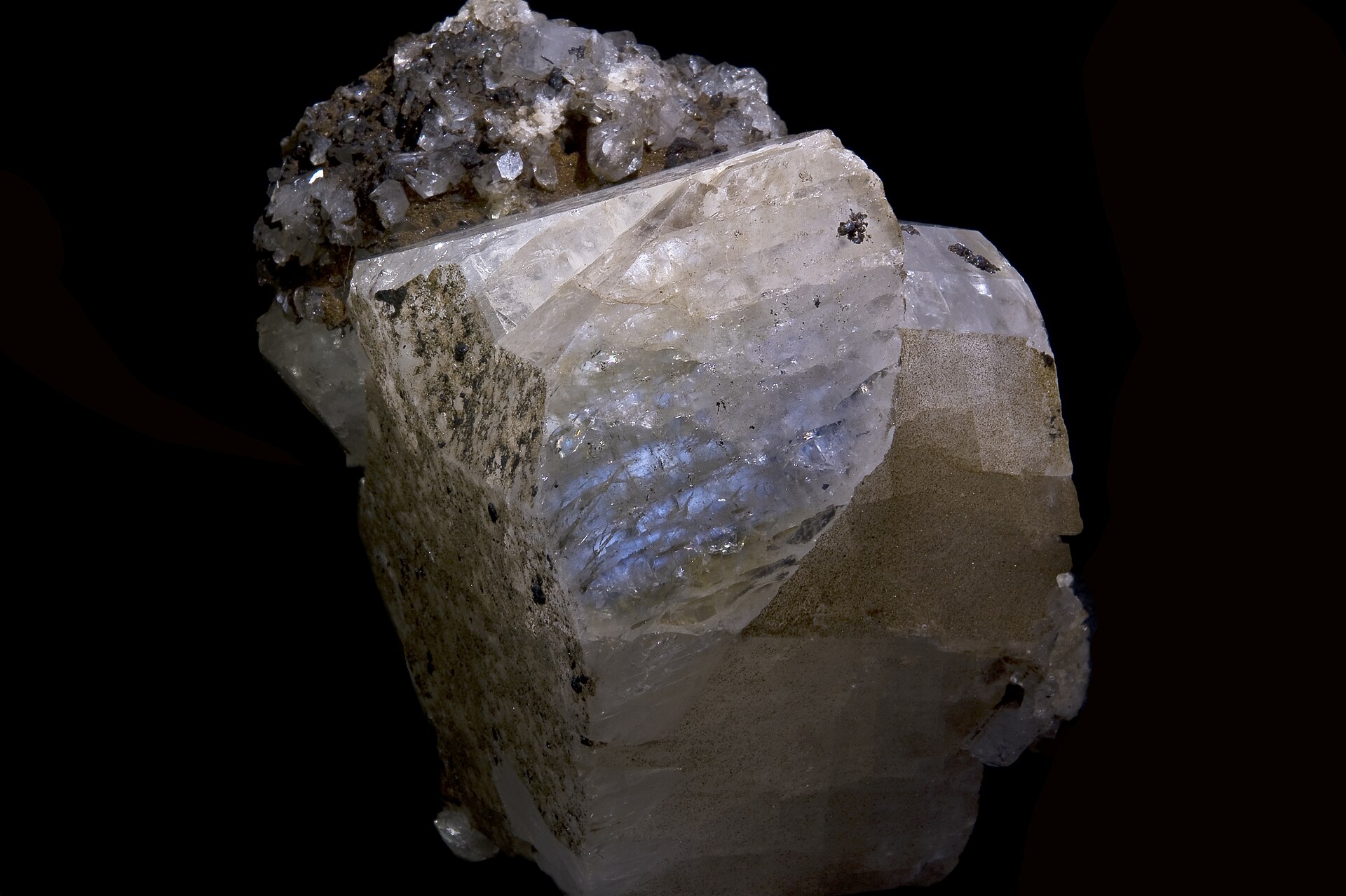
Moonstone
(K,Na)AlSi₃O₈ · Silicates
Moonstone is the gem variety of orthoclase feldspar showing 'adularescence' — a billowing blue or rainbow sheen caused by light scattering off layered structure. Sri Lanka produces the finest blue.
 Mohs 7.75
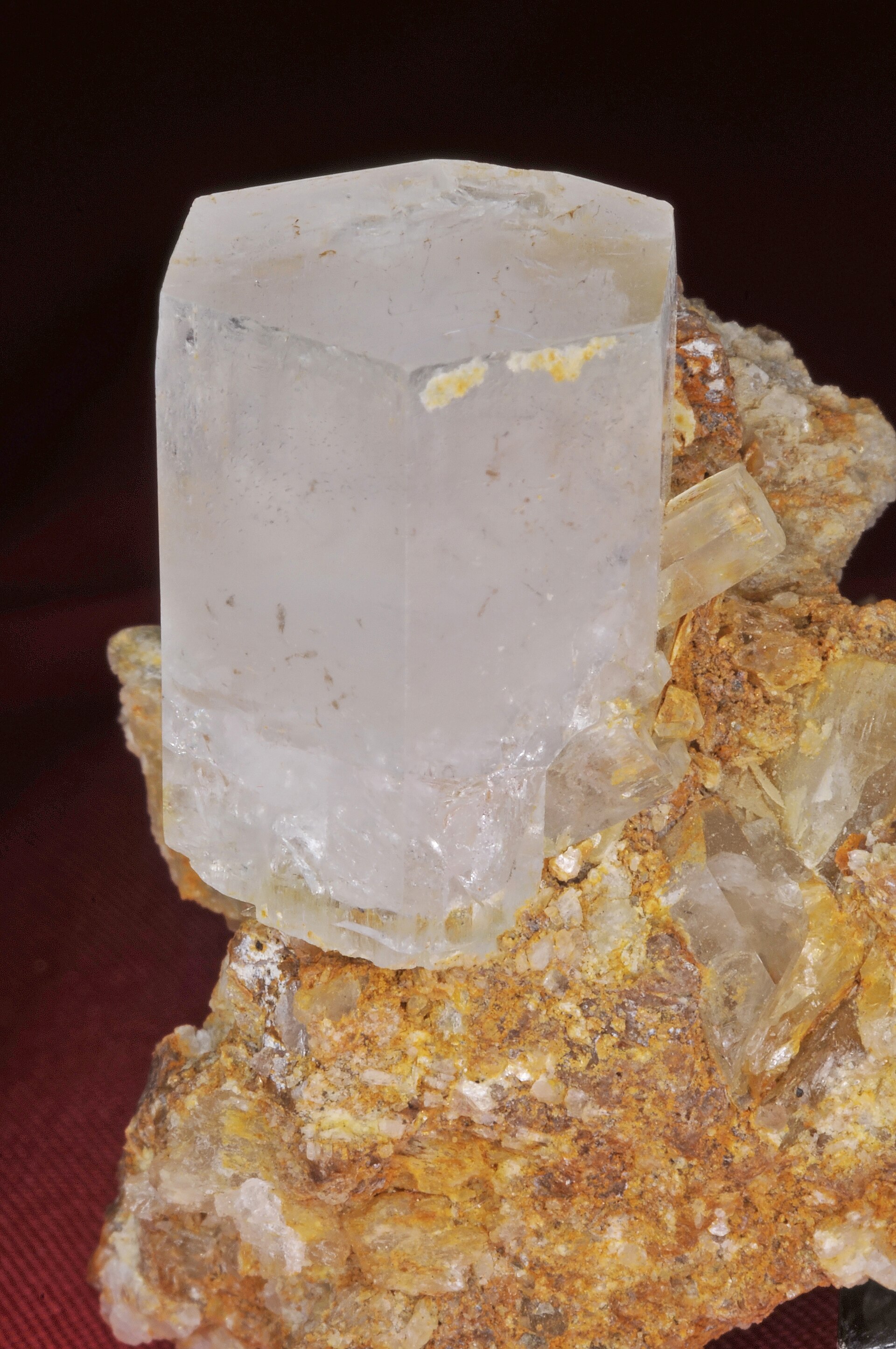
Morganite
Be₃Al₂Si₆O₁₈ (+ Mn trace) · Silicates
Morganite is the manganese-coloured pink to peach variety of beryl, same species as emerald and aquamarine. Mohs 7.5–8, named for J.P. Morgan in 1911 by gemmologist George Kunz.
 Mohs 5.5
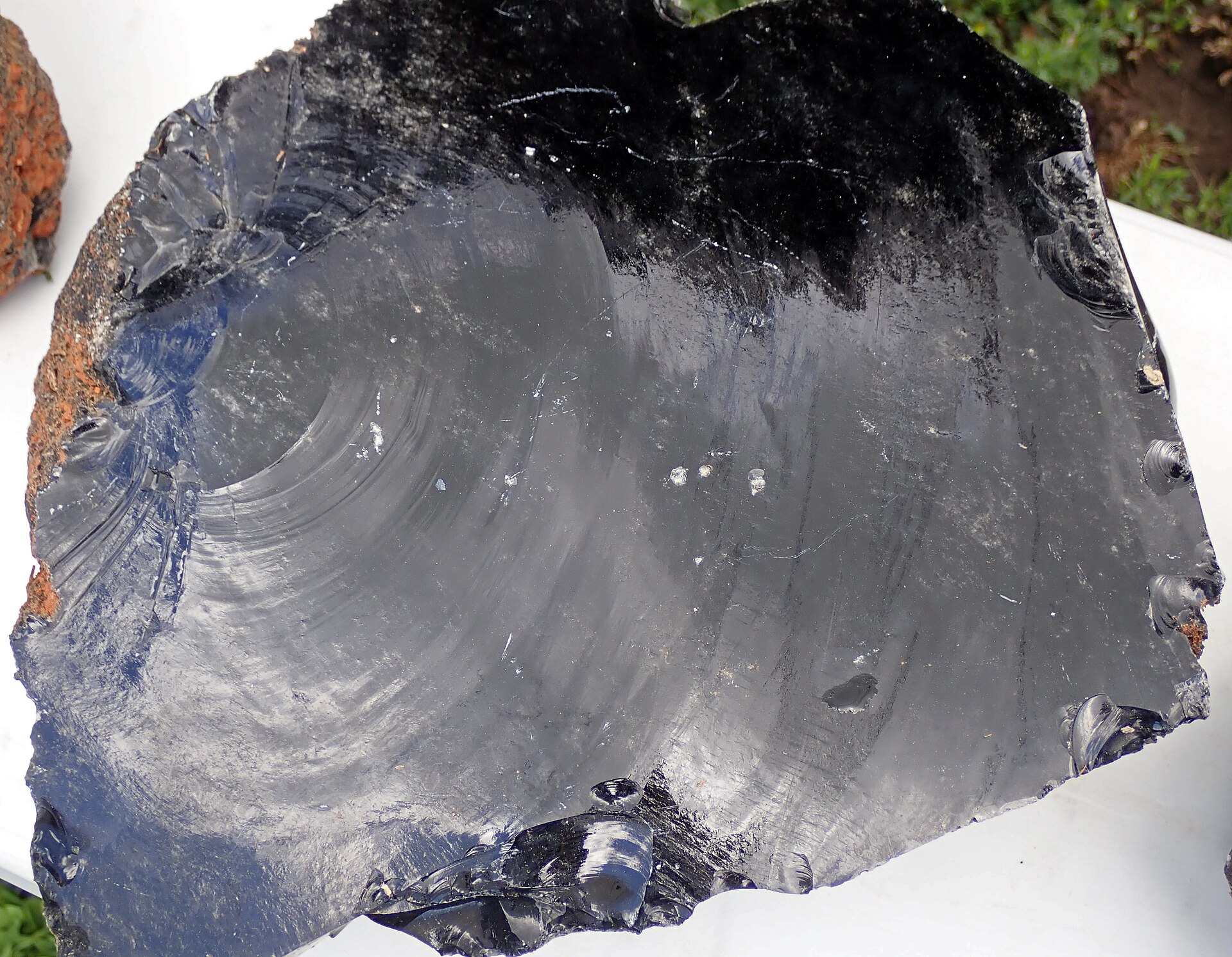
Obsidian
SiO₂ (amorphous, with minor Mg, Fe, Na, K) · Other
Obsidian is naturally occurring volcanic glass — rapidly cooled rhyolitic lava that lacks crystal structure. Mohs 5.5, conchoidal fracture. Used by humans for tools 700,000+ years.
 Mohs 5.5
Opal
SiO₂·nH₂O · Silicates
Opal is hydrated silica (SiO₂·nH₂O) — not a true crystal but a mineraloid. Famous for "play-of-colour" diffraction. Australia produces ~95% of precious opal worldwide.
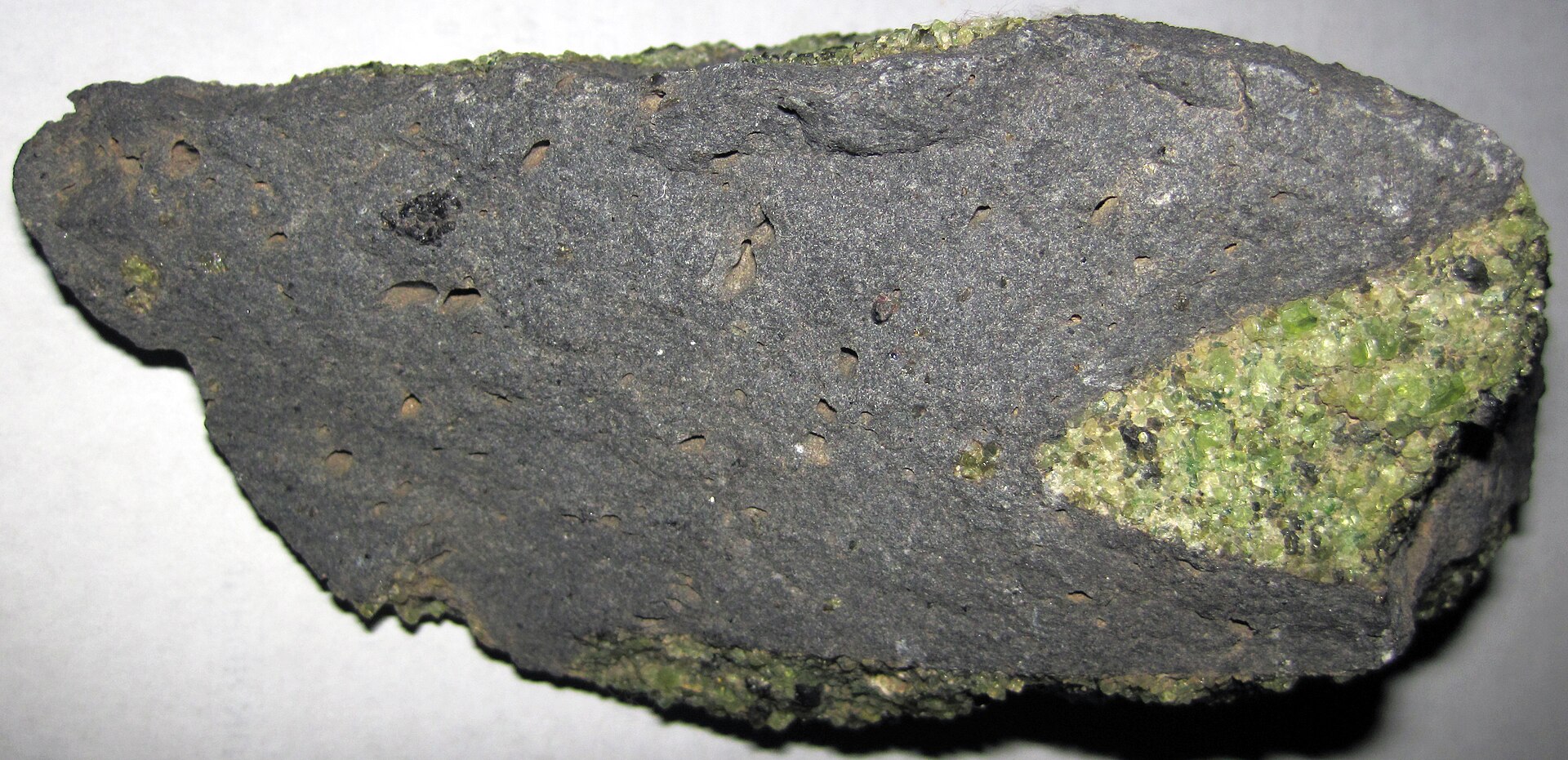 Mohs 6.75
Peridot
(Mg,Fe)₂SiO₄ · Silicates
Peridot is the gem variety of the magnesium-iron silicate olivine. Mohs 6.5–7, signature yellow-green colour from iron. Mined for 3,500 years; Egypt's Zabargad is the original source.
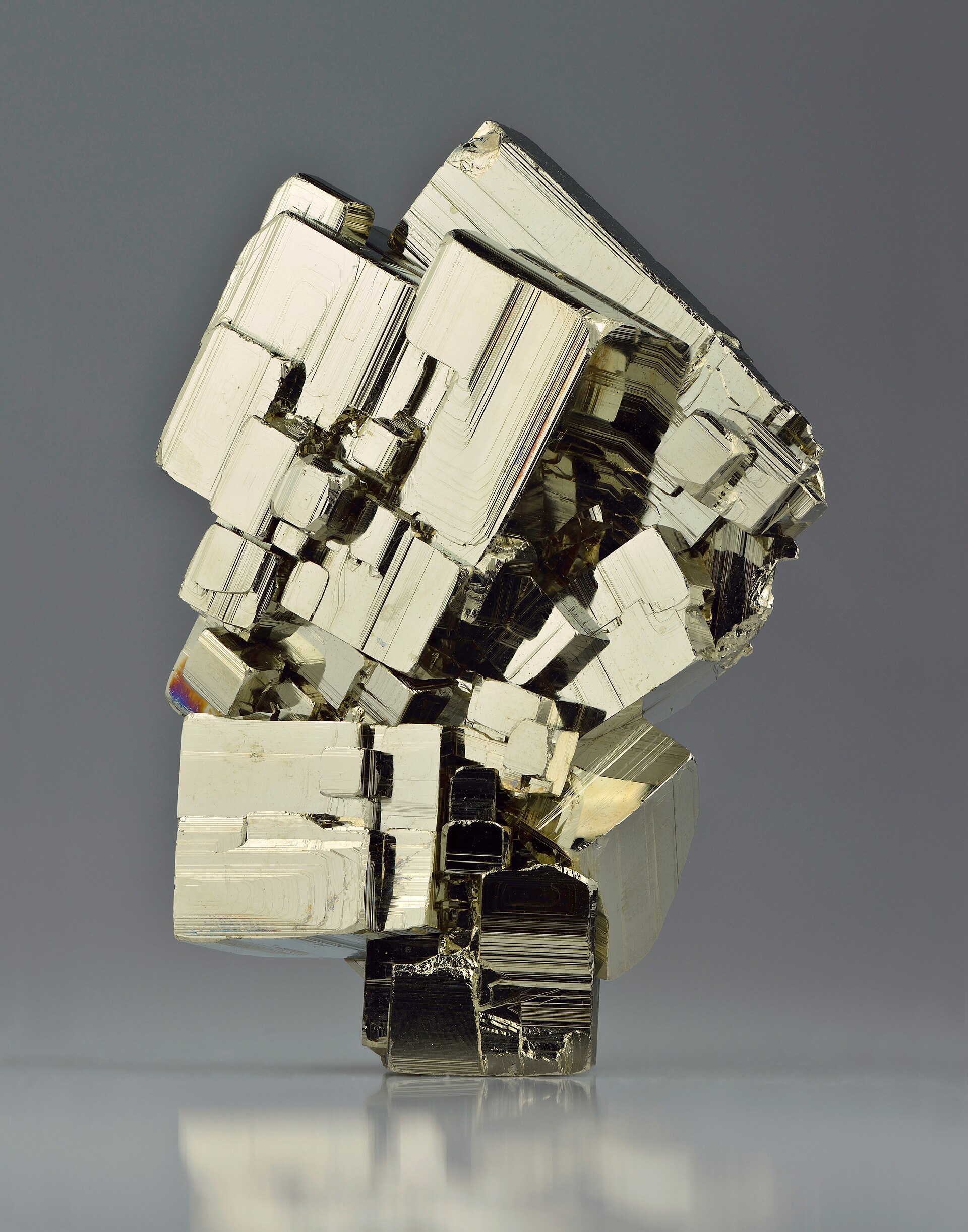 Mohs 6.5
Pyrite
FeS₂ · Sulfides
Pyrite (FeS₂) is iron sulfide — "fool's gold". Forms striking metallic-gold cubes and pyritohedrons. Mohs 6.5, density 5.0, brass-yellow streak greenish-black.
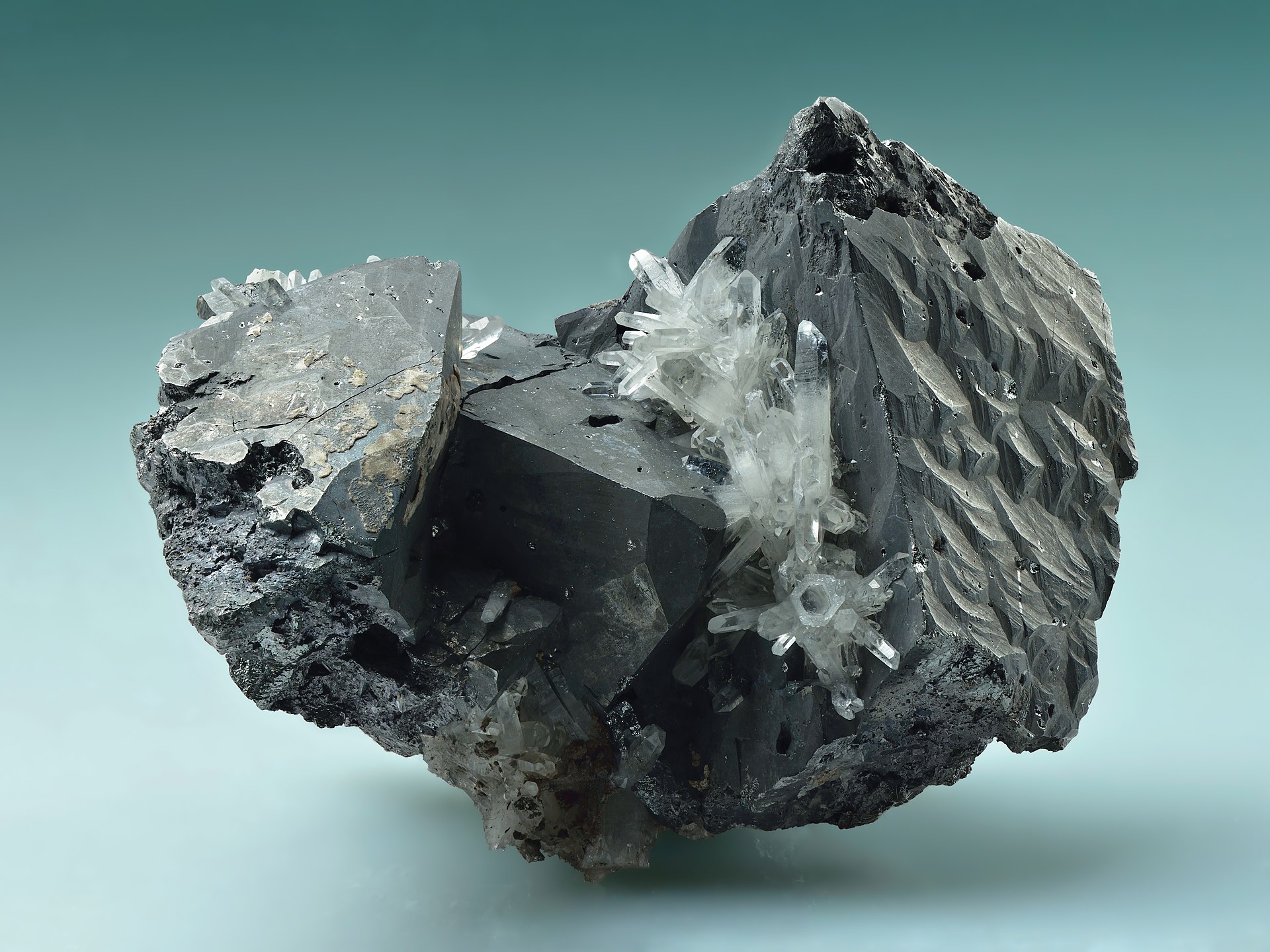 Mohs 7
Quartz
SiO₂ · Silicates
Quartz (SiO₂) is the second most abundant mineral in Earth's crust. Trigonal silicate, Mohs 7, vitreous luster — base of amethyst, citrine, rose quartz, and dozens of varieties.
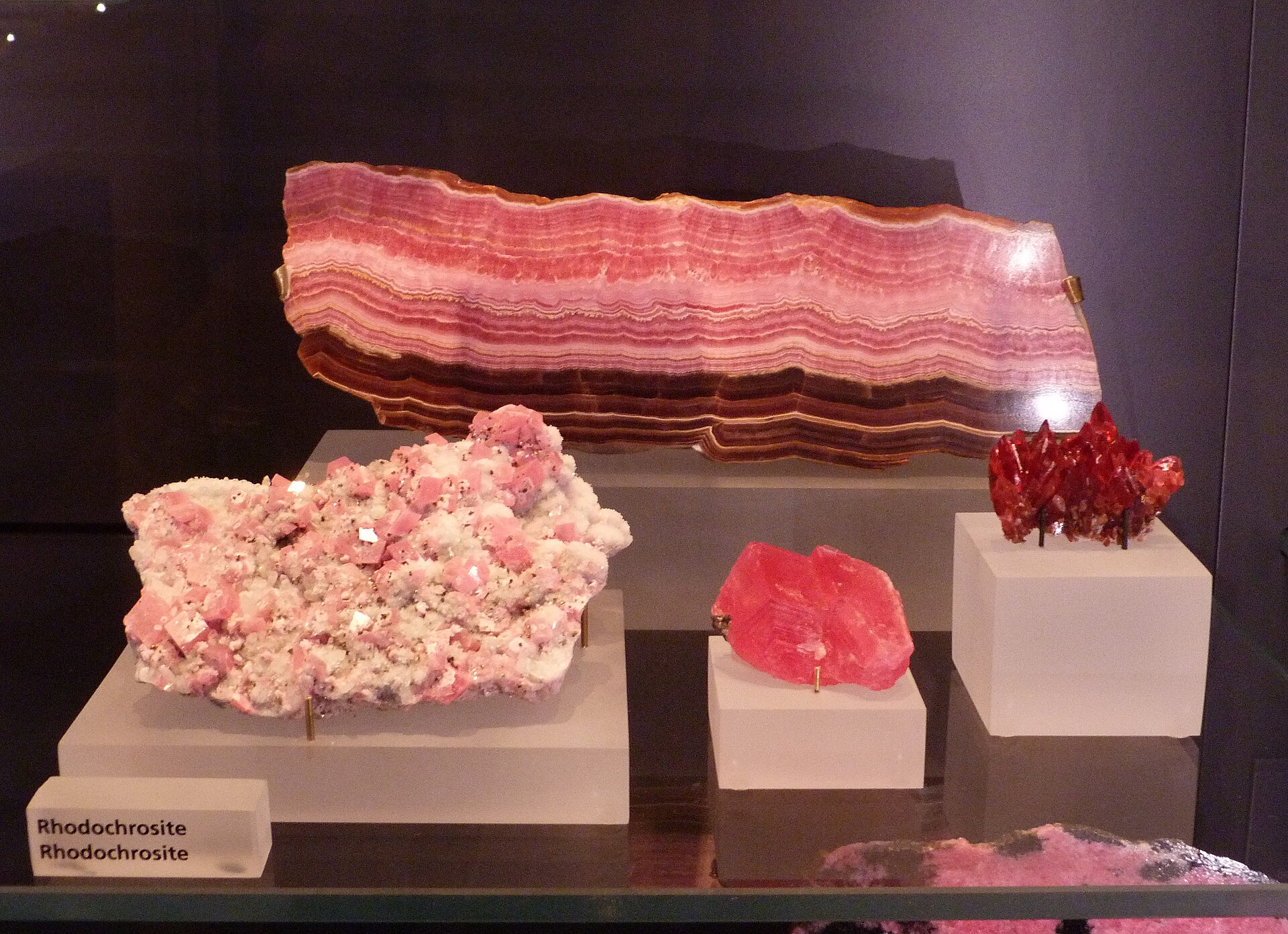 Mohs 3.75
Rhodochrosite
MnCO₃ · Carbonates
Rhodochrosite (MnCO₃) is a manganese carbonate, raspberry-red, very soft (Mohs 3.75). The Sweet Home Mine in Colorado produced the world's finest crystals.
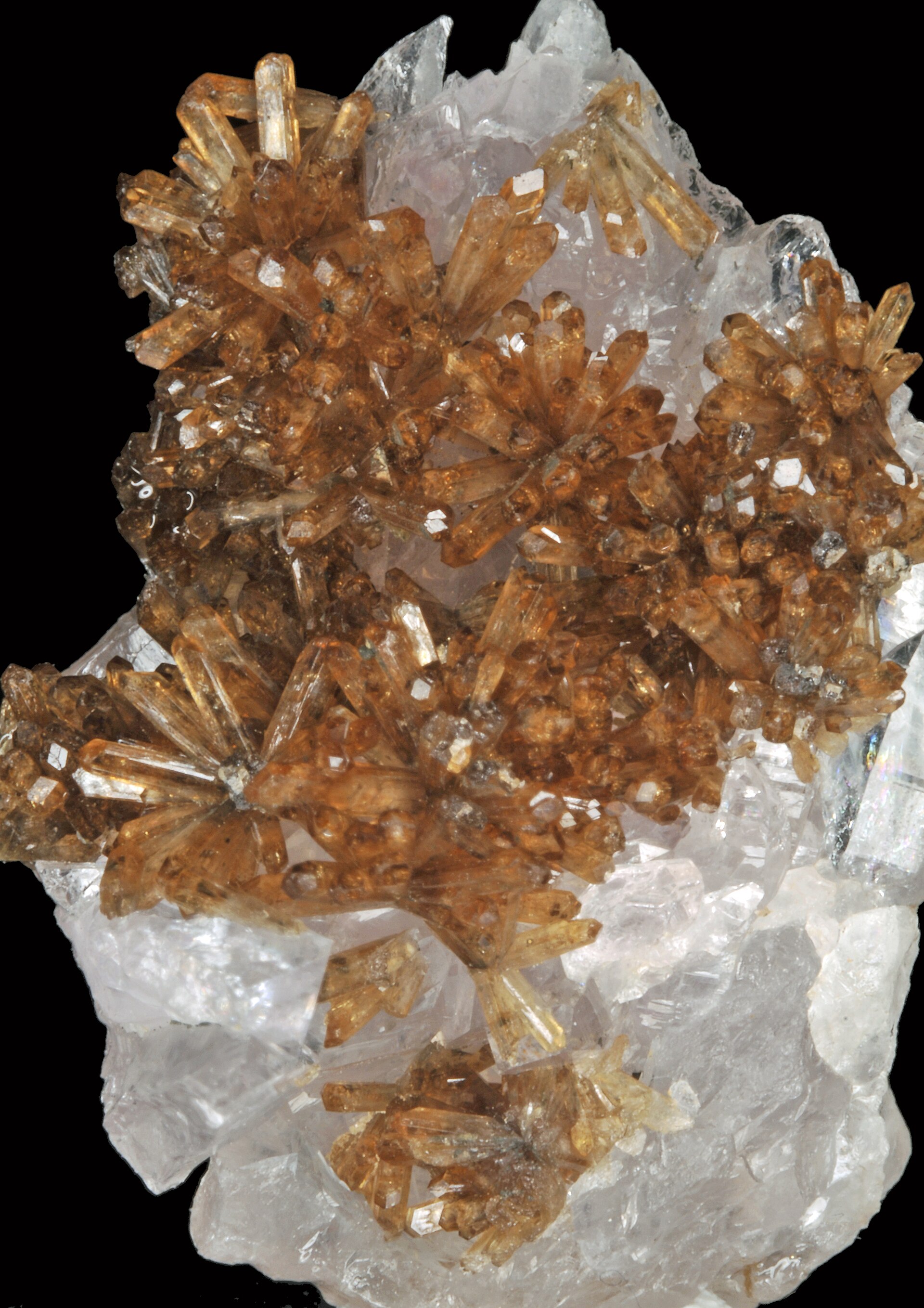 Mohs 7
Rose Quartz
SiO₂ · Silicates
Rose quartz is the pink translucent variety of quartz, coloured by dumortierite microfibers. Mohs 7, almost always massive (no faceted crystals). Brazil and Madagascar dominate supply.
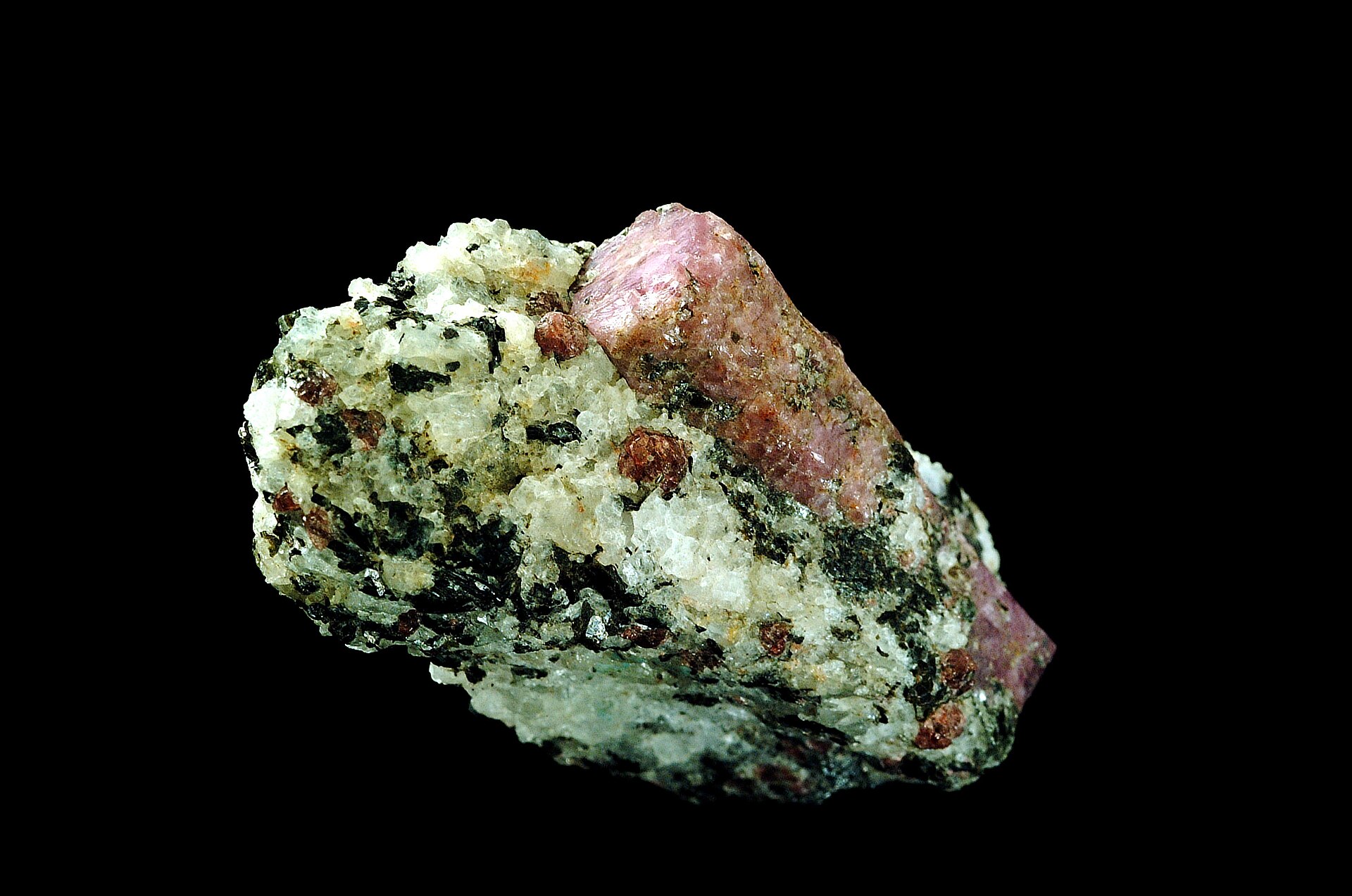 Mohs 9
Ruby
Al₂O₃ (+ Cr trace) · Oxides
Ruby is the chromium-red variety of corundum (Al₂O₃). Mohs 9, second hardest natural mineral. Burma's Mogok produces the legendary 'pigeon-blood' colour benchmark.
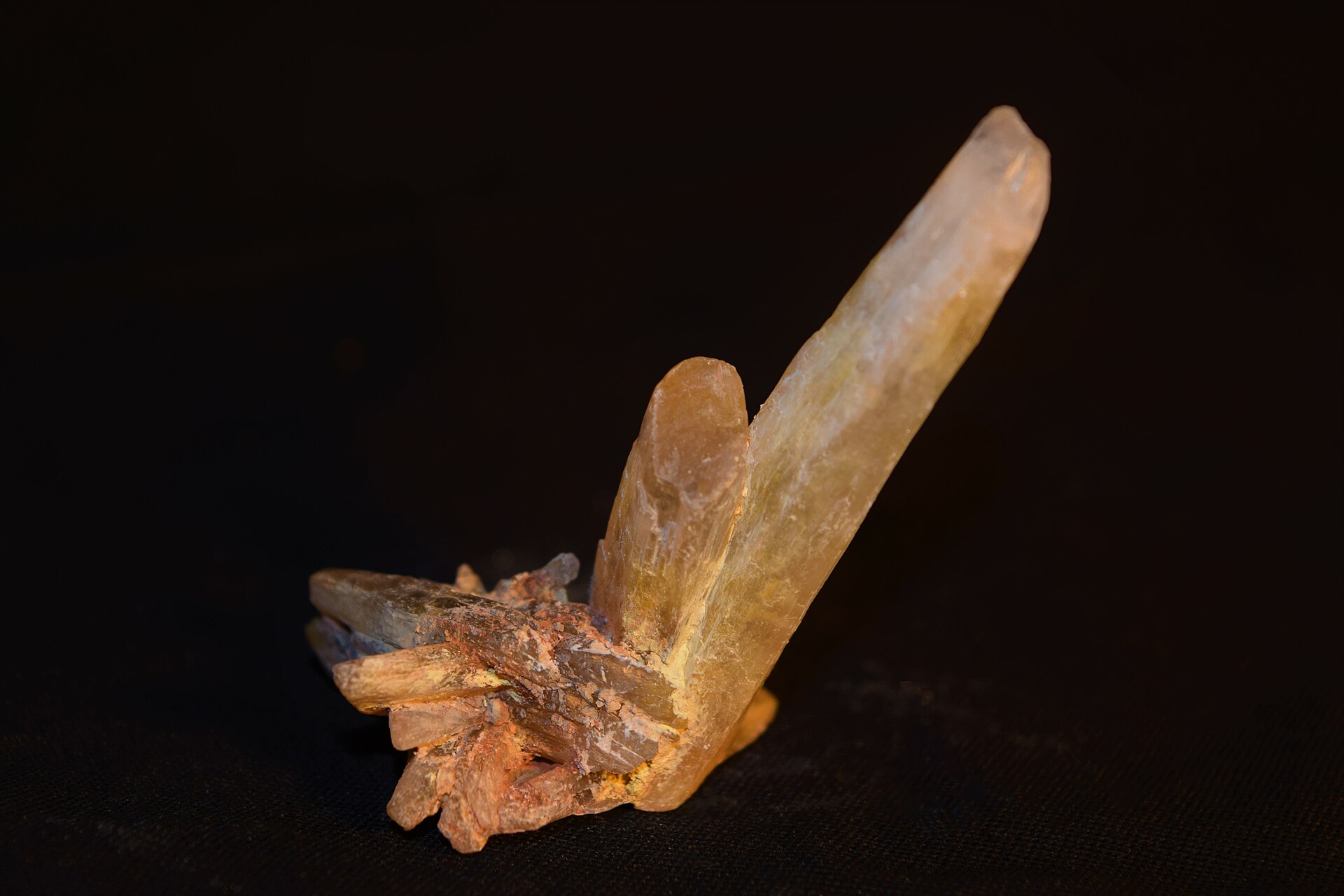 Mohs 2
Selenite
CaSO₄·2H₂O · Sulfates
Selenite is the transparent crystalline variety of gypsum (CaSO₄·2H₂O). Mohs 2 — very soft. Famous for the giant 12-meter crystals of Naica, Mexico.
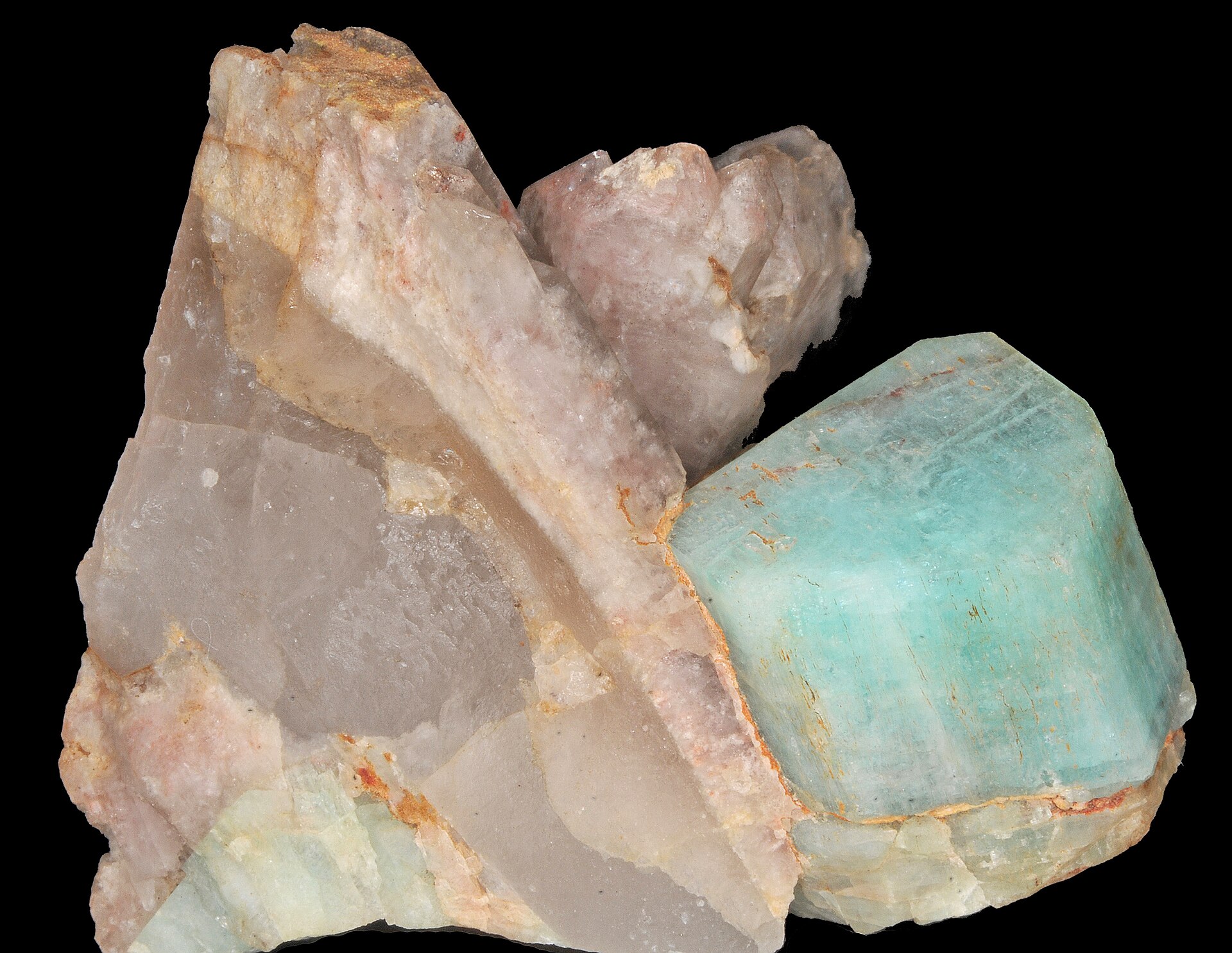 Mohs 7
Smoky Quartz
SiO₂ · Silicates
Smoky quartz is the brown-to-black variety of quartz, coloured by natural radiation acting on aluminium impurities. Mohs 7, often forms large terminated crystals.
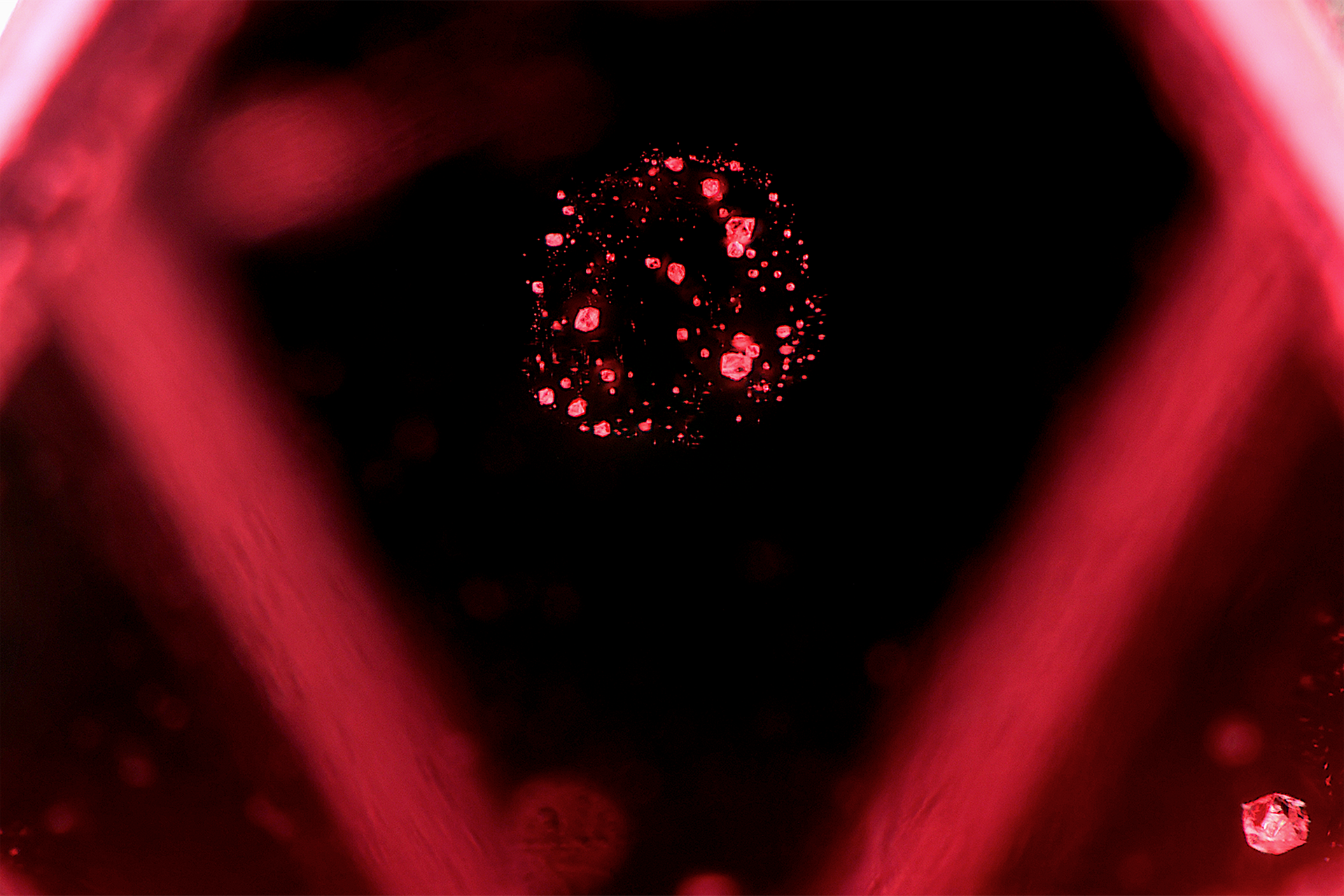 Mohs 8
Spinel
MgAl₂O₄ · Oxides
Spinel is a magnesium aluminate, often confused with ruby for centuries (the 'Black Prince's Ruby' is actually spinel). Mohs 8, cubic, singly refractive. Burma's Mogok produces top red.
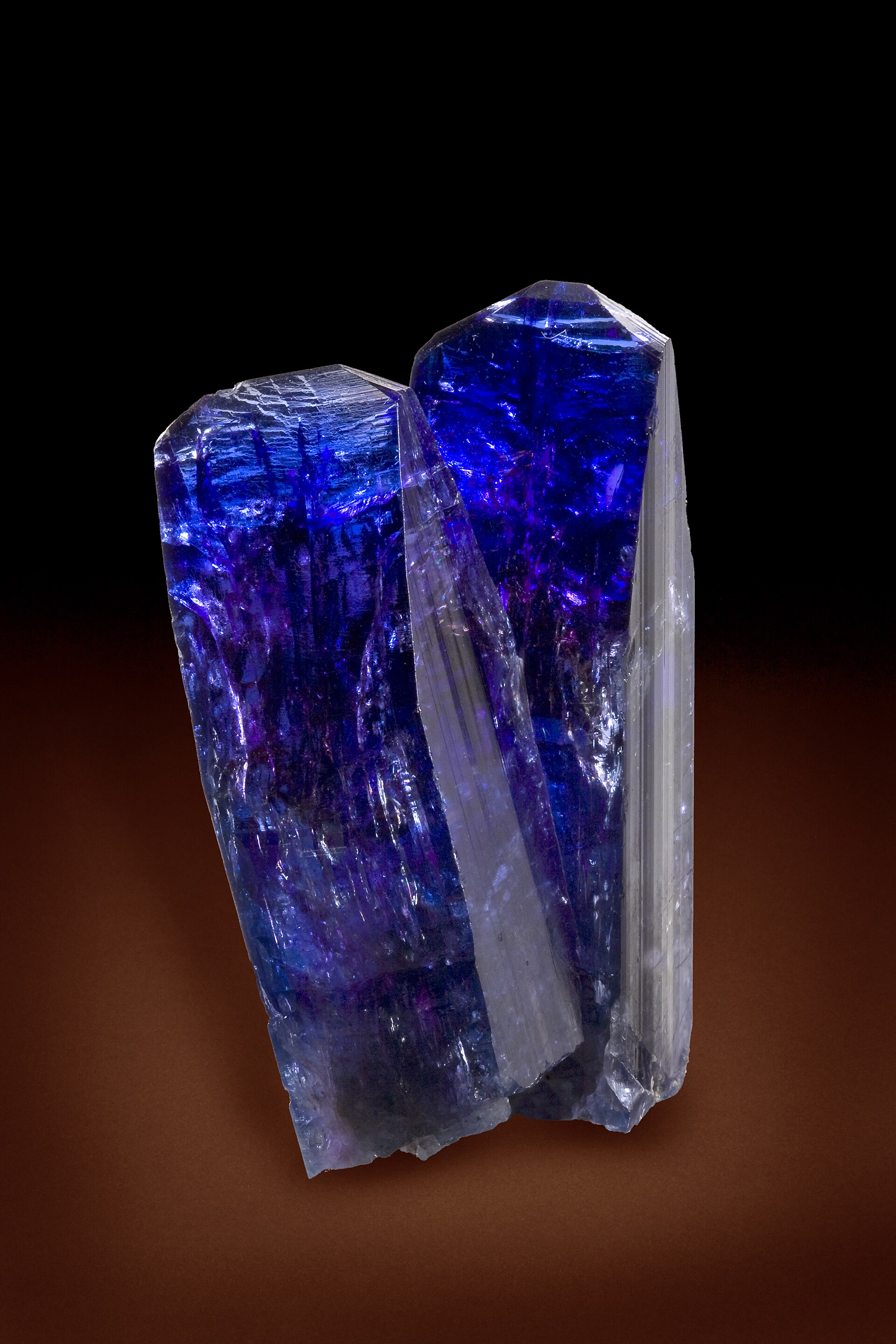 Mohs 6.5
Tanzanite
Ca₂Al₃(SiO₄)(Si₂O₇)O(OH) · Silicates
Tanzanite is the violet-blue variety of zoisite, found ONLY at Merelani in northern Tanzania. Mohs 6.5, strong pleochroism. One of the rarest gemstones — single mine source on Earth.