Overview
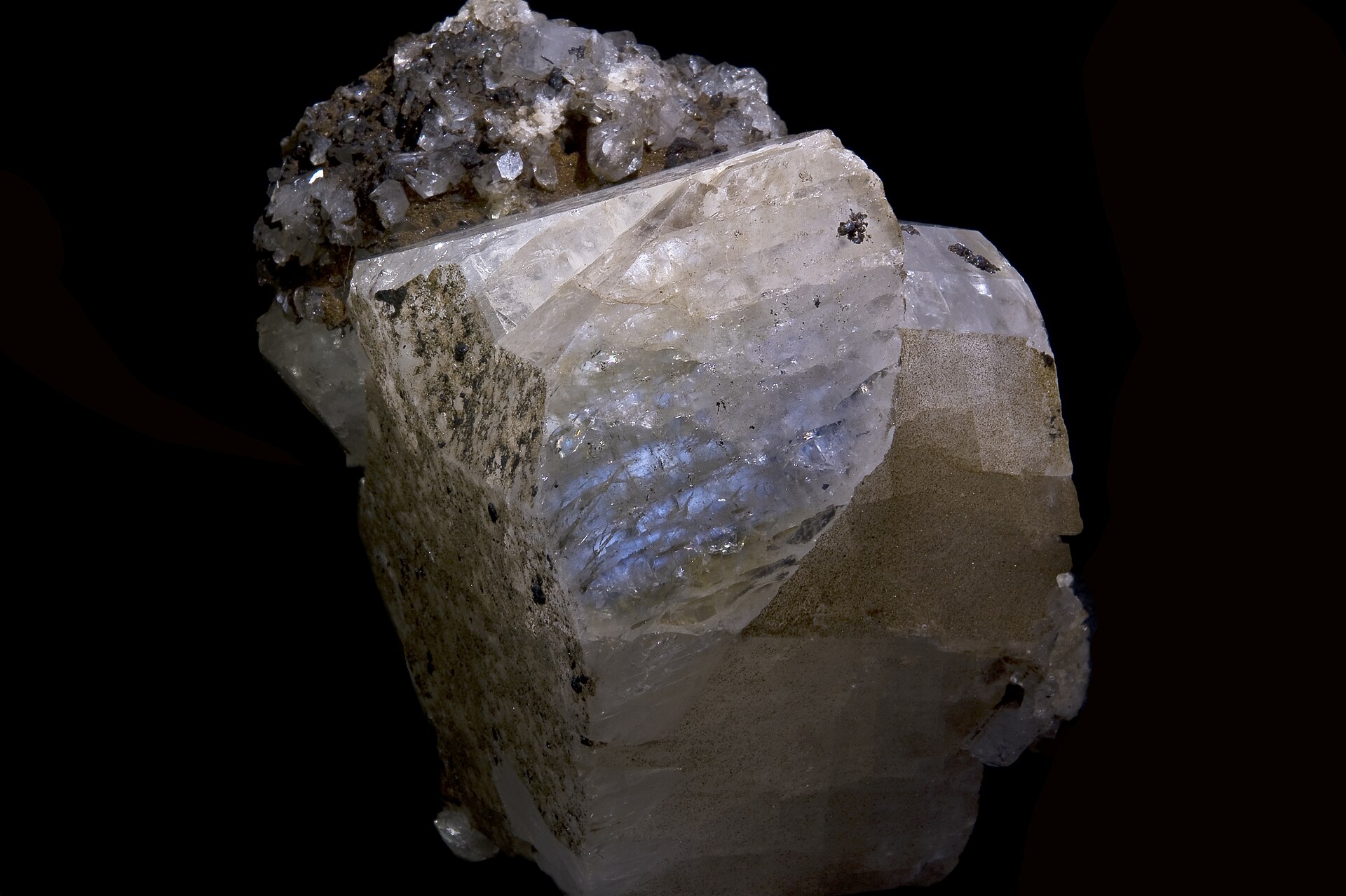
Moonstone is the gem-quality variety of orthoclase feldspar that exhibits the optical phenomenon called adularescence — a soft, billowing blue or white sheen that appears to float just beneath the surface, moving as the stone is tilted. The effect resembles moonlight reflecting on water, giving the gem its name.
The adularescence is caused by the interleaving of two feldspar phases — orthoclase and albite — at the microscopic scale, forming thin alternating layers approximately 100-200 nm thick. Light entering the stone scatters off these layers (Tyndall scattering) producing the characteristic blue glow on a colourless body.
The finest moonstone comes from Sri Lanka (Meetiyagoda and other deposits), producing the most prized "blue moonstone" — a transparent body with a vivid blue adularescent flash that floats over the entire stone. Indian rainbow moonstone is actually labradorite (a different feldspar) with multi-coloured adularescence; despite the technical name, it is universally marketed as moonstone in the trade.
Formation
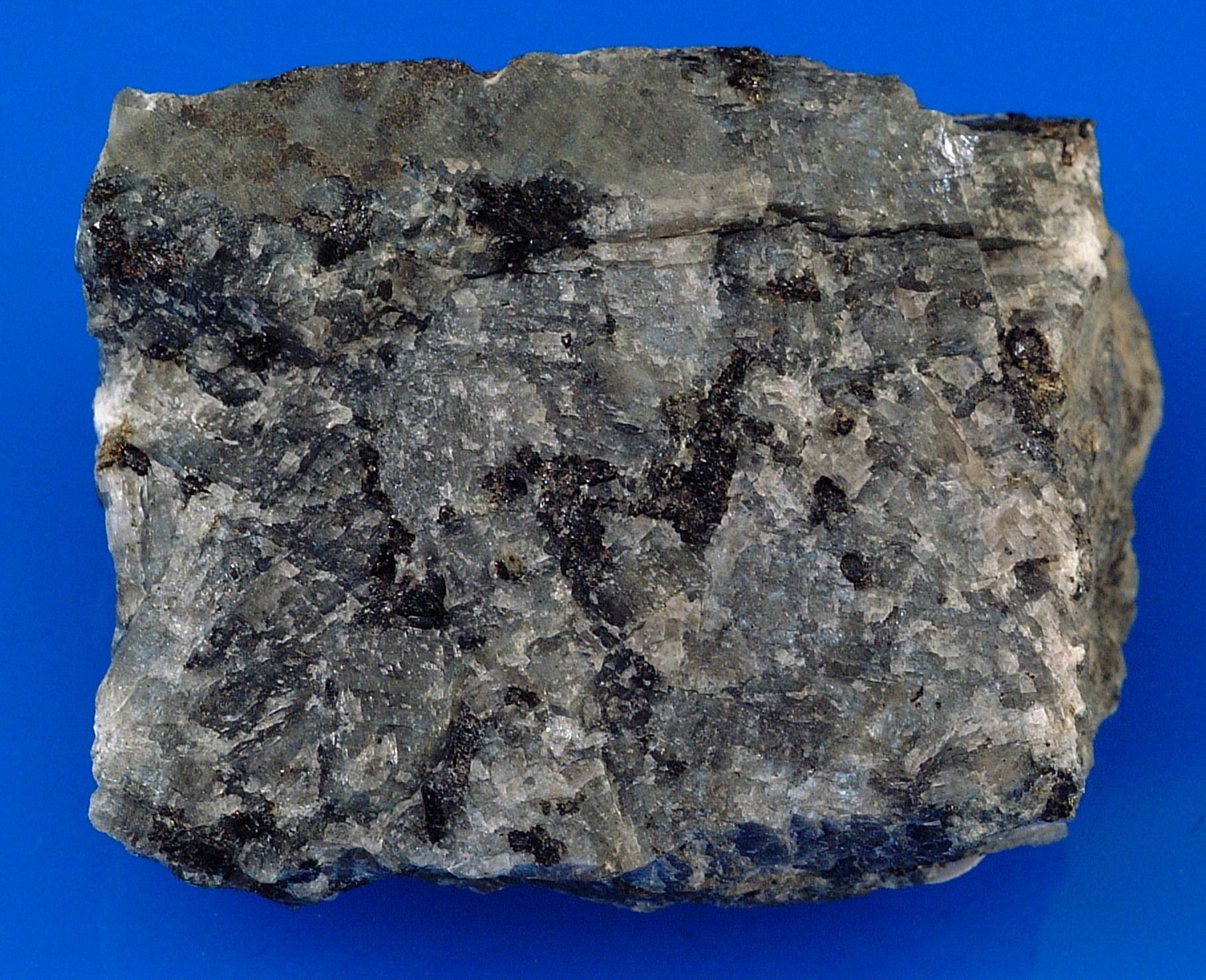
Moonstone forms in igneous pegmatites and certain felsic intrusive rocks as orthoclase feldspar crystallises slowly enough to allow the two-phase microstructure (perthitic intergrowth) to develop. This requires:
1. A potassium-sodium-rich melt (orthoclase + albite mixture)
2. Slow cooling over long timeframes
3. Conditions that prevent recrystallisation into a single homogeneous phase
The Sri Lankan deposits formed in granitic pegmatites that intruded ancient metamorphic rocks. The "rainbow moonstone" of India (technically labradorite) forms in mafic intrusions and basalts where calcium-rich plagioclase feldspar crystallises slowly.
Varieties
Blue moonstone (true) — colourless body with vivid blue sheen; Sri Lanka's classic premium gem.
White moonstone — milky body with subtle silver-white sheen; common, affordable.
Peach moonstone — pale orange body with pearly sheen; India.
Rainbow moonstone — actually labradorite (white labradorite) with multi-coloured iridescence; India, Madagascar — universally marketed as moonstone.
Cat's eye moonstone — chatoyant variety with parallel inclusions producing a moving "eye".
Star moonstone — extremely rare four-rayed asterism variety.
Black moonstone — actually labradorite or dark feldspar; trade name only.
How to identify
Moonstone identification:
- Adularescence: the diagnostic billowy sheen that moves with viewing angle; absent in imitations.
- Hardness 6–6.5 — softer than quartz, scratches with steel.
- Specific gravity 2.55–2.61 — very light; distinguishable from heavier white stones.
- Refractive index 1.518–1.525 — quite low.
- Perfect two-direction cleavage at 90° — diagnostic and a major hazard during cutting.
- Often shows "centipede inclusions" — short parallel tension cracks visible under magnification — diagnostic of Sri Lankan moonstone.
Common confusions: opalite (synthetic glass) — singly refractive, no real adularescence, often too uniform; chalcedony with sheen — different refractive index; synthetic moonstone (very rare) — extremely difficult to distinguish without lab tests.
Glass imitations are common at low price points — test for hardness (glass is similar at 5.5 but feels noticeably warmer; moonstone feels cool).
Meaning & metaphysical properties
Moonstone is the foremost stone of the divine feminine, intuition and emotional cycles in modern metaphysical traditions, associated with the third-eye and sacral chakras. It is recommended for:
- Lunar cycle work and menstrual/hormonal balance
- Intuition and psychic development
- Dreams and meditation
- New beginnings (often called the "stone of new starts")
Moonstone is the June birthstone alongside pearl and alexandrite. Across many cultures it has been considered sacred to lunar deities — in India worn for childbirth blessings, in Roman times for protection during travel by night, in medieval Europe as a love token believed to reveal future spouses when held under the full moon.
Sri Lankan moonstone has been mined and exported since at least the 3rd century CE, with Roman writers recording it as the most valued of moonlight-stones.
Care & cleaning
Moonstone requires careful handling:
- Soft (6–6.5 Mohs) and cleaves perfectly in two directions — vulnerable to chipping.
- Avoid ultrasonic and steam cleaners — vibrations easily crack moonstone.
- Clean only with damp soft cloth + mild neutral soap.
- Avoid sudden temperature changes and direct sunlight (prolonged).
- Set in protective settings (bezel preferred) for ring use.
- Store separately in cloth bags away from harder stones.
Reserve moonstone for occasional-wear jewellery (pendants, earrings) rather than daily rings.
Gallery
Looking to buy a moonstone specimen?
Our small curated catalogue of moonstone specimens is published on Etsy with worldwide shipping.
Browse Gemsprings on Etsy