Overview
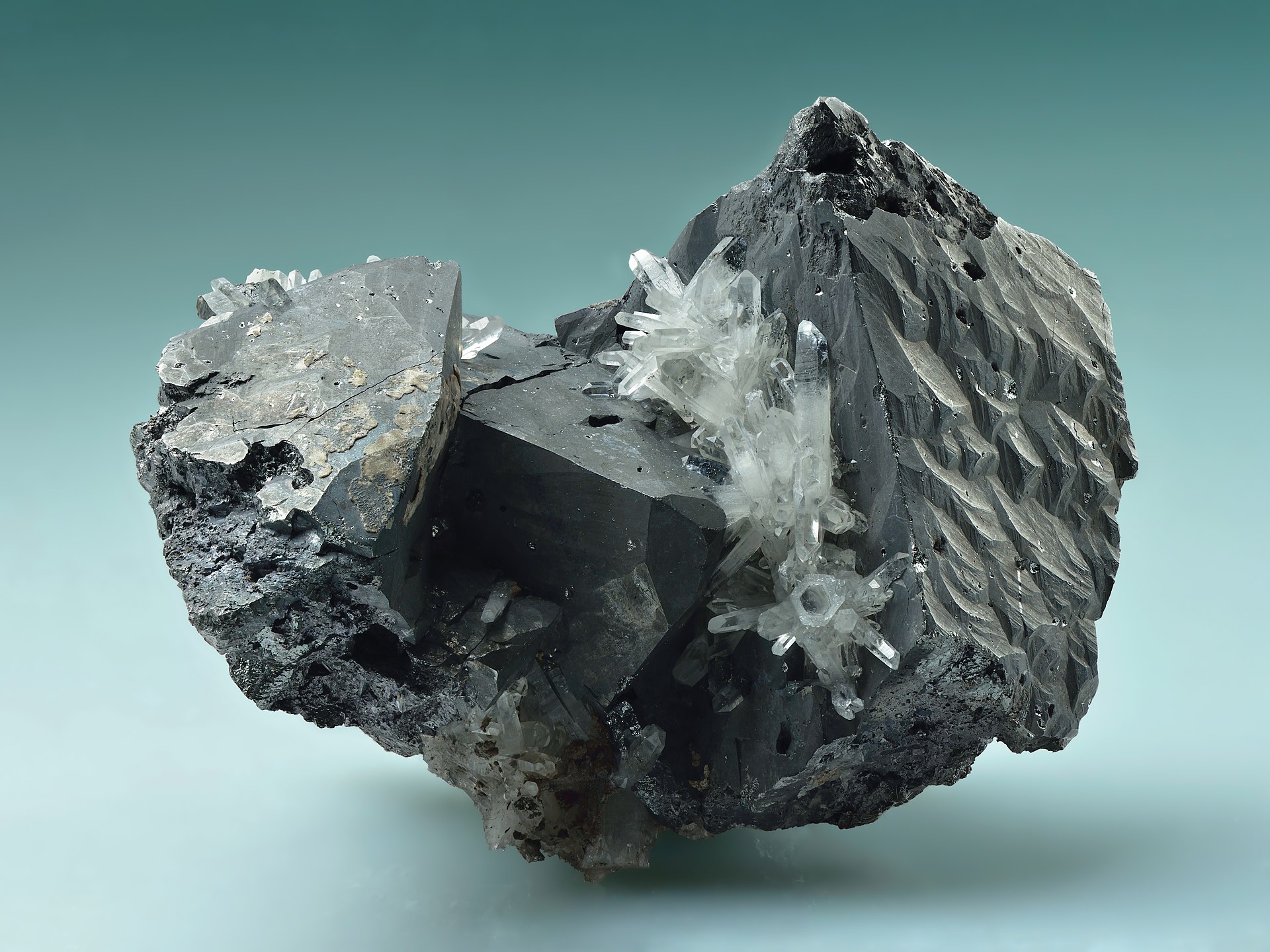
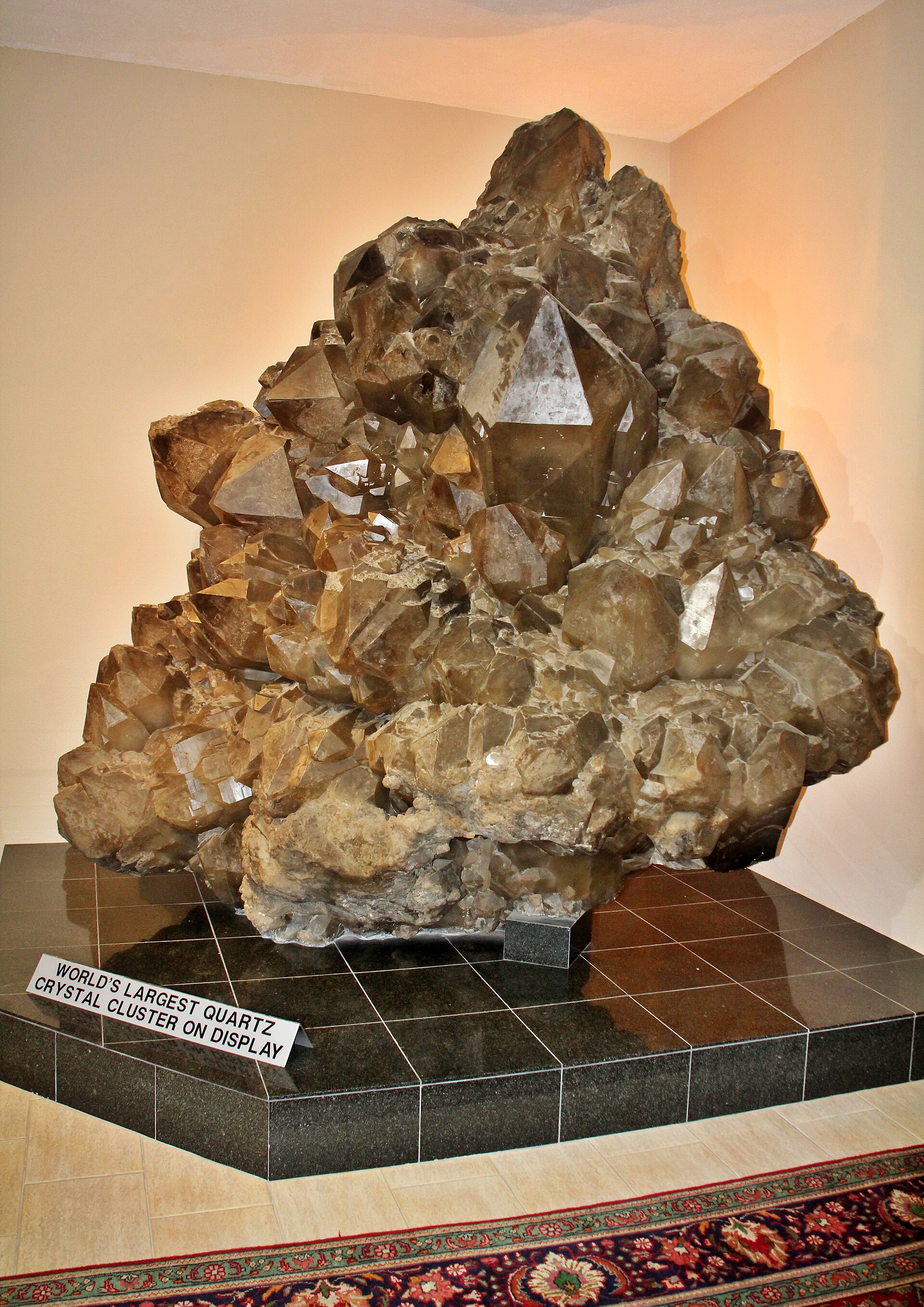
Quartz is silicon dioxide (SiO₂), the second most abundant mineral in Earth's continental crust after feldspar. It forms an extraordinary diversity of crystal varieties — from water-clear rock crystal to purple amethyst, yellow citrine, pink rose quartz, brown smoky quartz, and black morion — all sharing the same chemistry but differing in trace impurities and growth conditions.
Pure macrocrystalline quartz grows as terminated hexagonal prisms with characteristic six-sided pyramids at the tips. The "Herkimer diamond" of New York, the famous "Diamantina" quartz of Minas Gerais, and the great Alpine clusters of the Furka pass are all this same species at its most photogenic.
Formation
Quartz crystallises across an extraordinary range of geological environments — from low-temperature sedimentary cementation to high-pressure metamorphic veins. The most beautiful specimens grow slowly inside hydrothermal vein systems, where silica-saturated water deposits SiO₂ on cavity walls over millions of years. Alpine "cleft quartz" forms in tectonic fissures that opened during mountain building; Brazilian rock crystal grows in quartz veins cutting through Precambrian gneiss; Arkansas quartz fills cracks in the Ouachita mountains.
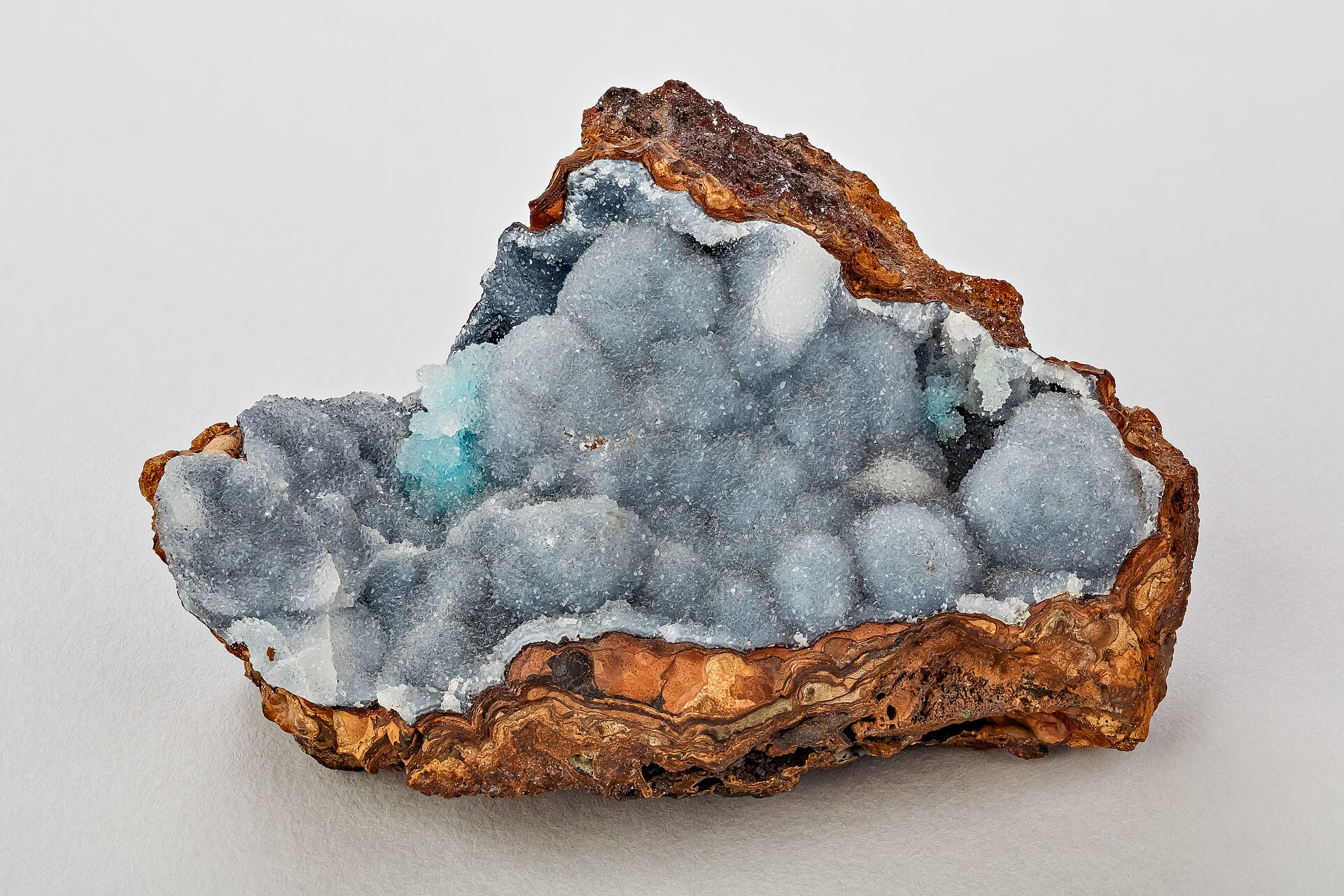
Microcrystalline quartz varieties — chalcedony, agate, jasper, flint — form by precipitation from silica-rich gels at much lower temperatures, often filling vesicles in volcanic rock.
Varieties
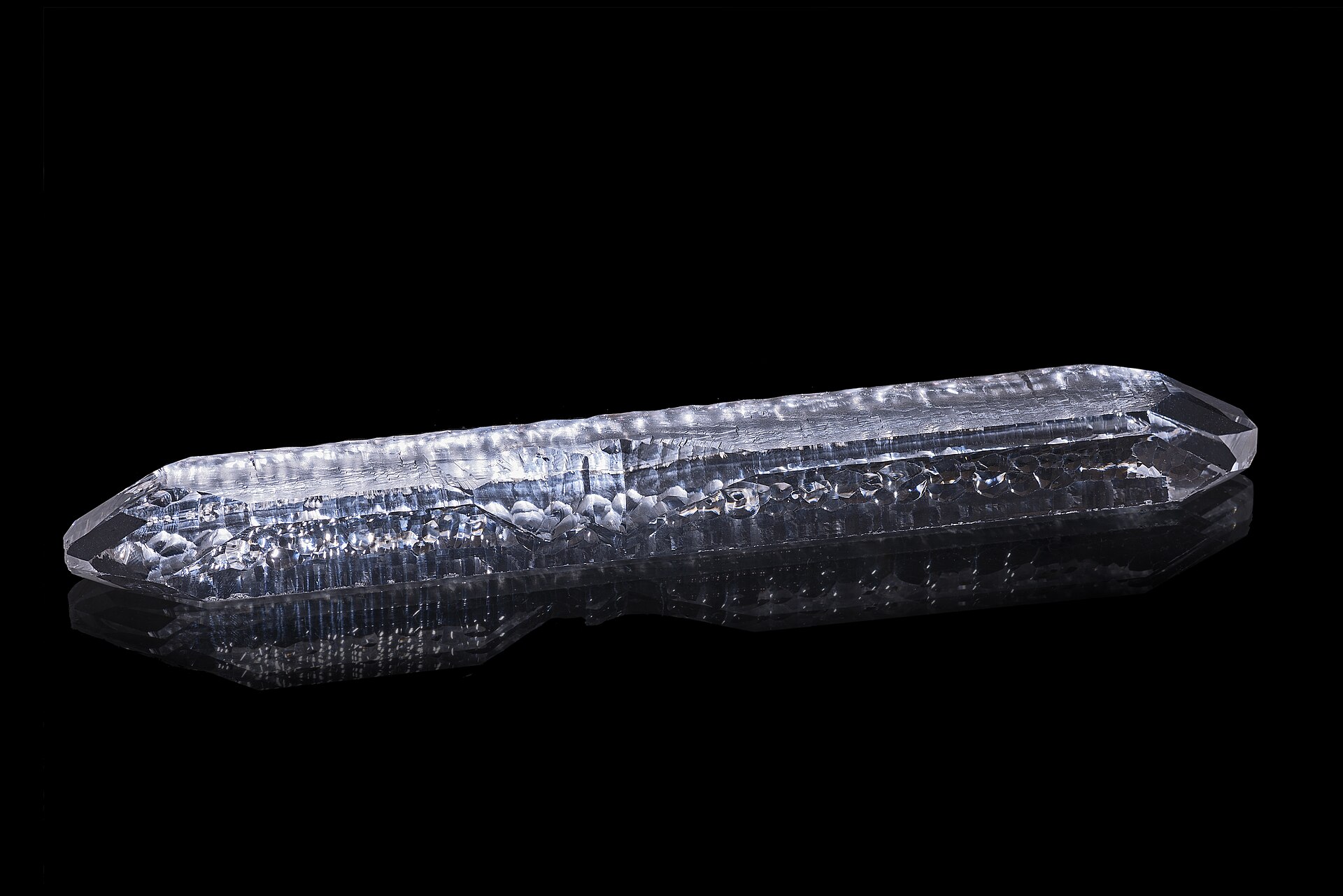
Rock crystal — colourless transparent quartz; the original "crystal" of antiquity.
Amethyst — purple variety, see dedicated page.
Citrine — yellow to brownish-yellow; most commercial stones are heat-treated amethyst.
Smoky quartz — brown to black, coloured by natural radiation and Al impurities.
Rose quartz — pink, usually massive (no good crystals); coloured by titanium or dumortierite inclusions.
Milky quartz — white opaque, the most abundant variety, coloured by microscopic fluid inclusions.
Rutilated quartz — clear quartz with golden needles of rutile (TiO₂) inside.
Tourmalinated quartz — clear quartz with black tourmaline needles.
Phantom quartz — clear quartz with ghostly internal "phantoms" of earlier growth surfaces.
How to identify
Quartz is one of the easiest minerals to identify: hardness 7 (scratches glass), conchoidal fracture, no cleavage, vitreous luster, and the unmistakable terminated hexagonal prism habit when well-formed. Specific gravity 2.65 is also diagnostic.
Common confusions: calcite (soft, hardness 3, effervesces in acid), fluorite (perfect octahedral cleavage, hardness 4), topaz (slightly heavier SG 3.5, perfect basal cleavage), and glass (no cleavage but lower hardness and often shows bubbles).
Meaning & metaphysical properties
Clear quartz is considered the "master crystal" in metaphysical traditions — believed to amplify intent, clear other crystals, and serve as a universal programmable energy tool. It is associated with all chakras and is the most commonly used stone for healing grids, meditation and energy work. Many practitioners begin a collection with a single clear quartz point.
Historically quartz crystals were used by Roman matrons as cooling balls in summer, by medieval shamans for scrying, and by Japanese and Tibetan craftsmen carved into ritual orbs known as *suishō*.
Care & cleaning
Extremely durable and chemically resistant. Clean with warm water and any neutral soap, or use ultrasonic cleaners safely on solid pieces. Quartz is unaffected by sunlight, temperature, household chemicals or normal wear; it is hard enough to scratch most everyday surfaces.
Gallery
Looking to buy a quartz specimen?
Our small curated catalogue of quartz specimens is published on Etsy with worldwide shipping.
Browse Gemsprings on Etsy