Overview
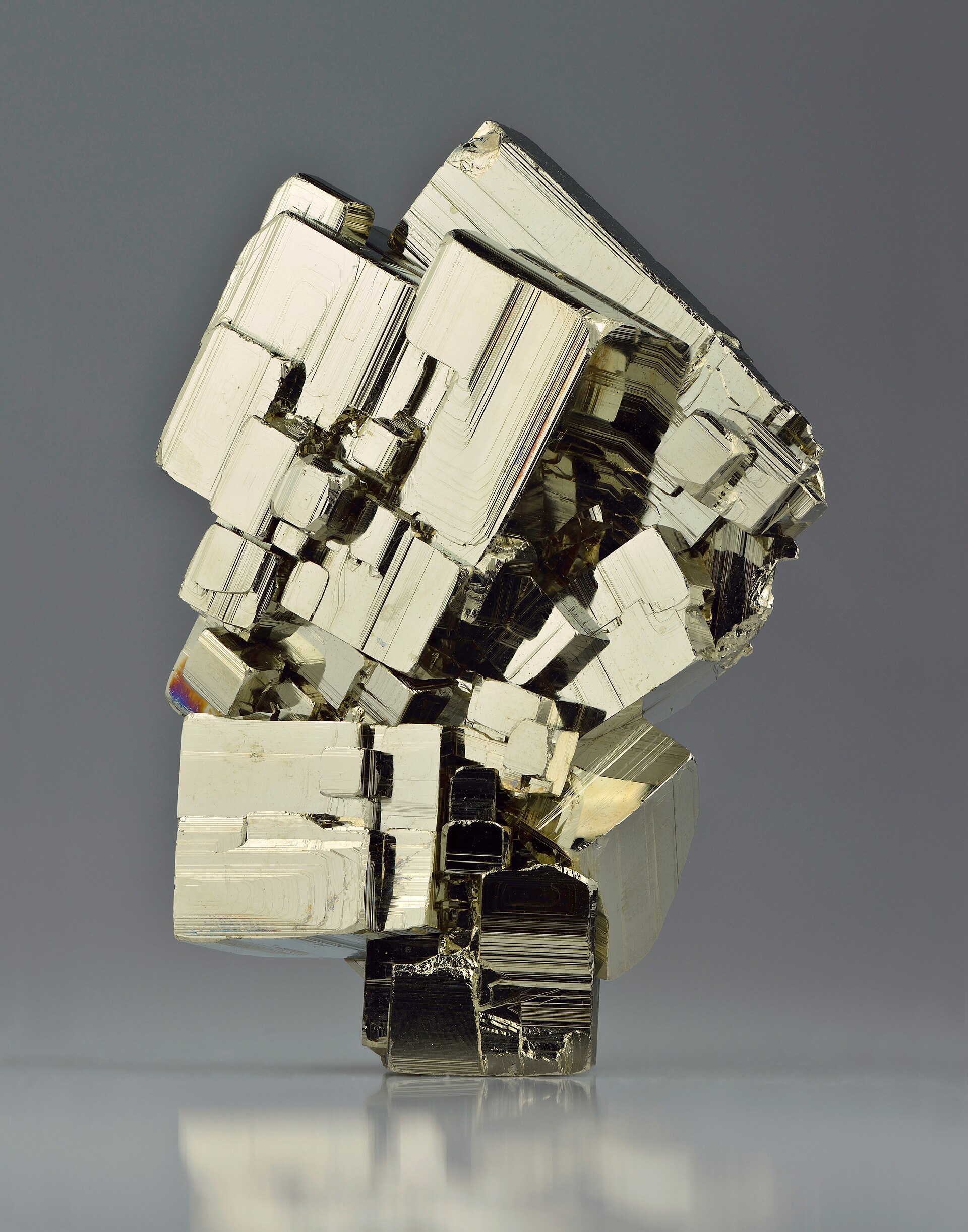
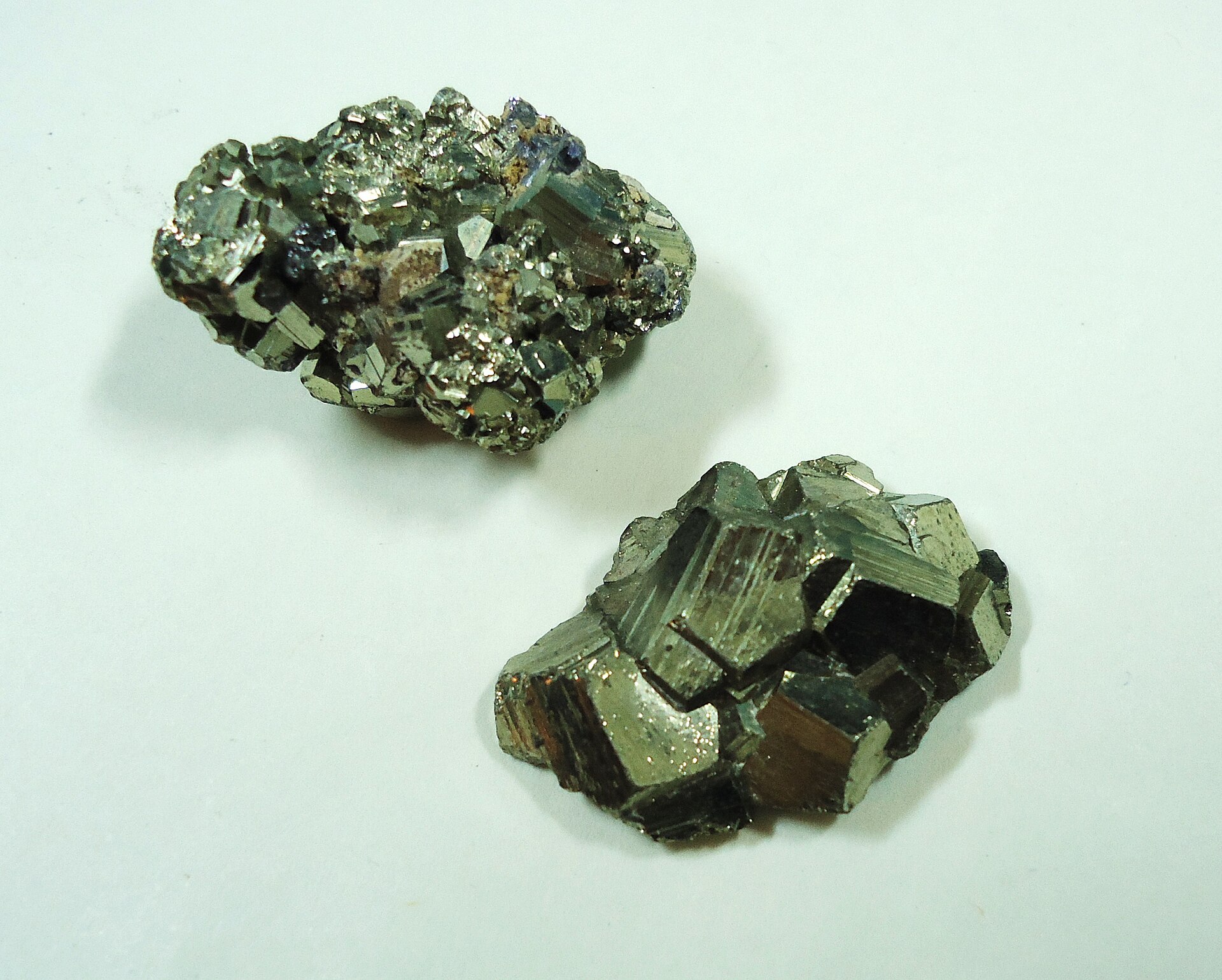
Pyrite is iron disulfide (FeS₂), one of the most widely distributed sulfide minerals on Earth and a striking display specimen thanks to its brass-yellow metallic luster and perfectly geometric crystal habits. It earned its nickname "fool's gold" because gold-rush prospectors regularly mistook its sparkling cubes in stream gravels for the real metal — though pyrite is much harder (6.5 vs gold's 2.5), lighter (SG 5.0 vs 19.3), and produces a greenish-black streak rather than gold's metallic yellow streak.
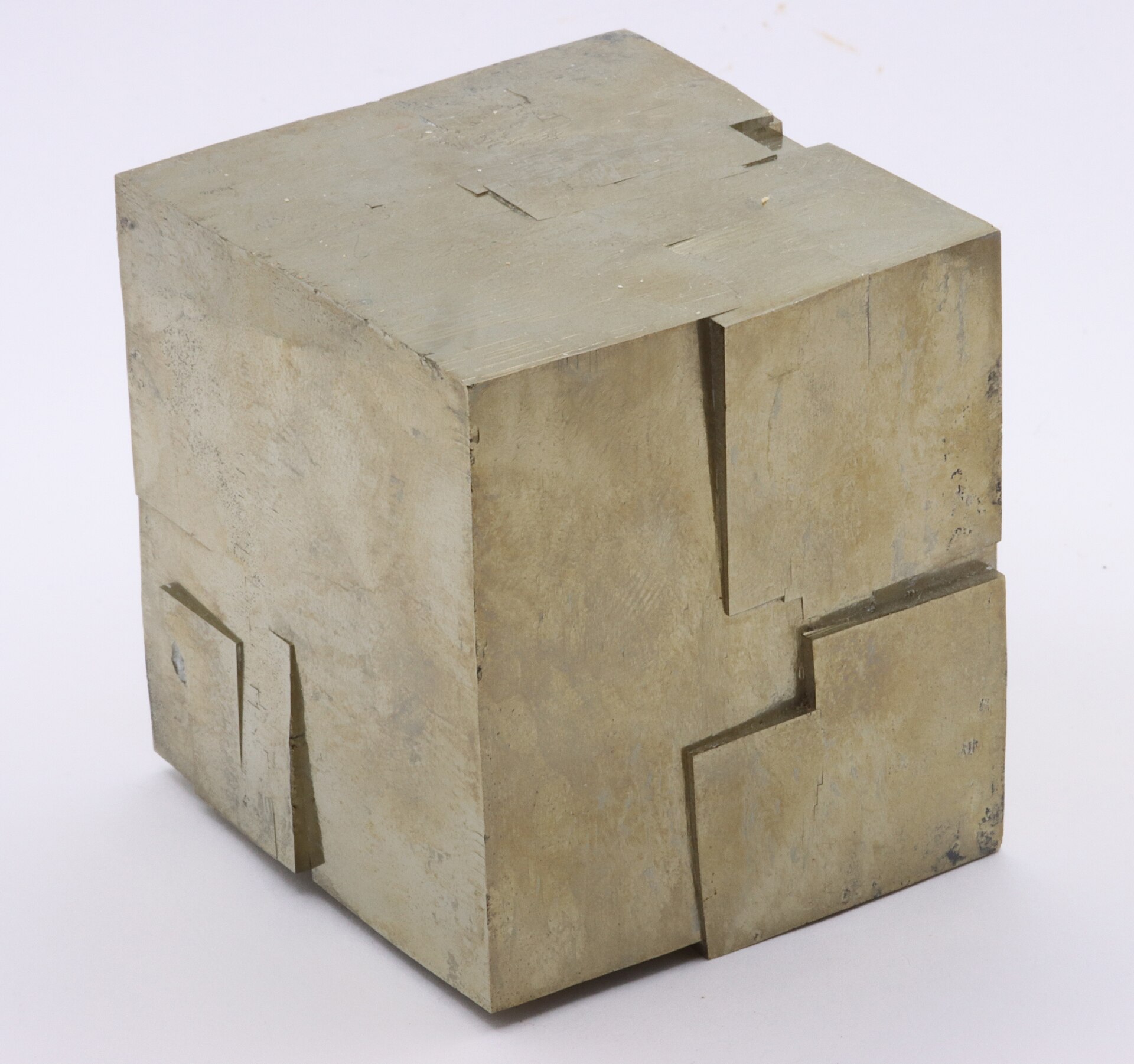
The most spectacular pyrite specimens are the perfectly square cubes of Navajún, La Rioja (Spain), which grow in soft marl and can be extracted as flawless single crystals up to 15 cm on edge — among the most geometrically perfect natural objects of any kind.
Formation
Pyrite forms across an enormous range of geological environments. The world's largest pyrite bodies are massive sedimentary deposits in black shales (Spanish "fool's gold" pyrite belt at Huelva, the Kupferschiefer of central Europe), where it precipitates from anoxic seawater carrying iron and sulfide produced by bacterial reduction.
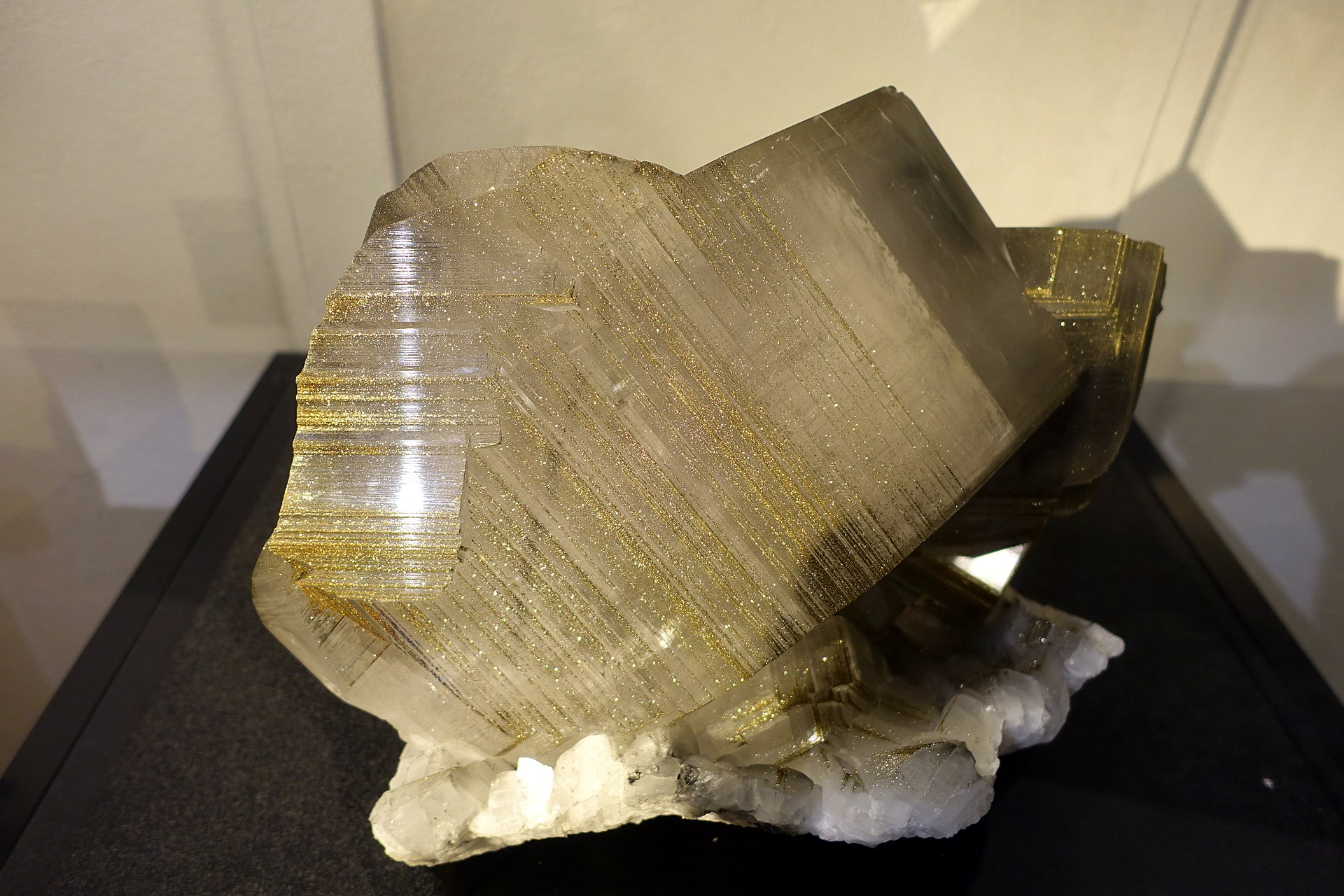
Hydrothermal pyrite — the source of most fine display crystals — forms in mineralised vein systems at temperatures of 100–500 °C, often associated with quartz, calcite and other sulfides (galena, sphalerite, chalcopyrite). The famous Navajún cubes grow in low-temperature sedimentary marl from sulfide-rich pore fluids during diagenesis.
Varieties
Cubic pyrite — perfect six-sided cubes, often with striated faces. From Navajún (Spain), Huanzala (Peru).
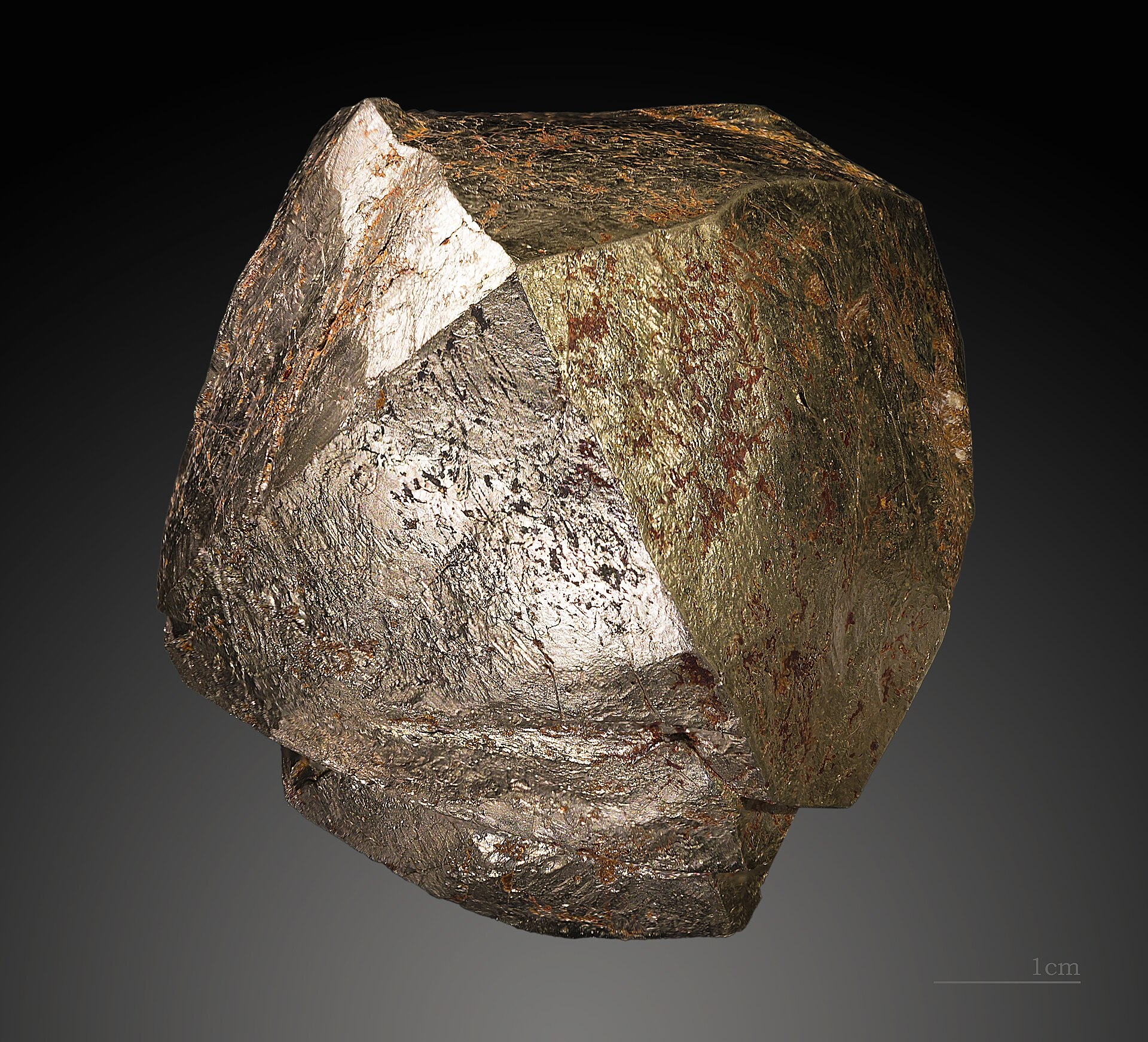
Pyritohedron — twelve-faced crystals with pentagonal faces; common in Peruvian pyrite.
Octahedral pyrite — eight-faced crystals, rarer and prized by collectors.
Pyrite suns / pyrite dollars — flat radial discs formed between layers of coal shale; classic from Sparta, Illinois.
Iron pyrite spheres — rounded concretionary pyrite found in shales.
Bravoite — nickel-rich pyrite variety with copper-coloured zones.
How to identify
Pyrite is identified by:
- Metallic brass-yellow colour — paler than gold or chalcopyrite.
- Hardness 6–6.5 — scratches glass; cannot be scratched by a knife.
- Cubic crystal habit with striations parallel to cube edges (a key field test).
- Greenish-black to brownish-black streak — gold's streak is gold-yellow, chalcopyrite's is greenish-black but more brittle.
- Specific gravity 5.0 — heavier than most non-metals but much lighter than gold.
Common confusions: gold (much softer, gold streak, denser), chalcopyrite (more brassy with iridescent tarnish, hardness 3.5, softer), marcasite (same chemistry FeS₂ but orthorhombic crystal system; often tarnishes and crumbles).
Meaning & metaphysical properties
Pyrite is considered a masculine, action-oriented "stone of will" in modern metaphysical traditions — associated with the solar plexus chakra and believed to attract abundance, confidence, leadership and protection. It is often paired with citrine for "abundance grids" and placed on desks to encourage productivity. Like citrine, it is said to require no cleansing.
The Incas polished large flat slabs of pyrite as mirrors used both for adornment and for scrying. Roman soldiers carried pyrite amulets for courage in battle.
Care & cleaning
Pyrite is chemically reactive: it slowly oxidises in humid air, especially if poorly crystallised or finely divided ("pyrite decay" or "pyrite disease"). Store display specimens in a dry environment, away from acids and humid bathrooms. Clean dry with a soft brush only — water can accelerate oxidation, particularly on pyrite-bearing matrix specimens. Avoid wearing pyrite jewellery in the shower or while swimming.
Gallery
Looking to buy a pyrite specimen?
Our small curated catalogue of pyrite specimens is published on Etsy with worldwide shipping.
Browse Gemsprings on Etsy