Overview
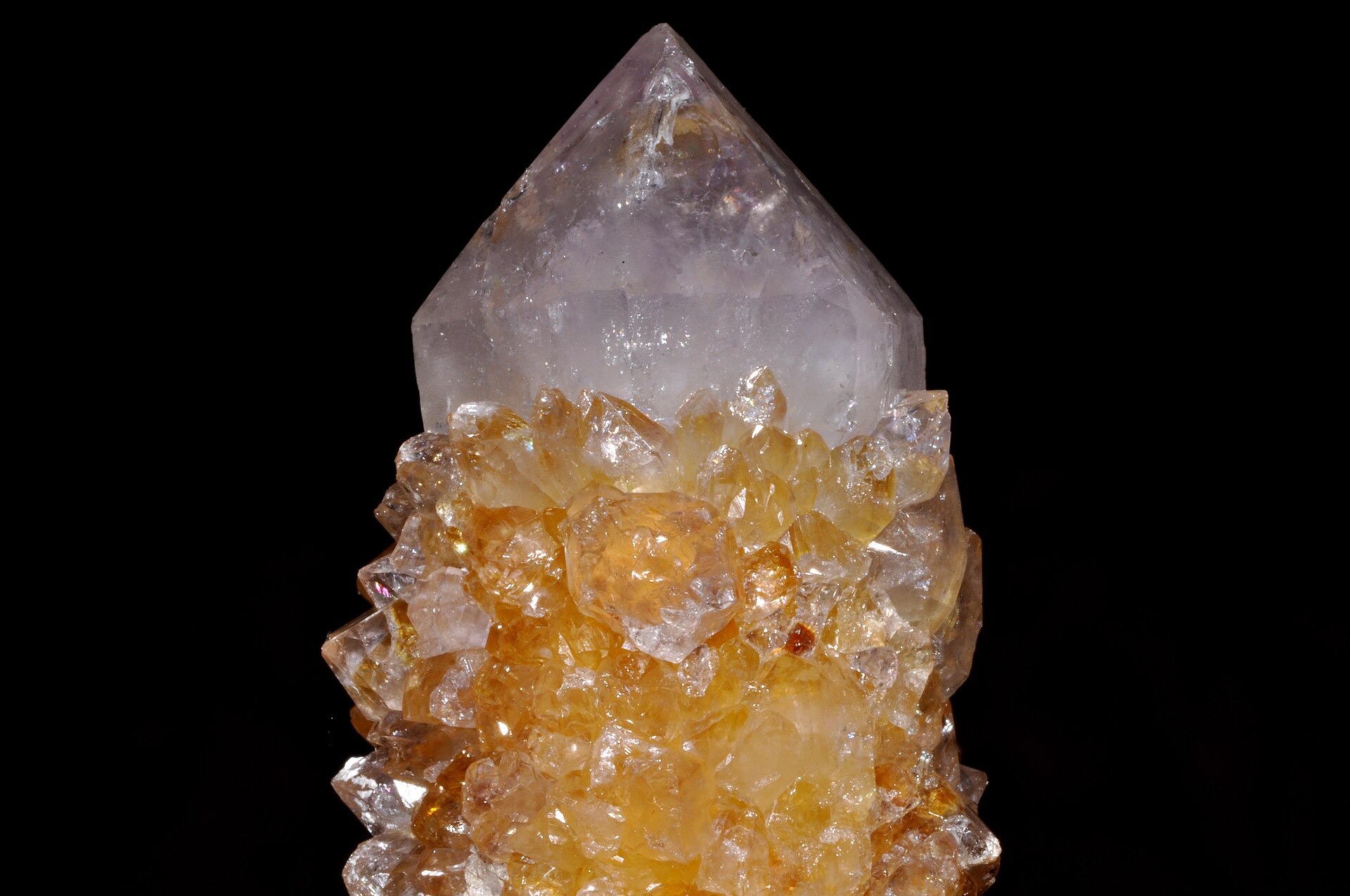
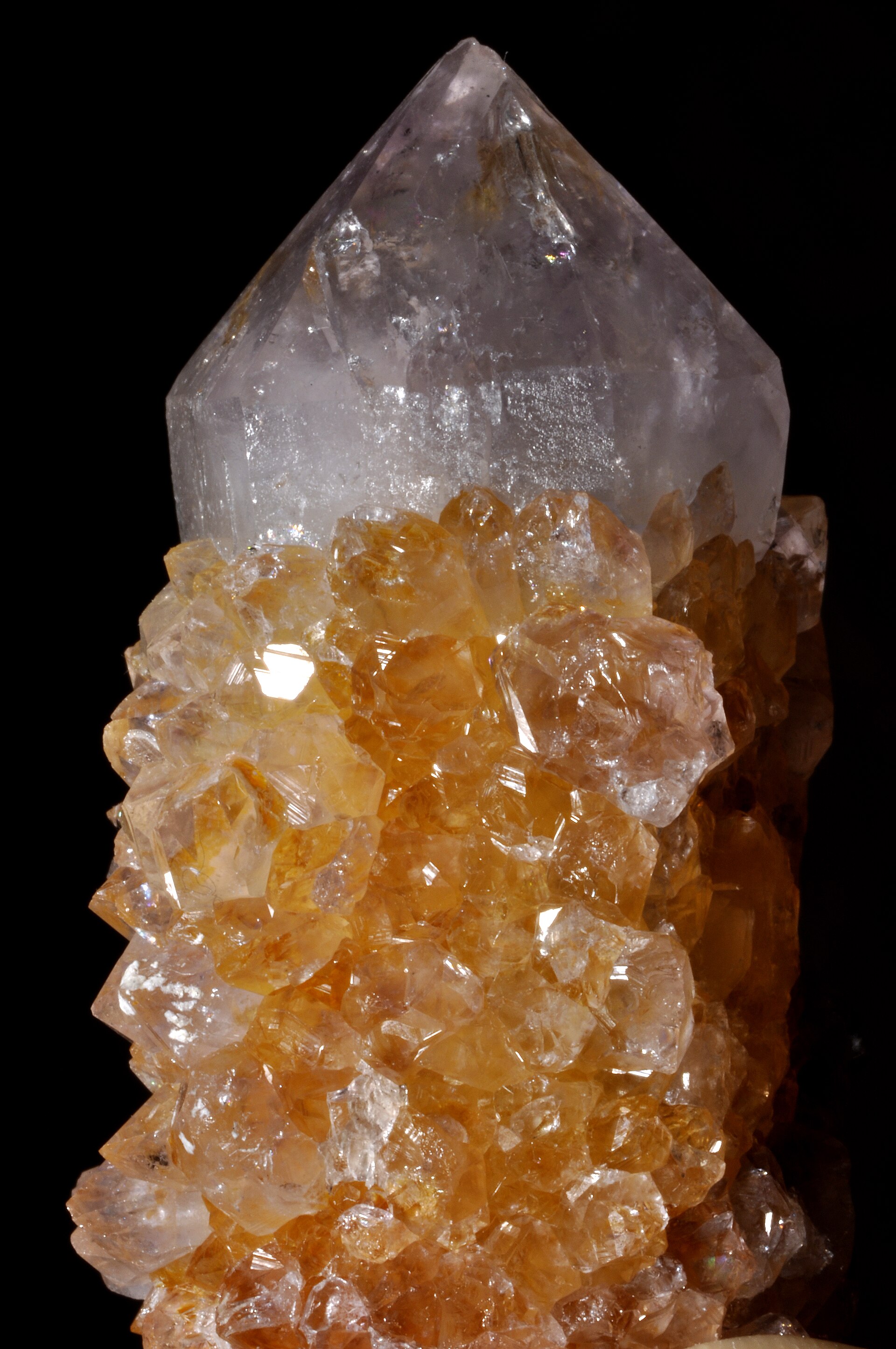
Citrine is the yellow to golden brown variety of quartz — the rarest naturally-occurring quartz colour. Pure natural citrine forms in only a handful of deposits worldwide; the great majority of commercial "citrine" on the market is in fact heat-treated amethyst, in which the original violet colour has been converted to yellow by heating to 470–560 °C.
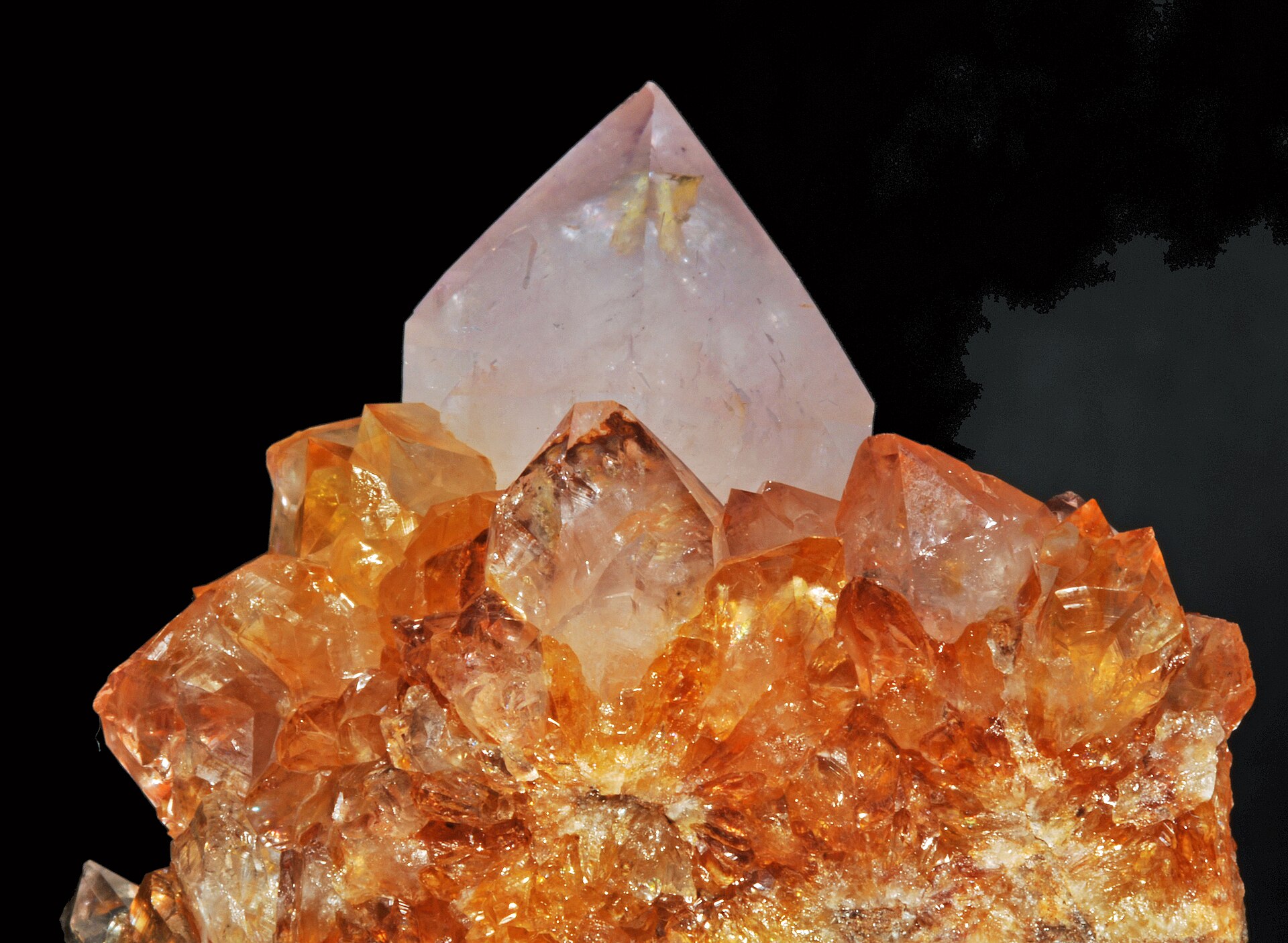
True natural citrine has a paler, lemon-yellow tone and characteristic colour zoning visible in oriented sections; heat-treated material is typically more saturated golden-brown to red-orange and shows tabular colour distribution. Both are chemically identical SiO₂ and behave the same as gemstones, but natural specimens are significantly more valuable to collectors.
Formation
Natural citrine forms in pegmatites and hydrothermal vein systems containing aluminium and trace iron impurities. The yellow colour is produced by Al³⁺ substituting for Si⁴⁺ in the lattice, charge-compensated by a hole defect produced by natural gamma irradiation from surrounding rocks.
Heat-treated citrine results from heating amethyst above ~470 °C: the iron-based purple colour centre is destroyed and the iron oxidises to Fe³⁺ in a different lattice position, producing the yellow to red-orange tones. The Anahí mine in Bolivia is the only commercial source of natural untreated bicolour ametrine (amethyst + citrine).
Varieties
Madeira citrine — deep red-brown to orange, named for Madeira wine. Almost always heat-treated.
Lemon citrine — pale yellow, often natural.
Palmeira citrine — bright orange-yellow, named after a Brazilian locality.
Rio Grande citrine — saturated golden brown, heat-treated amethyst.
Smoky citrine — yellow-brown with smoky undertone.
Ametrine — natural bicolour amethyst-citrine from the Anahí mine, Bolivia.
How to identify
Citrine has the same physical properties as all quartz (hardness 7, SG 2.65, RI 1.544–1.553). Telling natural from heat-treated:
- Natural citrine: paler lemon-yellow, even colour distribution, occasionally cloudy.
- Heat-treated amethyst: usually deeper orange-brown, may show reddish "burn" at terminations, often perfectly clear.
- A geologist's tip: natural citrine clusters retain the original amethyst-like prism habit but with yellow colour; heat-treated material from geodes shows tabular crystals that point inward.
Confused with: topaz (harder 8, perfect basal cleavage, higher SG 3.5), yellow beryl ("heliodor", harder 7.5–8), and dyed yellow glass (lower hardness, internal bubbles).
Meaning & metaphysical properties
Citrine is the foremost "abundance stone" in modern metaphysical practice — associated with the solar plexus chakra and believed to attract wealth, success and entrepreneurial energy. It is sometimes called the "merchant's stone" and traditionally placed in cash registers, purses and offices. Unlike most healing crystals, citrine is said to "never need cleansing" because it transmutes rather than absorbs negative energy.
Citrine has been worn since Hellenistic times — Greek and Roman jewellery of the 1st century BCE features cabochon citrine in gold settings.
Care & cleaning
Citrine colour fades with strong sunlight, especially in heat-treated stones. Display away from direct sun. Hardness 7 makes it suitable for daily wear in rings; clean with warm soapy water. Avoid ultrasonic for heavily included or fracture-filled pieces.
Gallery
Looking to buy a citrine specimen?
Our small curated catalogue of citrine specimens is published on Etsy with worldwide shipping.
Browse Gemsprings on Etsy