Overview
Spinel is a magnesium aluminium oxide that crystallises in the cubic system, producing perfectly octahedral crystals in a wide range of colours. For most of recorded history spinel was confused with ruby — most of the world's famous "rubies" in royal regalia (including the 170-ct Black Prince's Ruby in the British Imperial State Crown, the Timur Ruby, the Sun of India) are actually red spinels. Mineralogy distinguished the two species only in 1783.
Modern gemmology has reclaimed spinel as a fine gem in its own right — it is now added to the August birthstone roster alongside peridot and sardonyx. Top red spinel from Mogok, Burma rivals fine ruby in beauty (without ruby's typical inclusions) and is significantly more affordable per carat. The discovery of vibrant pink-red Mahenge spinel in Tanzania in 2007 sparked renewed market interest.
Spinel is also unique among major gems for being almost never treated — what you see is what nature made.
Formation
Spinel forms in metamorphic environments where alumina-rich rocks (bauxites, clays) and magnesium-rich rocks (peridotites, dolomitic limestones) meet at high temperature and pressure. The classic deposits are:
- Marble-hosted spinel (Mogok Burma, Kuh-i-Lal Tajikistan) — formed by contact metamorphism of dolomitic limestone by granitic intrusions, producing the famous "Burma red" colour from chromium impurities.
- Skarn deposits (Mahenge Tanzania) — calcium-silicate contact zones producing pink-red spinel.
- Placer (alluvial) deposits (Sri Lanka, Vietnam) — eroded from primary marble deposits and concentrated in stream gravels.
Spinel often occurs with ruby and sapphire in the same marble matrix — historically miners did not distinguish them, leading to the centuries-long ruby/spinel confusion.
Varieties
Red spinel ("Balas Ruby") — the historically famous variety; Burma Mogok produces the top colour.
Pink spinel — abundant from Burma, Tanzania, Sri Lanka.
Mahenge spinel — vivid pink-red from Tanzania (discovered 2007), often called "Mahenge electric pink".
Cobalt blue spinel — saturated electric blue from Vietnam Luc Yen and Tanzania, very rare.
Lavender/violet spinel — Sri Lanka.
Black spinel — common, used in mourning jewellery.
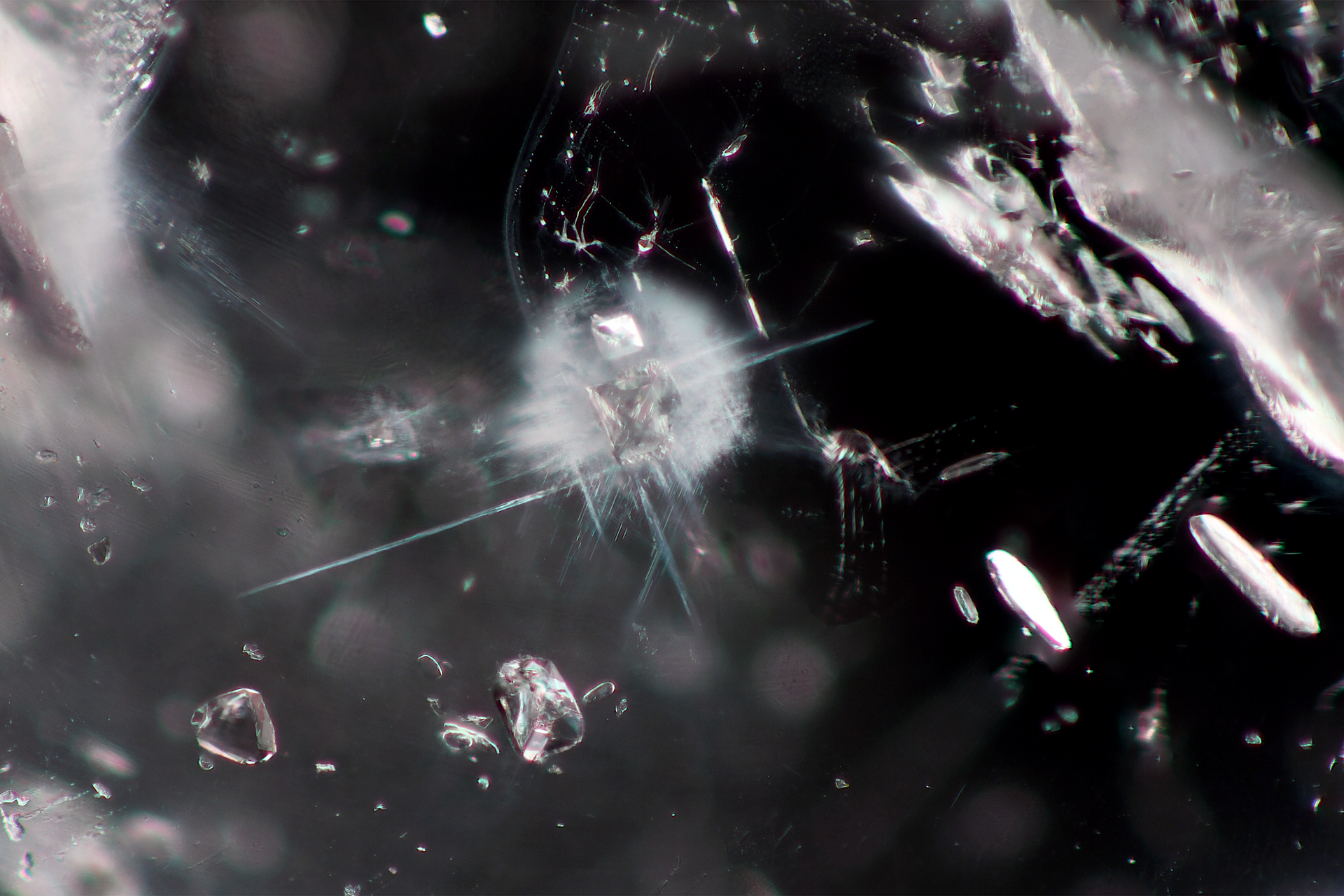
Star spinel — rare four- or six-rayed asterism from inclusions.
Synthetic spinel — manufactured since 1908; used in birthstone jewellery as inexpensive substitute for many gems.
How to identify
Spinel identification:
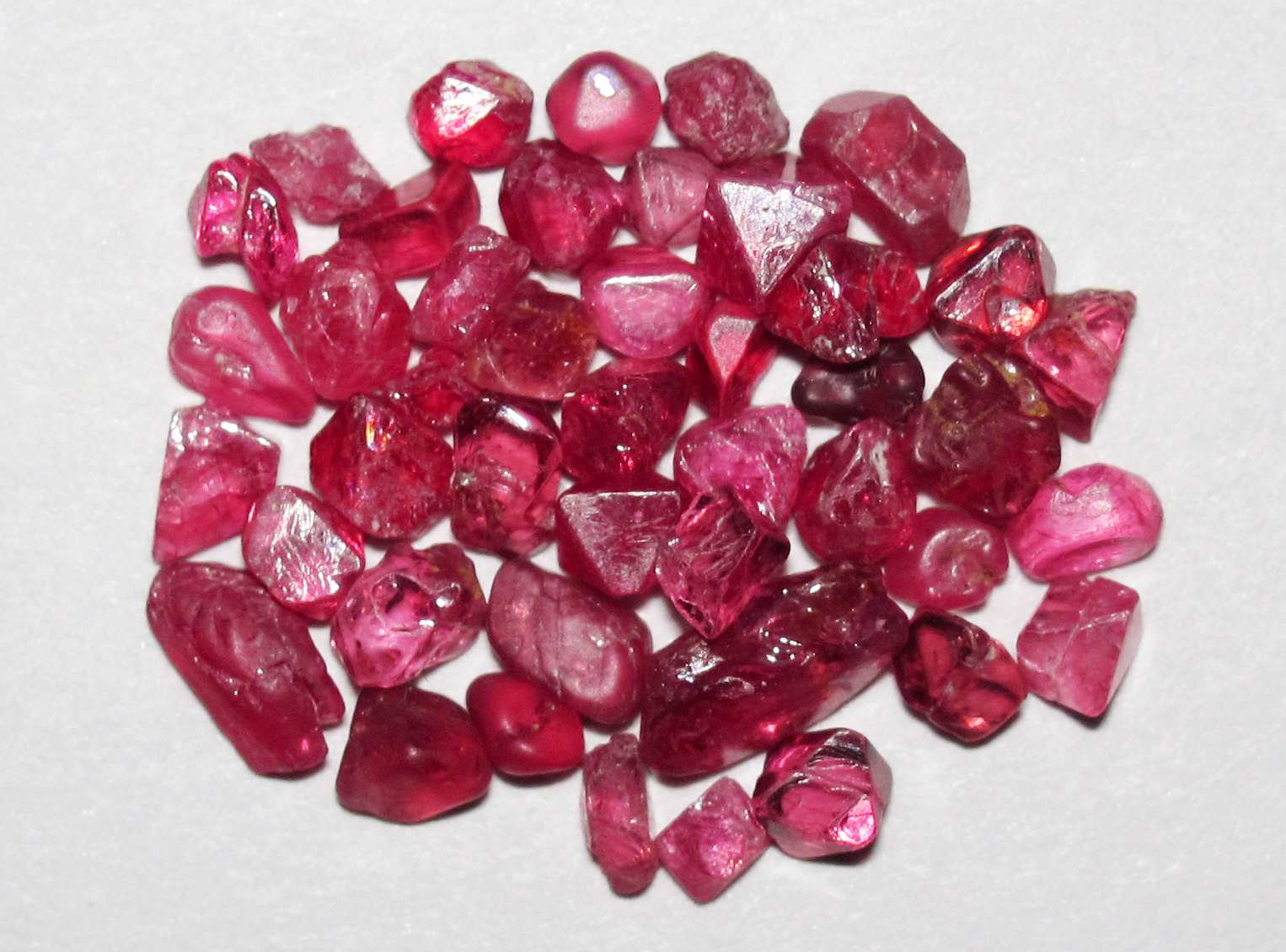
- Cubic crystal habit — perfect octahedra; diagnostic for natural specimens.
- Singly refractive — no birefringence (distinguishing from ruby which is doubly refractive).
- Hardness 8 — scratches quartz and topaz; cannot be scratched by sapphire.
- Specific gravity 3.5–4.1 depending on composition.
- No cleavage — fractures conchoidally.
- Red and pink varieties show no pleochroism (unlike ruby which is dichroic).
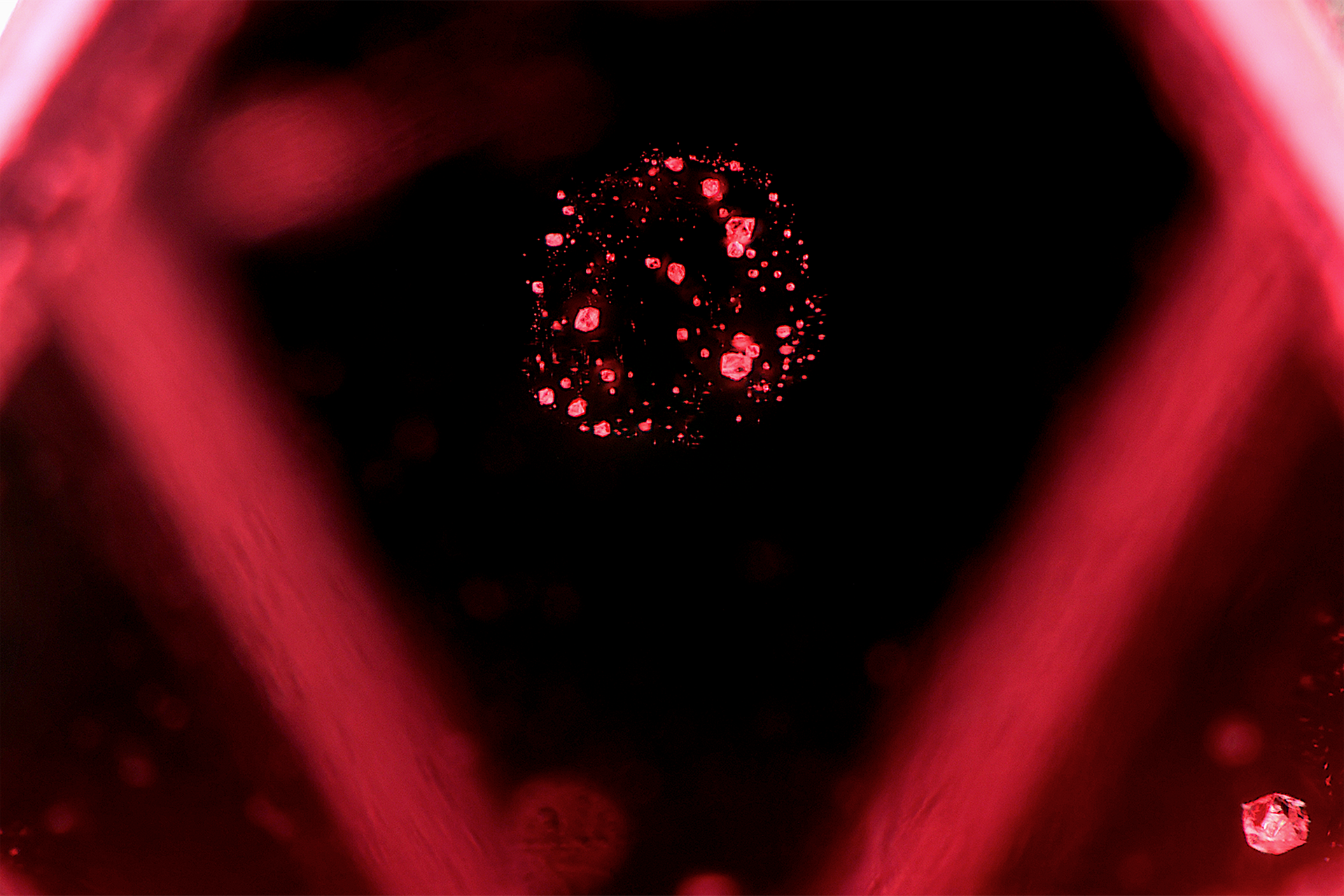
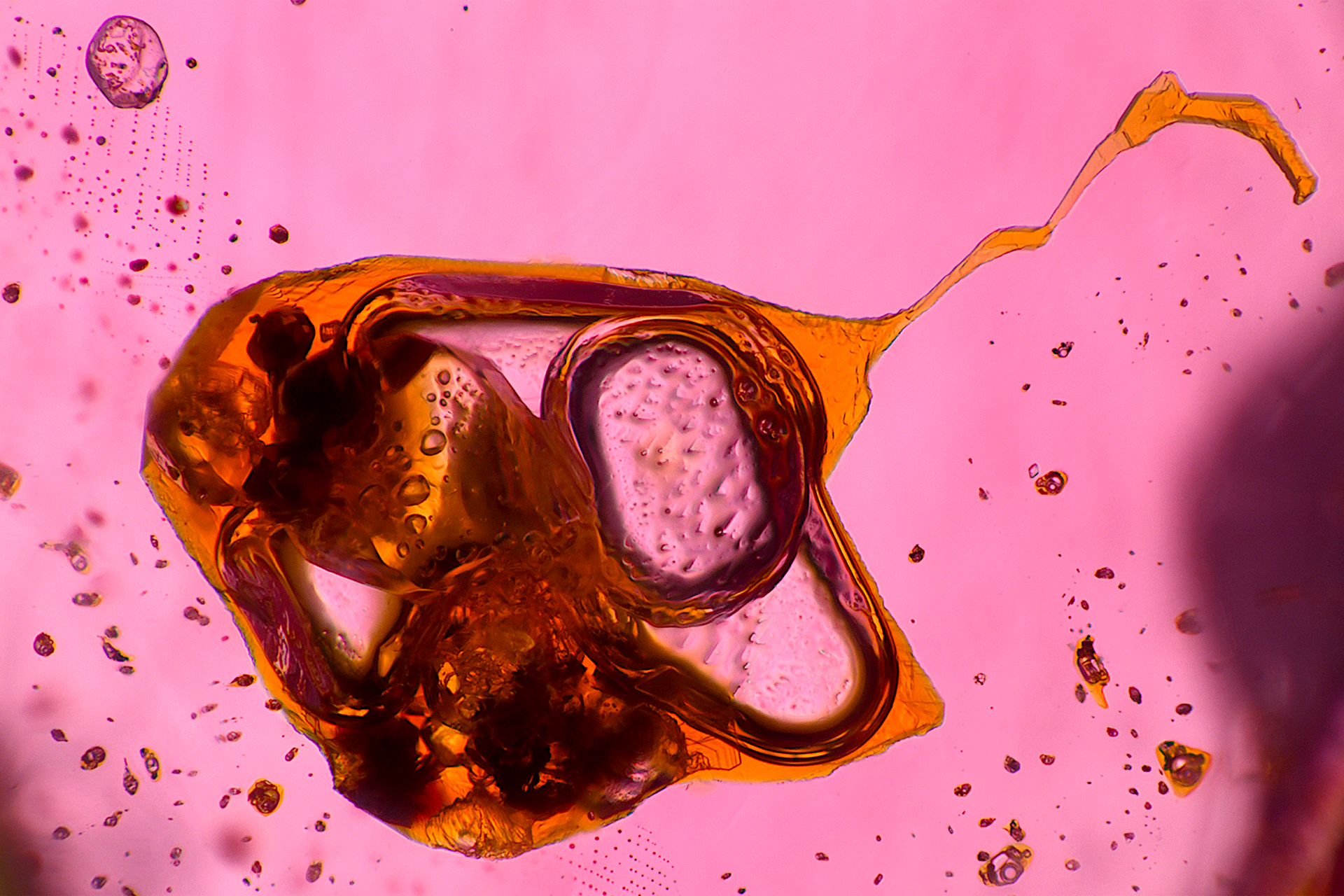
- Inclusions: often octahedral negative crystals (cavities shaped as miniature octahedra) — diagnostic of natural spinel.
Common confusions: ruby (doubly refractive, pleochroic, different inclusion patterns); garnet (different hardness and SG, different RI); red beryl (much rarer, hexagonal habit).
Always request a GIA, GRS or SSEF certificate for spinel over 1 ct to confirm natural vs synthetic and identify origin (Burma commands premium).
Meaning & metaphysical properties
Spinel is considered a stone of renewal, hope and revitalisation in modern metaphysical traditions — associated with various chakras depending on colour (red = root, pink = heart, blue = throat, etc.). Because of its long misidentification as ruby it shares much metaphysical lore with that stone, particularly the courage and protection associations.
Historically Spinel adorned royal regalia worldwide: the 170-ct Black Prince's Ruby (actually a spinel) was set in the British crown after Edward the Black Prince received it from Spanish king Pedro the Cruel in 1367; the 361-ct Timur Ruby (also spinel) bears the engraved names of every Mughal emperor who owned it.
Care & cleaning
Spinel is durable and easy to care for:
- Hardness 8 + no cleavage + no treatment = excellent for daily-wear jewellery.
- Clean with warm soapy water and soft brush.
- Ultrasonic and steam cleaners are safe.
- Stable in sunlight and resistant to chemicals.
- Store separately from softer stones to avoid scratching them.
Spinel is one of the most user-friendly gemstones — second only to diamond, sapphire and ruby for durability.
Gallery
Looking to buy a spinel specimen?
Our small curated catalogue of spinel specimens is published on Etsy with worldwide shipping.
Browse Gemsprings on Etsy