Overview
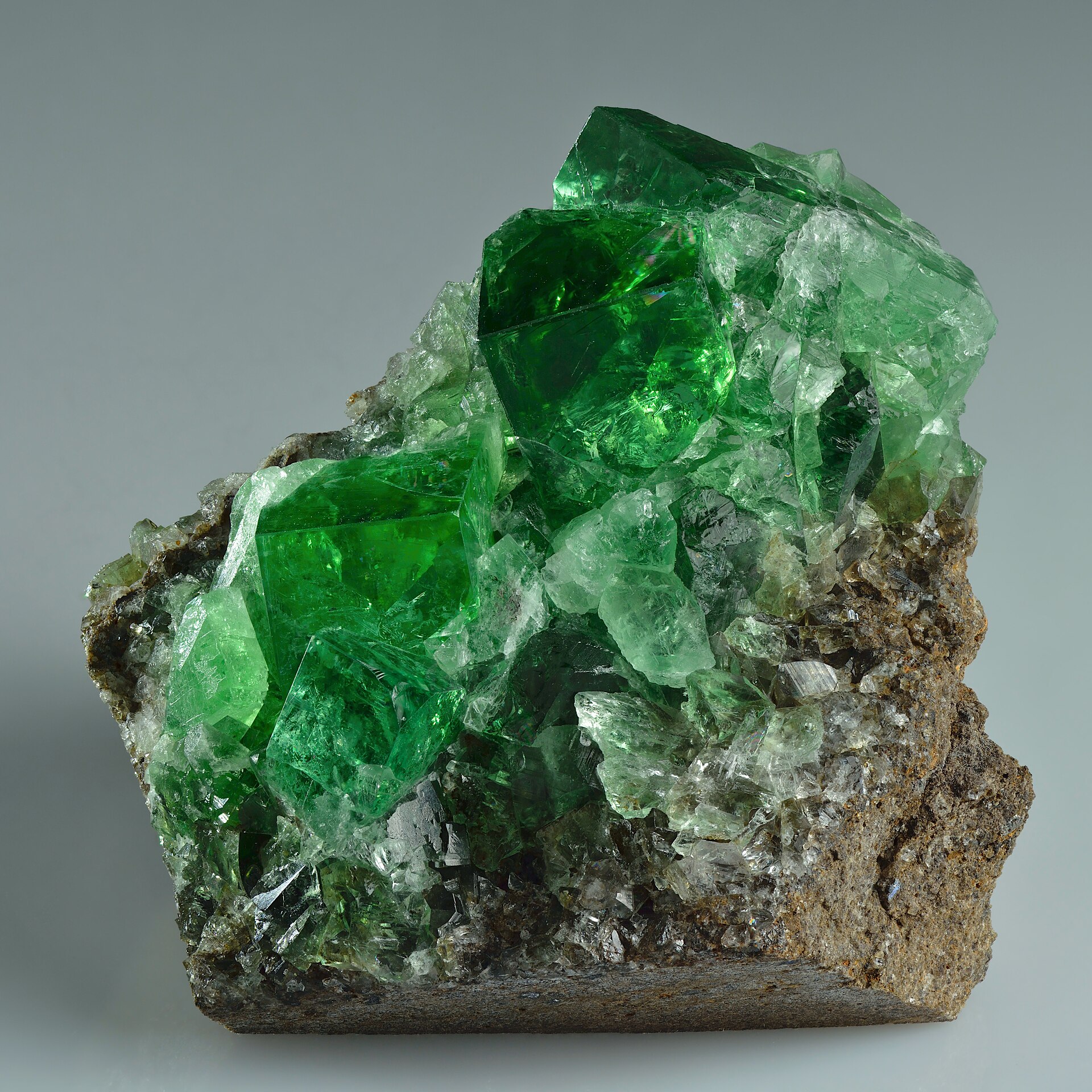
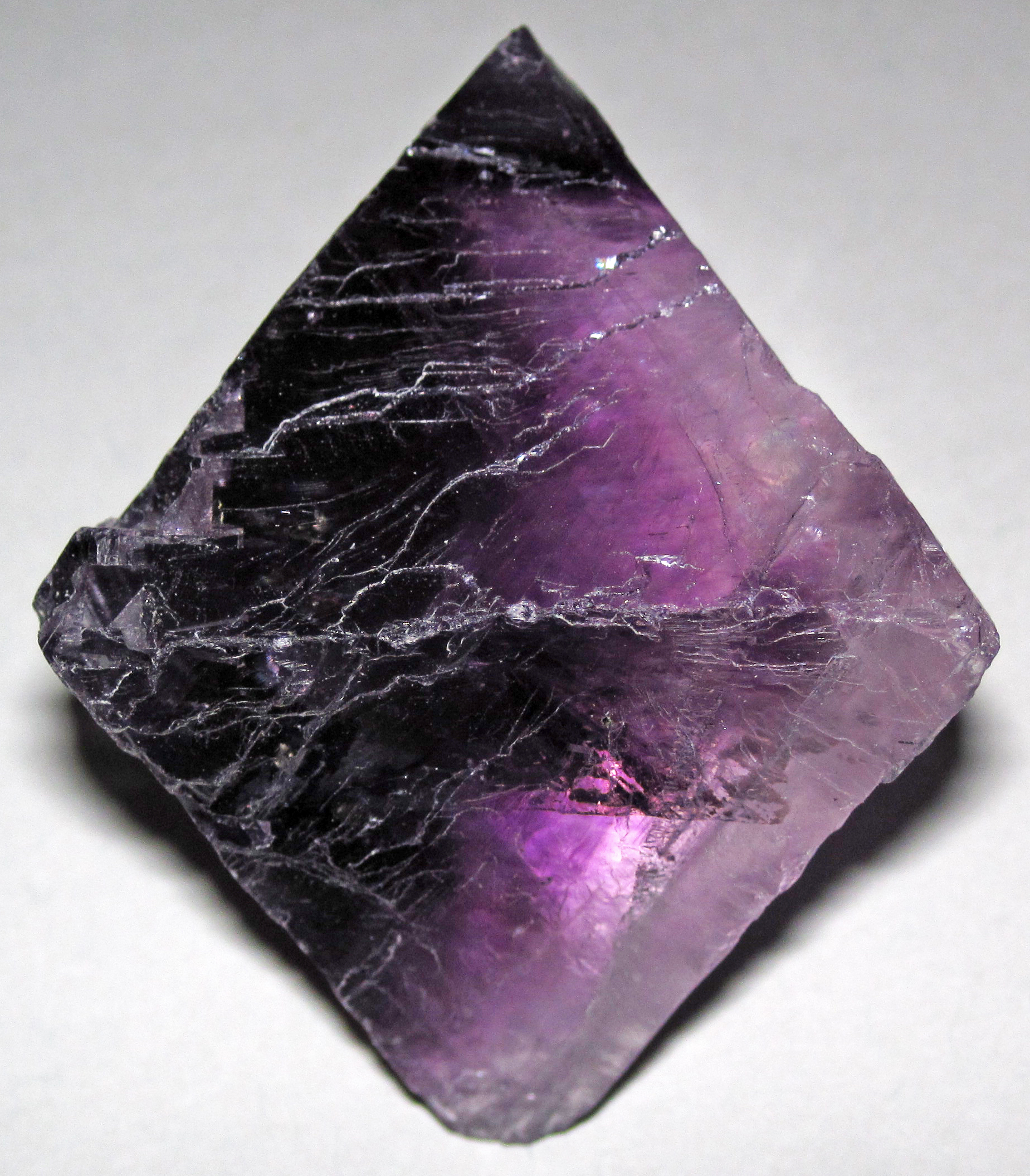
Fluorite is calcium fluoride (CaF₂), the type mineral for which the property of fluorescence was named in 1852. It crystallises in beautifully geometric cubes and octahedra and occurs in virtually every colour of the spectrum — colourless, green, purple, blue, yellow, pink, even pitch black ("antozonite") — sometimes with multiple zones in a single crystal.
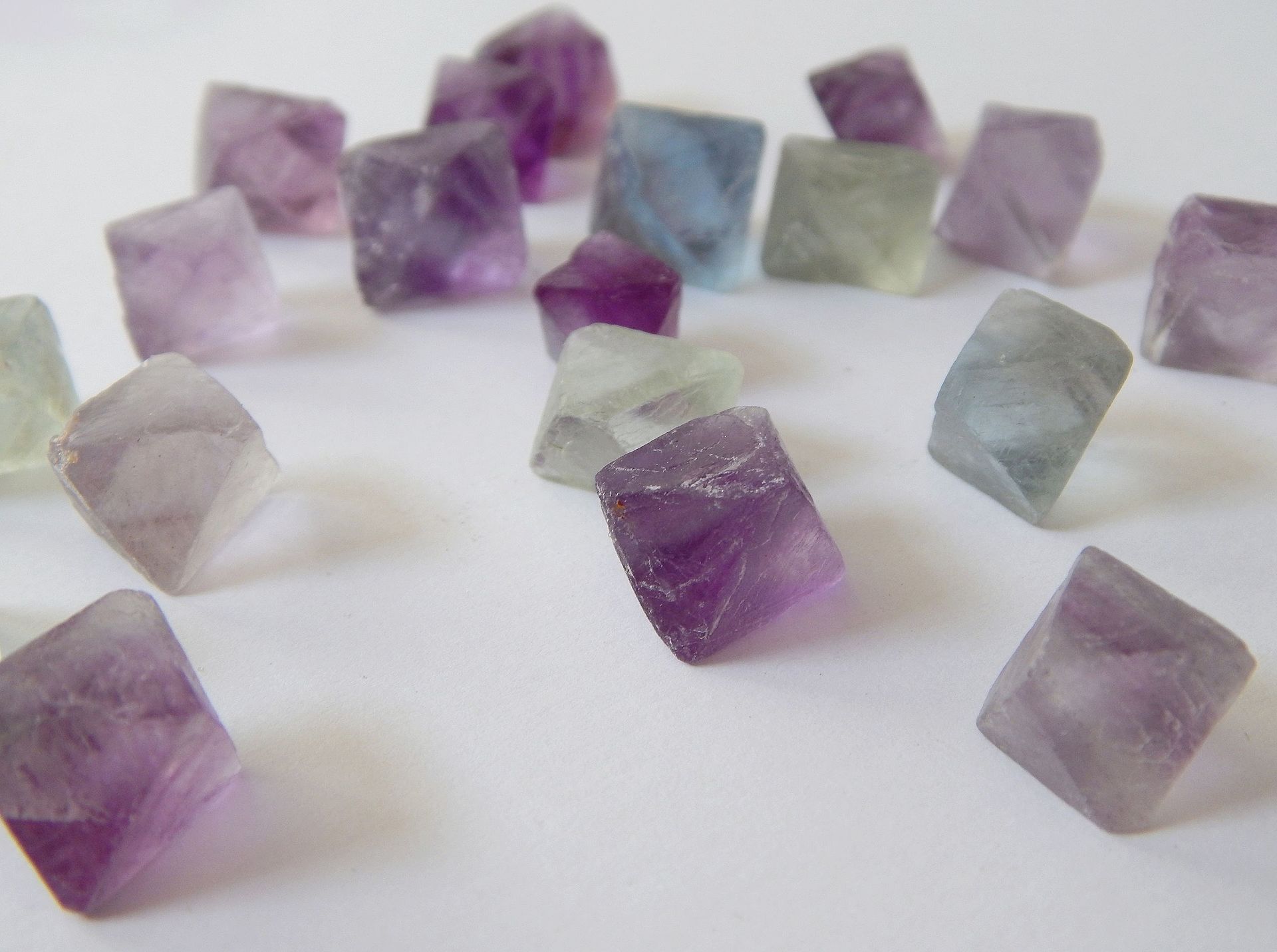
Fluorite defines hardness 4 on the Mohs scale and shows perfect cleavage on the four octahedral planes, making it possible to cleave even rough cubes into perfect octahedra. This optical and structural symmetry, combined with its often-rainbow colouring, makes fluorite one of the most popular collector minerals worldwide.
Formation
Fluorite forms in hydrothermal vein systems associated with granite and limestone, typically at low to medium temperatures (50–300 °C). It is one of the last minerals to crystallise from cooling hydrothermal fluids and frequently lines vug walls atop quartz, calcite, galena and sphalerite.
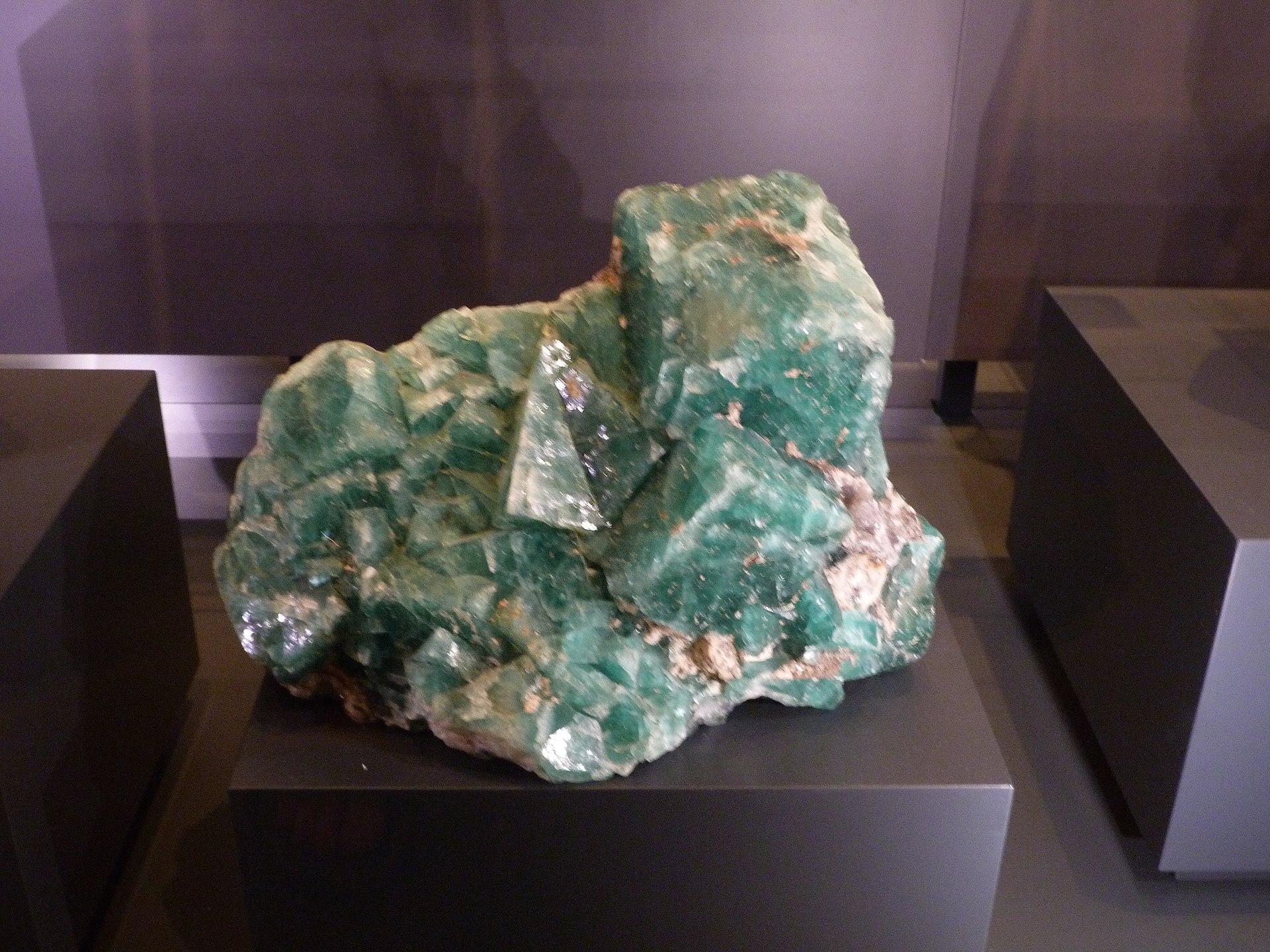
The English Northern Pennine ore field produced the iconic blue-purple "Blue John" fluorite — the only commercial deposit of banded purple-yellow ornamental fluorite. Chinese fluorite deposits at Yaogangxian (Hunan) produce vivid green and purple cubes; American fluorite from Cave-in-Rock, Illinois yields honey-yellow and purple-zoned crystals; Swiss Alpine fluorite produces pink octahedral "alpine pink" specimens.
Varieties
Blue John — purple-yellow banded ornamental fluorite from Castleton, England; carved since Roman times.
Rainbow fluorite — banded green-purple-yellow material from China.
Antozonite (stink fluorite) — black to dark purple fluorite that releases ozone-like odour when crushed.
Yttrofluorite — yttrium-rich variety, often green and slightly fluorescent.
Chlorophane — green to colourless variety that fluoresces strongly green when heated.
Optical fluorite — colourless single crystals used to make scientific lens elements (Naica, Mexico).
How to identify
Fluorite is identified by:
- Perfect octahedral cleavage — cube fragments cleave smoothly into octahedra.
- Hardness 4 — scratched by a steel knife but scratches calcite.
- Specific gravity 3.18 — slightly heavier than quartz.
- Often fluorescent under UV light (blue, purple, or green glow).
- Wide colour range — sometimes multiple colours in single crystal.
Common confusions: quartz (much harder at 7, no cleavage), calcite (effervesces in acid, rhombohedral cleavage, softer), glass (no cleavage, no fluorescence, lower SG).
Meaning & metaphysical properties
Fluorite is the "stone of mental clarity" in modern metaphysical traditions — associated with the third-eye chakra and used to improve focus, organise scattered thinking, and support study and creative work. The different colour varieties carry slightly different associations: green for emotional balance, purple for intuition, blue for clarity of speech, yellow for confidence and intellect.
Fluorite has been used since prehistoric times: Egyptians carved scarabs from green fluorite; Romans drank from purple-and-white "myrrhine" fluorite cups (the famous *vasa murrina*); medieval European miners called it "ore flower" because of its colourful crystals around metallic ores.
Care & cleaning
Fragile: hardness 4 and perfect cleavage make fluorite vulnerable to chipping if knocked. Avoid ultrasonic cleaners (vibrations cleave the crystal). Clean only with soft cloth and lukewarm soapy water. Avoid prolonged sunlight — some fluorite colours fade, particularly the rare pink Alpine variety.
Reserve fluorite for occasional-wear jewellery in protected settings. Carved spheres and obelisks should be displayed where they cannot be knocked.
Gallery
Looking to buy a fluorite specimen?
Our small curated catalogue of fluorite specimens is published on Etsy with worldwide shipping.
Browse Gemsprings on Etsy