Overview
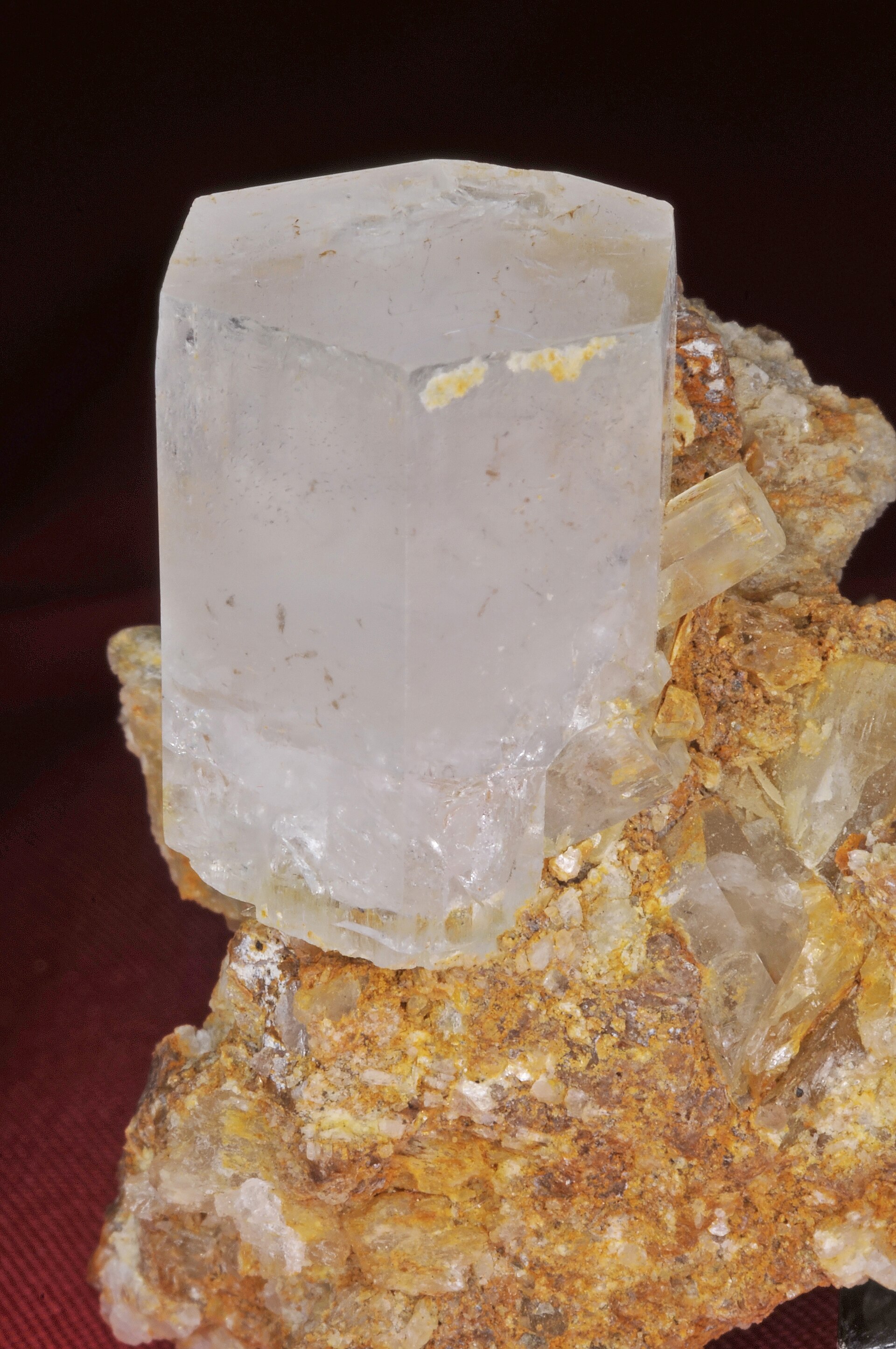
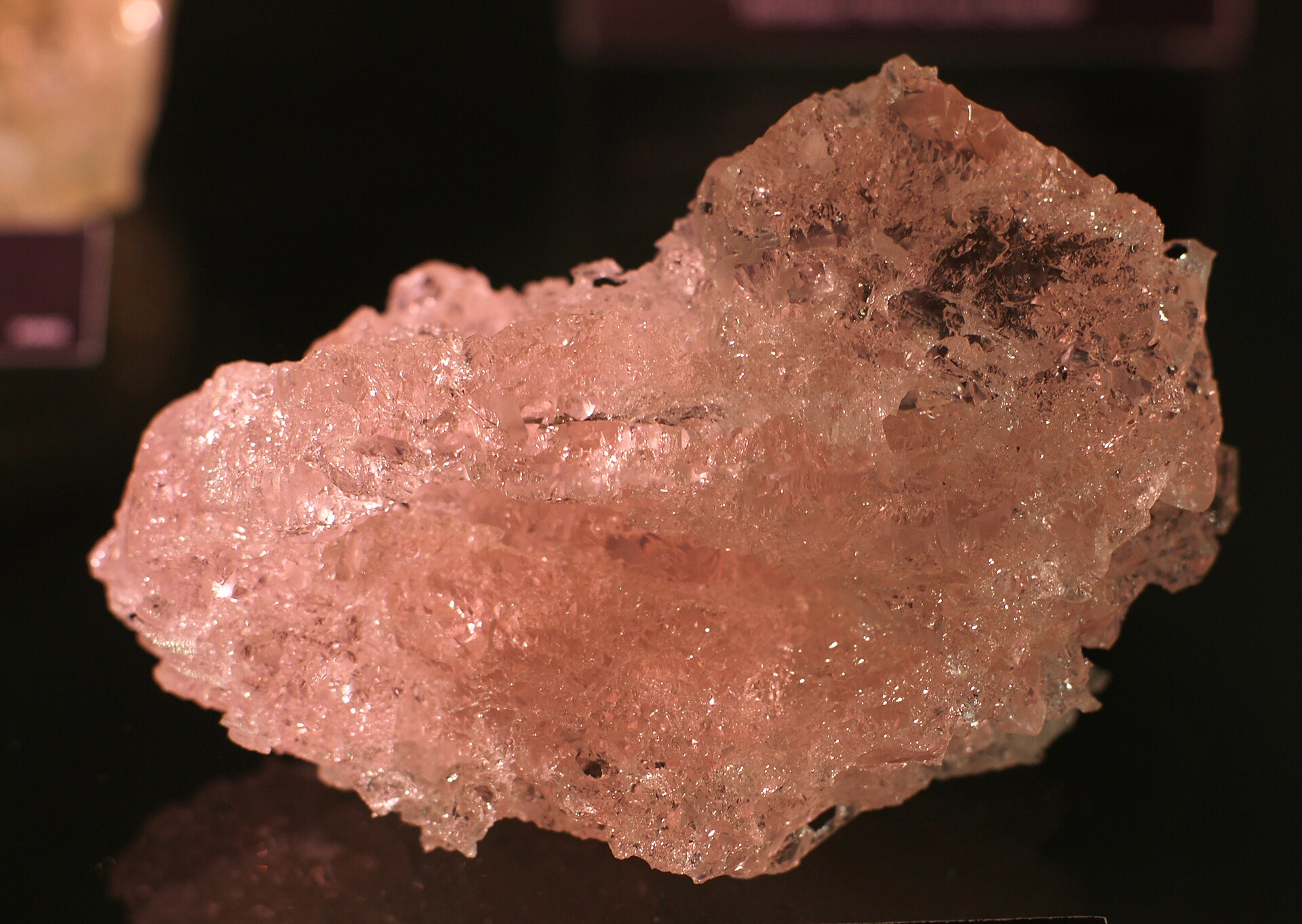
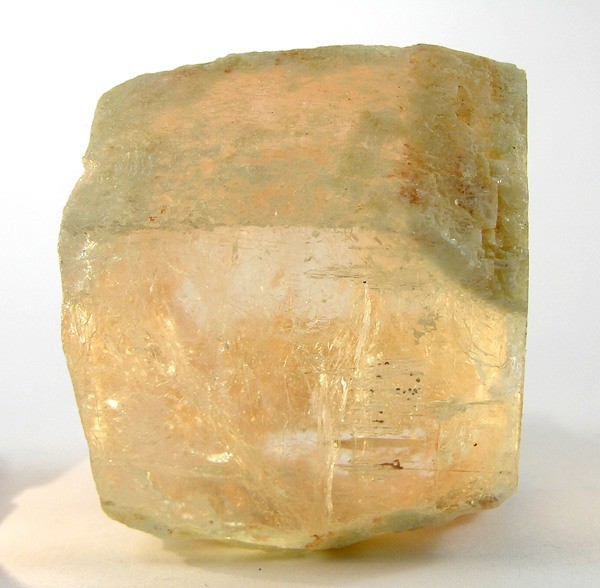
Morganite is the pink to peach gem variety of beryl, coloured by trace manganese. It is the same chemical species as emerald, aquamarine, and heliodor (Be₃Al₂Si₆O₁₈) but distinguished by its delicate warm tones ranging from pale pink to salmon, peach, and violet-pink.
The gem was first identified in 1911 by George Frederick Kunz (the same gemmologist who named kunzite) and named after his patron J.P. Morgan, the financier and noted gem collector. Morgan's spectacular morganite collection — including some of the largest crystals ever found — is now part of the American Museum of Natural History.
Most natural morganite has a slightly yellowish-pink "salmon" tone; heat treatment at ~400°C removes the yellow component and produces the popular pure pink tone seen in commercial jewellery. Heat treatment is permanent and undetectable — assume any morganite is heated unless explicitly stated.
Formation
Morganite forms in granitic pegmatites — the same gem pockets that produce aquamarine. The manganese chromophore is concentrated in late-stage cesium-rich pegmatite fluids; many morganite crystals also contain measurable cesium and are sometimes called "cesian beryl".
The Brazilian Minas Gerais pegmatites produce the largest commercial morganite production, including the famous "Rose of Maine" — a 50 lb morganite crystal extracted from the Bennett Quarry in 1989. Pakistan's pegmatite belt (Mardan, Kohistan) and Afghanistan's Nuristan deposits produce excellent gem-quality crystals often with fine pink saturation.
Varieties
Pink morganite — the standard commercial form, heat-treated to pure pink.
Salmon morganite — natural untreated pink-peach colour; favoured by purists.
Bicolour beryl — morganite-aquamarine bicolour crystals from some Brazilian and Pakistani pegmatites.
Cat's eye morganite — rare chatoyant variety.
Pezzottaite — discovered 2002 in Madagascar; pink-red caesium beryl (formerly thought to be morganite but reclassified as a separate species).
How to identify
Morganite identification:
- Hardness 7.5–8 — same as all beryl varieties.
- Specific gravity 2.71–2.91 — distinguishable from heavier pink stones like kunzite (3.17) or pink topaz (3.5).
- Refractive index 1.572–1.592 — birefringence 0.005-0.009.
- Weak pleochroism: pale pink to deeper pink (much weaker than kunzite).
- Often shows tubular inclusions parallel to c-axis (like aquamarine).
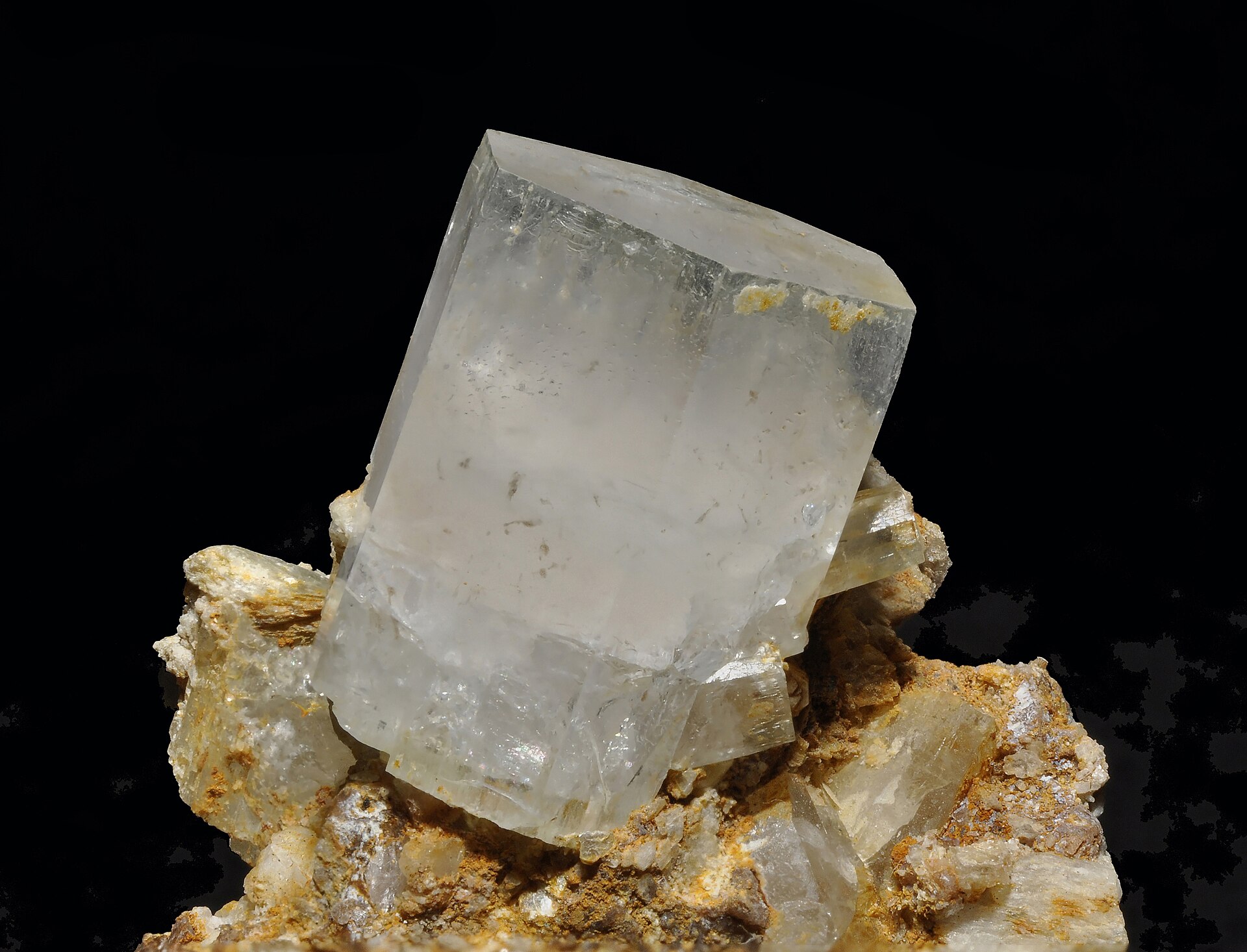
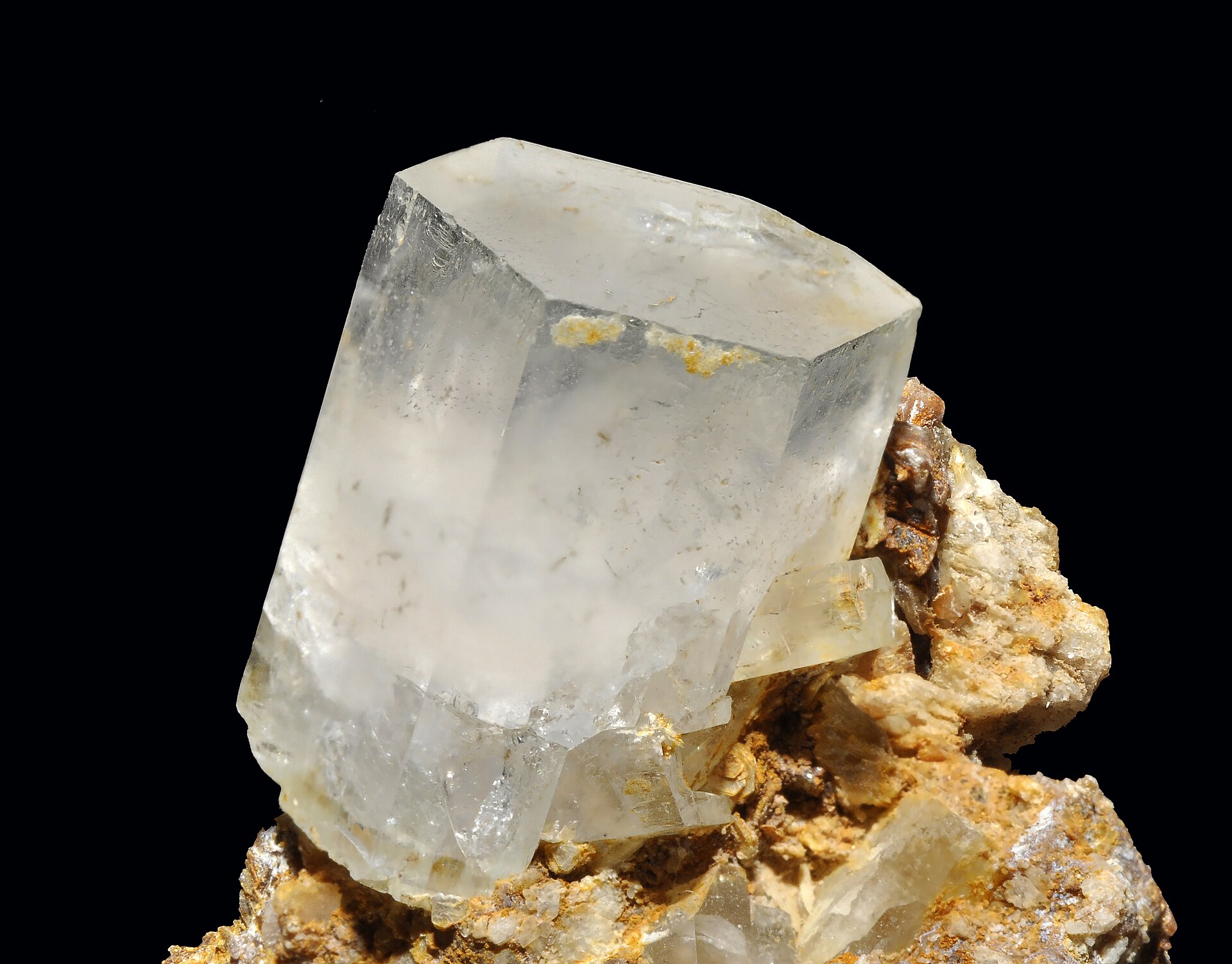
- Hexagonal prism habit when crystallised.
Common confusions: kunzite (different RI, much stronger pleochroism, perfect cleavage, lower hardness 7); pink tourmaline (different RI, stronger pleochroism, distinct trigonal habit); pink topaz (heavier SG 3.5, perfect basal cleavage, different RI); pink sapphire (much higher RI and SG, hardness 9).
Meaning & metaphysical properties
Morganite is the foremost stone of divine love, emotional healing and gentle compassion in modern metaphysical traditions — associated with the heart chakra. It is recommended for romantic relationships, opening to receive love, and healing childhood emotional wounds.
Modern crystal practitioners often pair morganite with rose quartz (everyday love) and kunzite (universal love) as the "pink heart trinity" of high-vibrational love stones. Morganite is sometimes referred to as the "stone of the Divine Feminine" and has been adopted by spiritual healers as a complement to or alternative to rose quartz for intensive heart work.
As a 20th-century discovery, morganite has no ancient lore but rapidly gained popularity in the 2010s thanks to its appearance in engagement rings (Kate Middleton-inspired peach beryl rings, plus rose-gold pairings that complement the pink tone).
Care & cleaning
Morganite is durable enough for daily-wear jewellery:
- Clean with warm soapy water + soft brush.
- Ultrasonic cleaners are generally safe for clean stones; avoid for fractured or heavily included pieces.
- Avoid sudden temperature changes — heat-treated morganite can lose colour stability with thermal shock.
- Avoid prolonged sunlight — some natural morganite colour fades with extended UV exposure.
- Avoid harsh chemicals including chlorine.
Morganite is ideal for engagement rings in protective settings (bezel or halo). Its delicate colour pairs particularly well with rose gold.
Gallery
Looking to buy a morganite specimen?
Our small curated catalogue of morganite specimens is published on Etsy with worldwide shipping.
Browse Gemsprings on Etsy