Overview
Peridot is the gem variety of olivine — a magnesium-iron silicate solid solution (forsterite Mg₂SiO₄ to fayalite Fe₂SiO₄) that is one of the most abundant minerals in Earth's mantle. Its distinctive yellow-green to olive colour is intrinsic to the iron content; unlike most coloured gemstones, peridot has no chromophore impurity — the iron is an essential part of the structure.
Peridot has been mined continuously for at least 3,500 years, originally from the Egyptian island of Zabargad (St. John's Island) in the Red Sea, which supplied the Pharaohs with green gems often confused historically with emerald. The famous "emeralds" of Cleopatra are now believed to have included substantial amounts of peridot. The Zabargad mine remained productive into the early 20th century.
Today the dominant production is Pakistani peridot from the Sapat Gali deposit in the Kohistan range, discovered in the 1990s, which produces clean stones up to 100+ carats with deep yellowish-green saturation. Other significant sources include Arizona (San Carlos Apache reservation) and Myanmar.
Formation
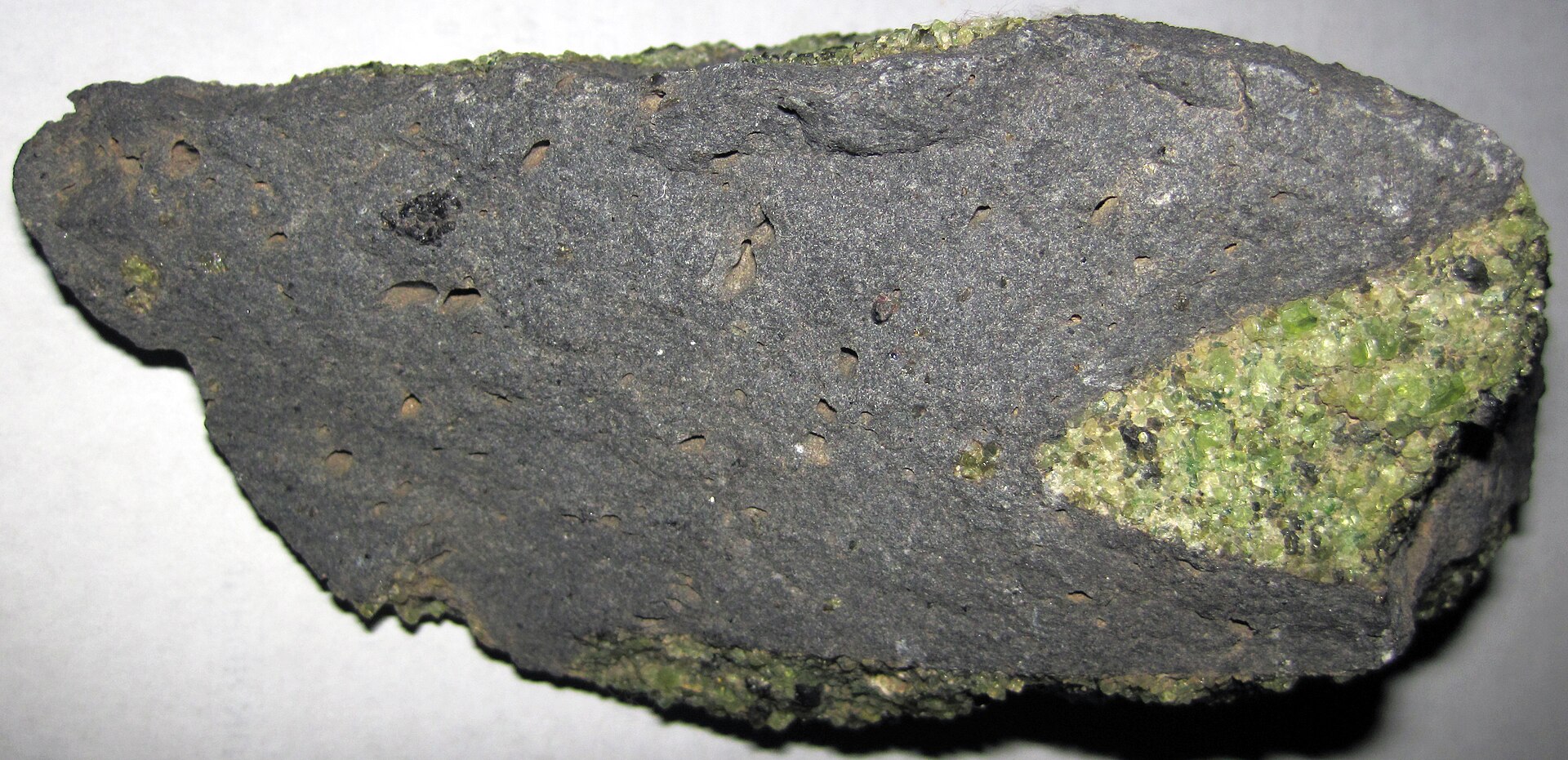
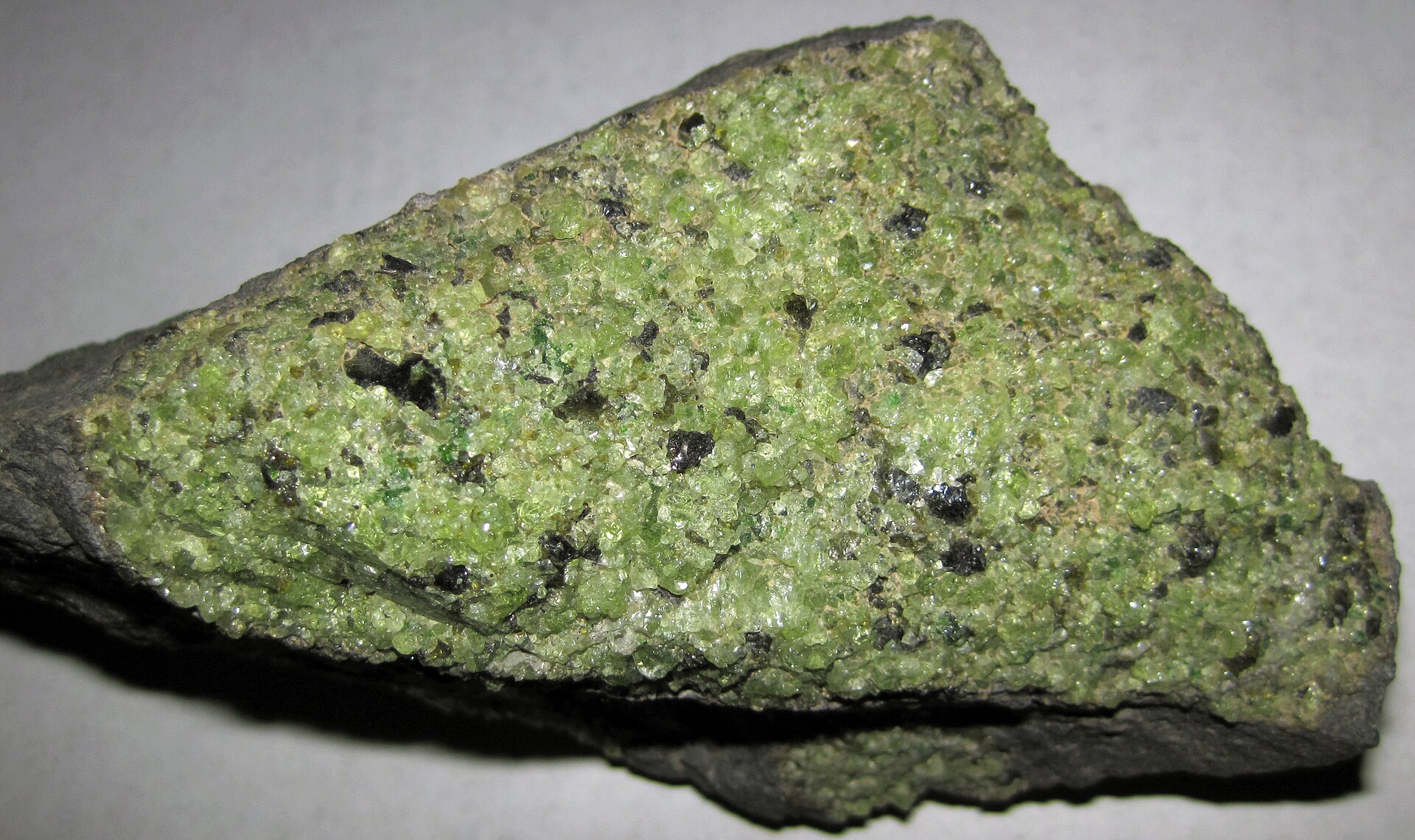
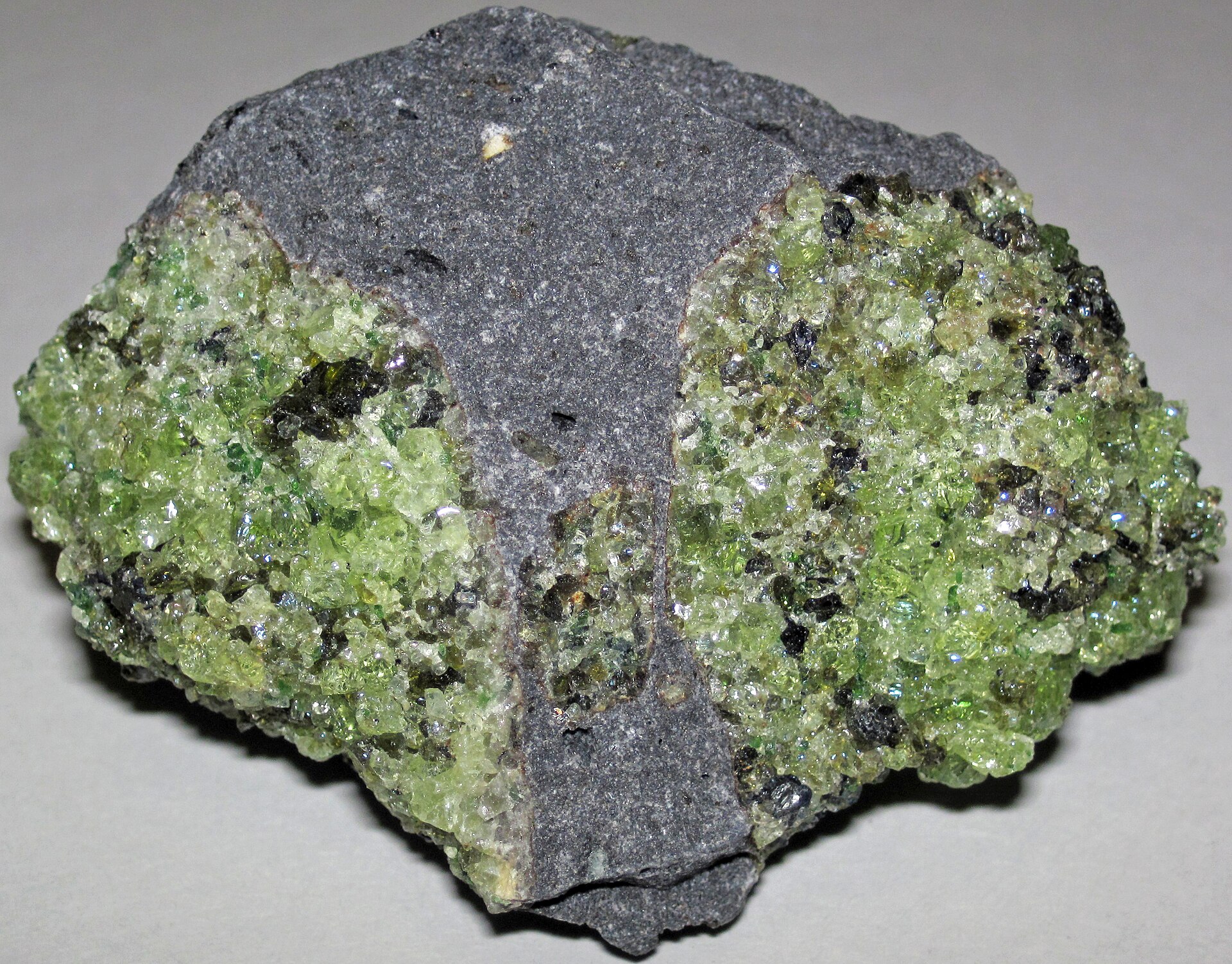
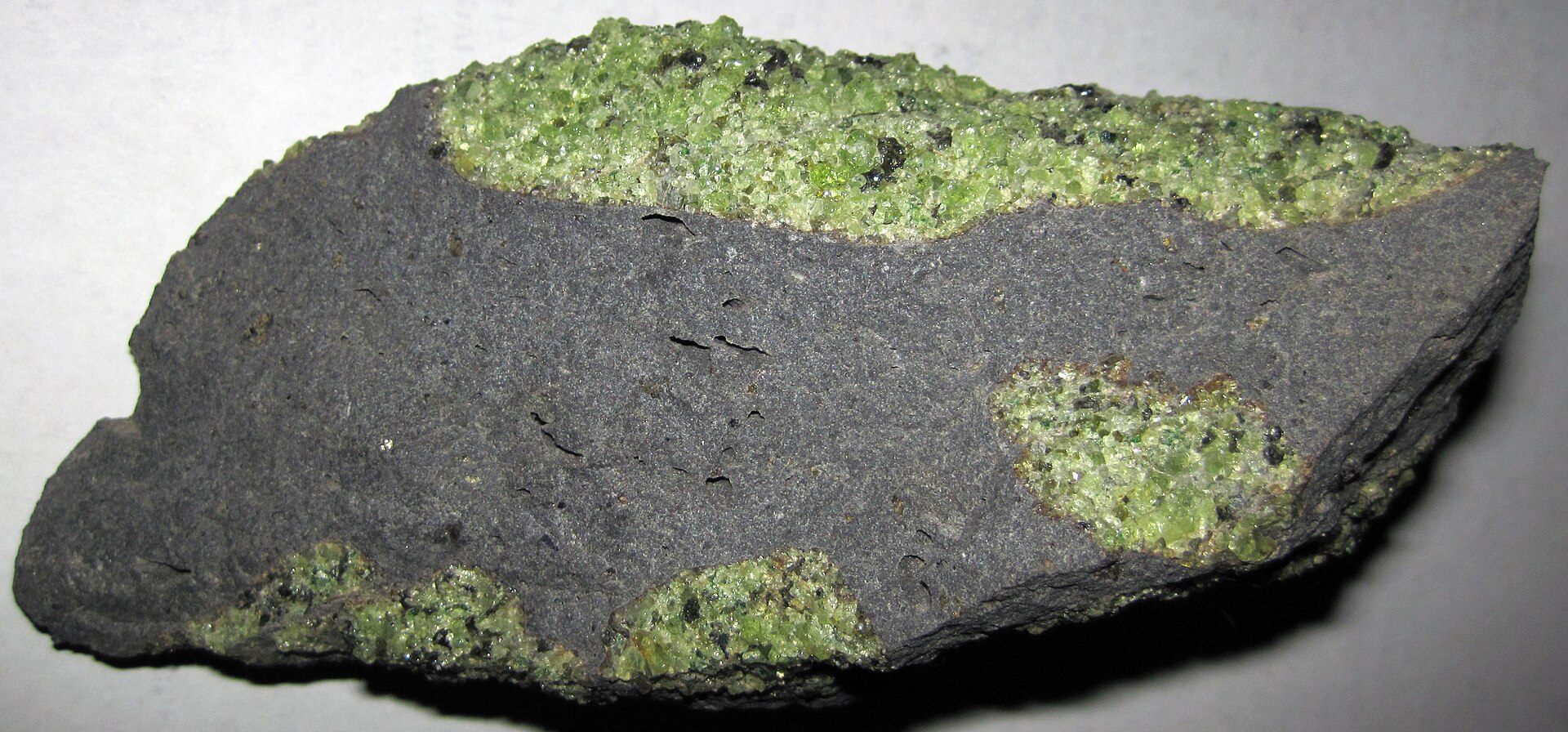
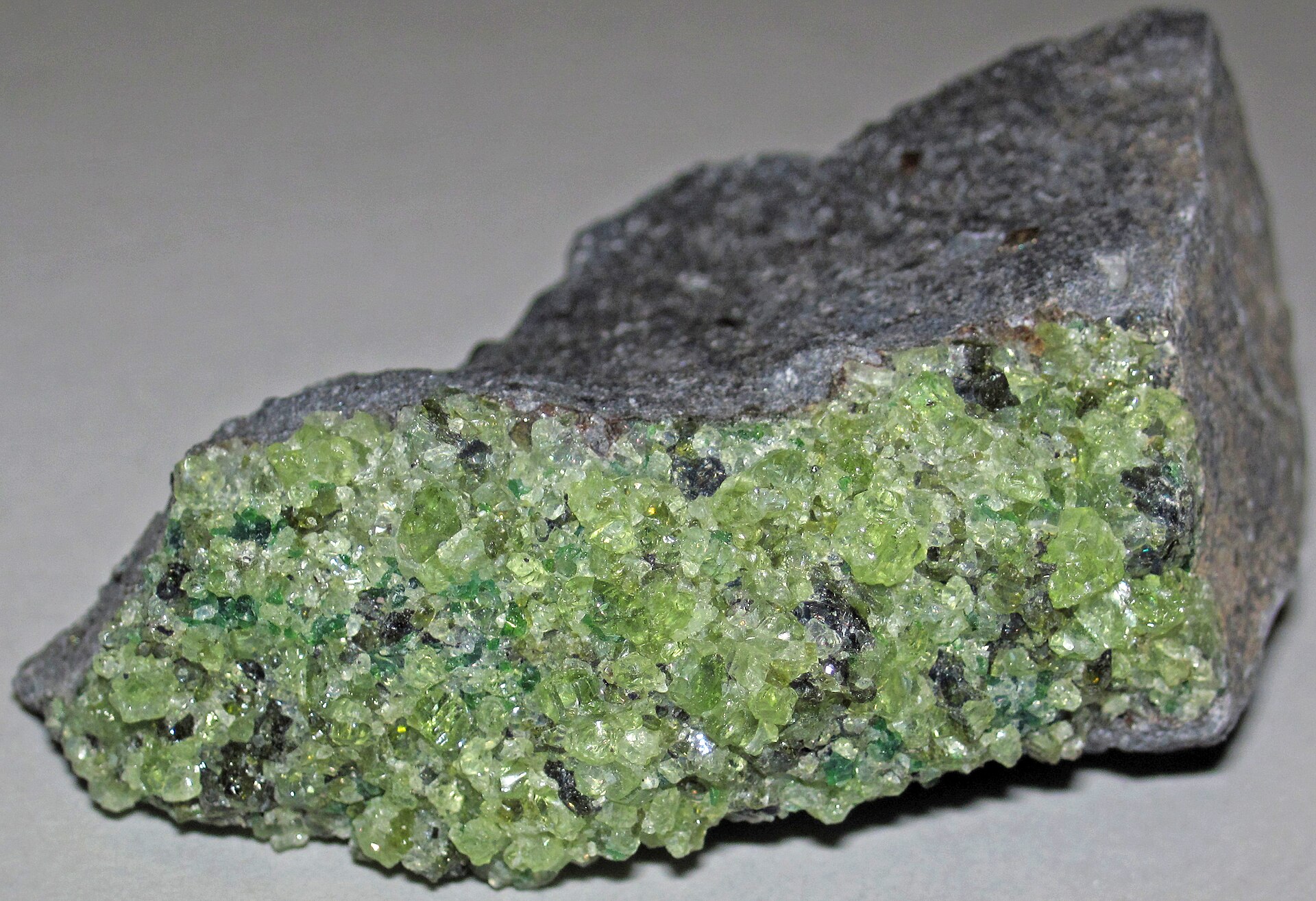
Peridot is unusual among gemstones in that it forms in deep-mantle ultramafic rocks rather than crustal pegmatites. It crystallises in dunites, peridotites and basalts at high temperatures (1,000+ °C), making it one of the few gemstones brought to surface by mantle processes.
There are three principal geological settings:
1. Mantle xenoliths in basalt — small olivine crystals carried up in volcanic eruptions (Arizona, Hawaii's green sand beaches, Inner Mongolia).
2. Ophiolite complexes — slabs of oceanic mantle obducted onto continents during plate collision (Pakistan, Myanmar, Norway).
3. Pallasite meteorites — peridot crystals embedded in iron-nickel matrix from differentiated asteroids (extremely rare; "extraterrestrial peridot" sold by collectors).
The Egyptian Zabargad deposit formed by hydrothermal alteration of mantle peridotite during Red Sea rifting.
Varieties
Pakistani peridot (Sapat) — deep saturated green, clean, large sizes available; today's commercial benchmark.
Burmese peridot (Mogok) — top colour and clarity, smaller sizes; historic supply for European jewellery.
Arizona peridot (San Carlos) — paler yellow-green, abundant small stones (1–3 ct).
Egyptian Zabargad peridot — historic; rarely available today.
Chinese peridot (Hebei) — Inner Mongolia source; commercial grade.
Pallasite meteorite peridot — embedded in iron meteorite matrix; cut from slices of Esquel, Imilac, Brenham pallasites. Highly collectible at $500–$5,000/ct.
Cat's eye peridot — rare chatoyant variety from Myanmar; cut as cabochons.
How to identify
Peridot identification:
- Hardness 6.5–7 — softer than topaz and quartz; care needed for ring use.
- Refractive index 1.654–1.690 — birefringence 0.036 (very high, easily visible as doubled inclusions under a 10x loupe — diagnostic for peridot).
- Specific gravity 3.27–3.45 — heavier than quartz, distinguishable on heft.
- Distinctive "lily pad" inclusions — circular tension fractures with central crystallite, diagnostic of peridot.
- Pleochroism: weak (yellow-green to green).
Common confusions: chrysoberyl (harder 8.5, much lower birefringence), green tourmaline (different RI, distinct pleochroism), demantoid garnet (singly refractive, much higher dispersion gives more fire), green glass (single refraction, no birefringence-doubling), synthetic forsterite (very rare, optically similar — labs identify by spectroscopy).
The strong birefringence (0.036) creating visible doubling under magnification is the easiest non-instrumental identification test for peridot.
Meaning & metaphysical properties
Peridot is the August birthstone in modern Western tradition (alongside spinel and sardonyx) and is associated with the heart and solar plexus chakras. It is considered a stone of personal abundance, prosperity, emotional release of resentment, and protection from psychic attack — many practitioners pair it with citrine for "prosperity grids."
The ancient Egyptians called it the "gem of the sun" and mined Zabargad island peridot exclusively for the Pharaoh. Medieval European crusaders brought peridot from the Middle East to Europe, where it was incorporated into ecclesiastical jewellery — the spectacular "Three Holy Kings shrine" in Cologne Cathedral contains 200 ct of peridot once thought to be emerald.
In Hawaiian folklore peridot is "the tears of Pele," the volcano goddess.
Care & cleaning
Peridot is somewhat fragile for a gemstone — hardness 6.5–7 is moderate, and its tendency to develop "lily pad" inclusions creates internal stress that can propagate under thermal or mechanical shock. Care guidelines:
- Avoid ultrasonic and steam cleaners — vibration and heat can crack peridot easily.
- Clean with warm soapy water + soft brush only.
- Avoid sudden temperature changes.
- Avoid acids, including weak ones like lemon juice — peridot is slightly reactive to acid.
- Reserve for occasional-wear jewellery (pendants, earrings) rather than daily rings; if mounted in rings, use protective settings.
Pakistani peridot is generally more durable than Arizona material due to fewer fractures, but care recommendations apply to all peridot.
Gallery
Looking to buy a peridot specimen?
Our small curated catalogue of peridot specimens is published on Etsy with worldwide shipping.
Browse Gemsprings on Etsy