Overview
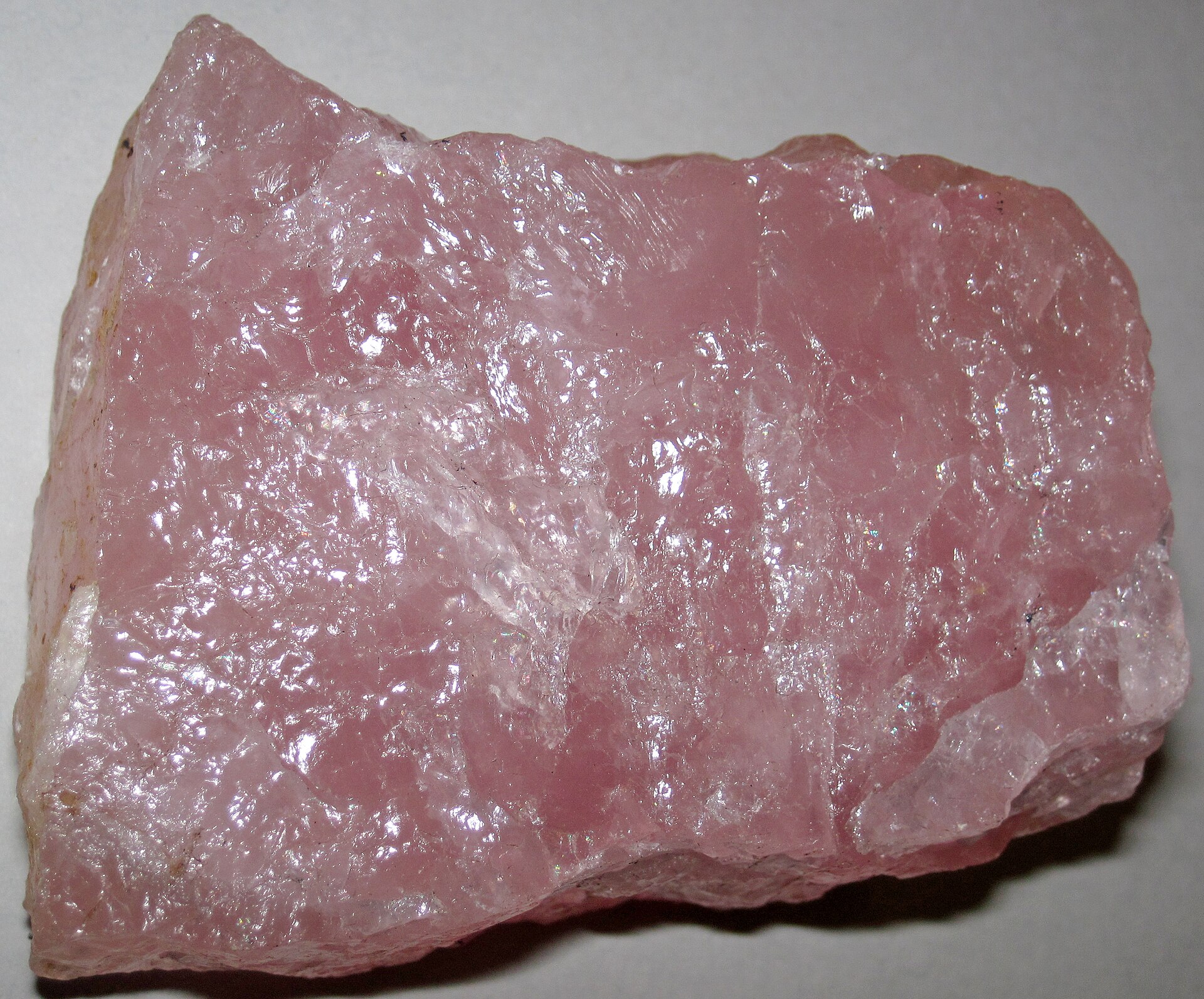
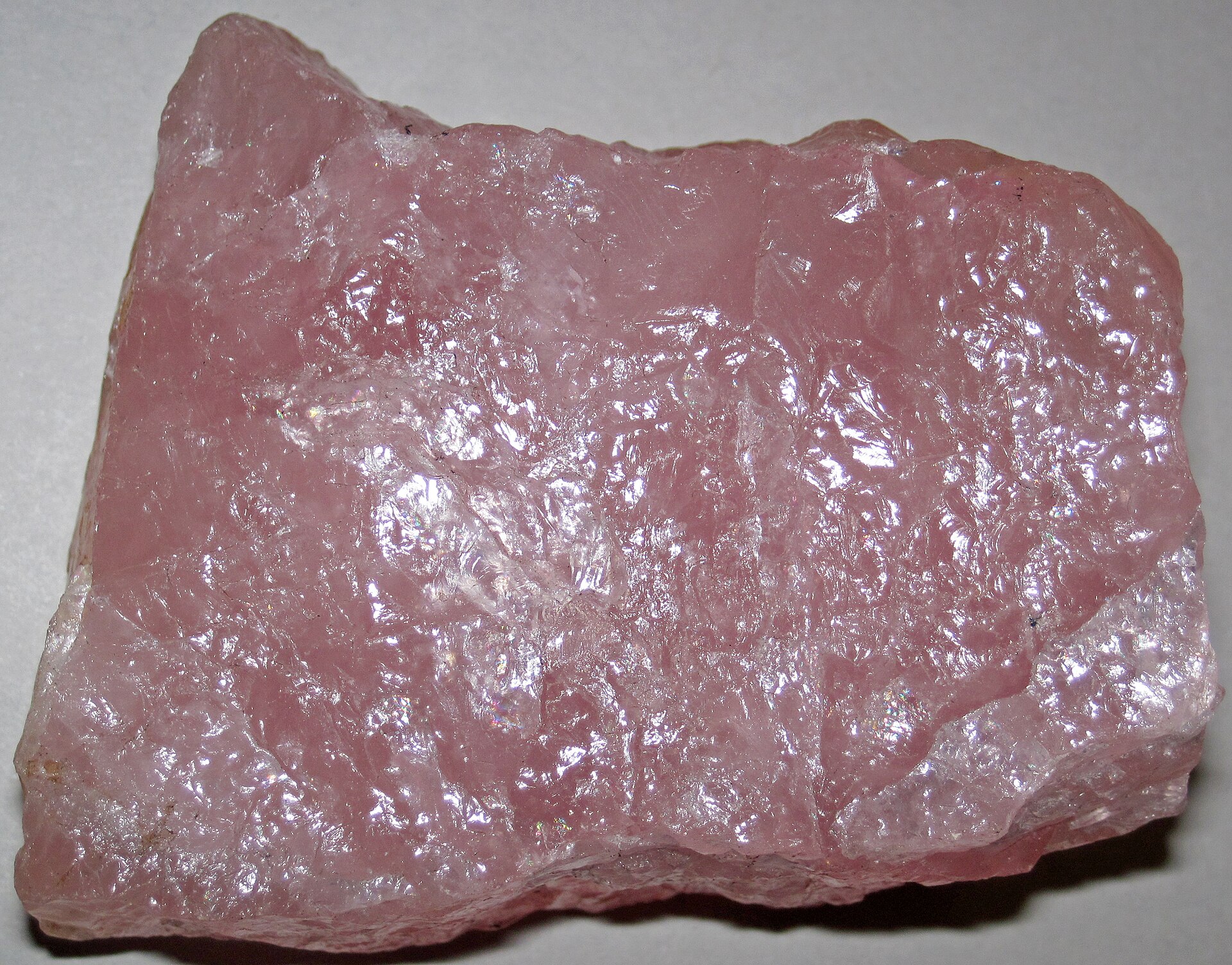
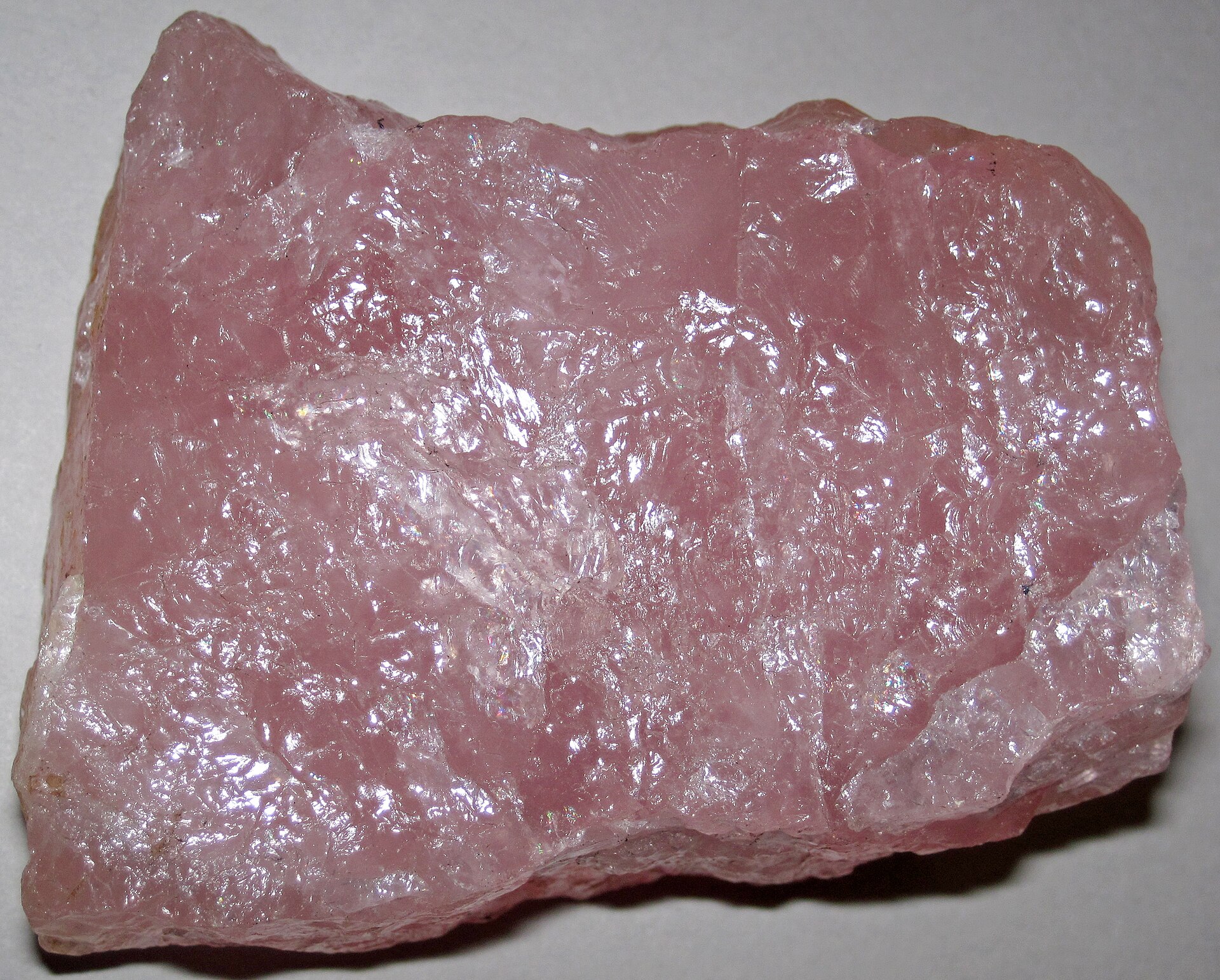
Rose quartz is the soft pink variety of macrocrystalline quartz, prized for its delicate translucent colour and large size of available pieces. Unlike its cousins amethyst and citrine, rose quartz almost never grows as well-formed terminated crystals; it occurs as massive vein fillings inside pegmatites — sometimes in blocks of several tons.
The pink colour comes from microscopic pink fibers of the borosilicate mineral dumortierite (or a related fibrous inclusion of pink mica), aligned within the host quartz. This fibrous inclusion also produces the cat's-eye effect (asterism) visible in some polished spheres and cabochons.
Formation
Rose quartz forms in the late stages of crystallisation of granitic pegmatites — extreme silica-rich pegmatite melts that cool slowly and concentrate water and rare elements. As the pegmatite crystallises, residual silica precipitates as massive rose quartz in pockets and core zones. The traces of boron, aluminium and titanium that produce the pink fibrous inclusions are also concentrated in these late-stage fluids.
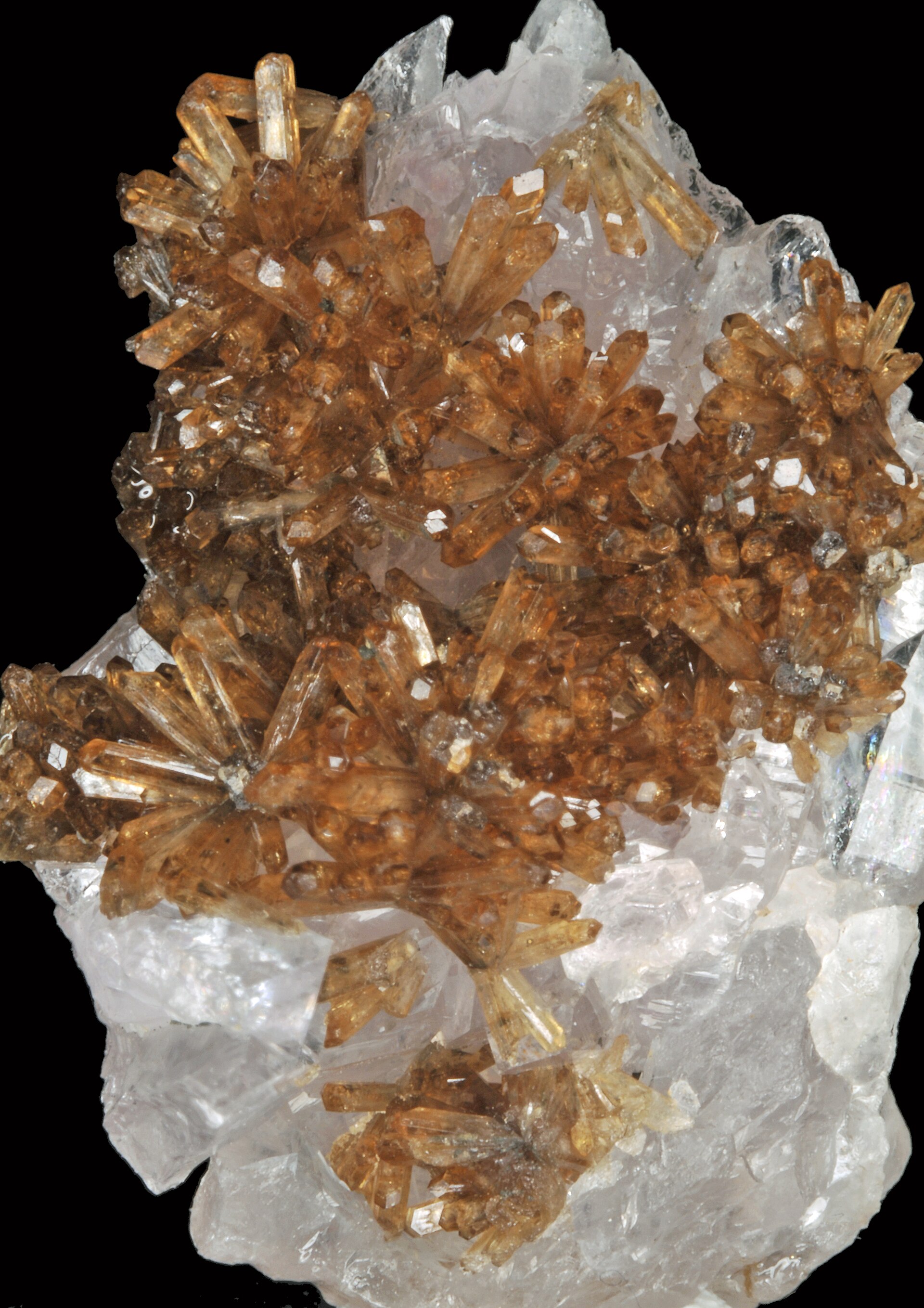
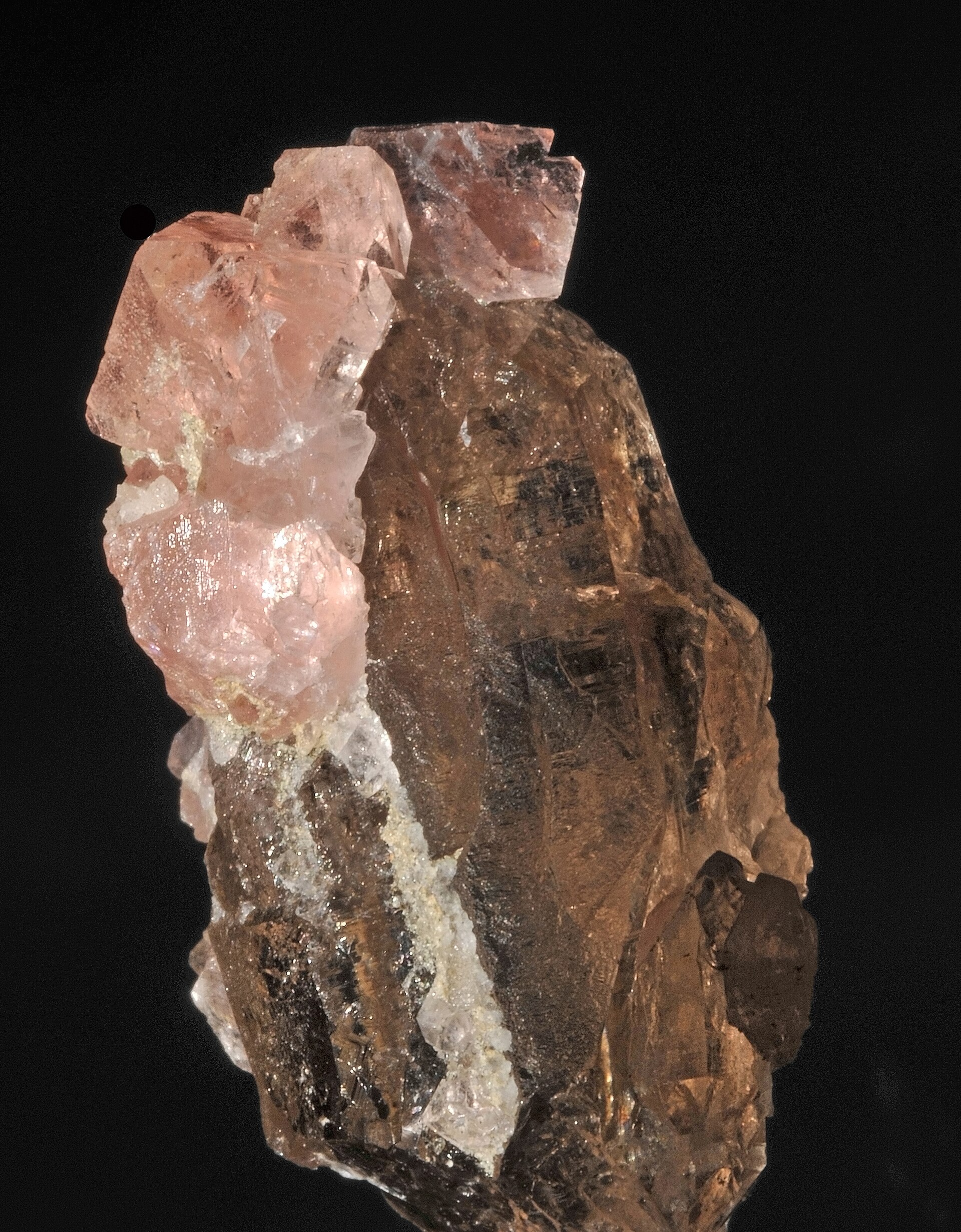
Rare terminated rose quartz crystals — the "pink quartz" of the Pitorra mine, Minas Gerais — form by a different mechanism, growing from low-temperature solutions and coloured by phosphate or aluminium centres. These crystals are highly sought by collectors and rarely exceed a few centimetres.
Varieties
Massive rose quartz — the standard market form; large pink chunks suitable for tumbling, carving and sphere-making. From Brazil, Madagascar, Mozambique.
Star rose quartz — translucent rose quartz with six-rayed asterism visible in cabochons and spheres when illuminated with a point light source.
Pink quartz (crystalline rose quartz) — rare terminated crystals from a handful of Brazilian pegmatites, colour-unstable in sunlight.
Strawberry quartz — quartz with red hematite or lepidocrocite inclusions; not technically rose quartz but often marketed alongside.
How to identify
Rose quartz is identified by its uniform pink translucency, hardness 7 and conchoidal fracture. It is almost always massive — well-formed pink crystals are diagnostic of "true pink quartz" rather than ordinary rose quartz.
Common confusions: morganite (pink beryl; harder at 7.5–8, transparent, well-formed crystals), pink calcite (much softer, effervesces in acid), and dyed quartz or chalcedony (colour concentrates in fractures, often unnaturally vivid).
Meaning & metaphysical properties
Rose quartz is the foremost crystal of love, compassion and emotional healing in modern metaphysical traditions. It is associated with the heart chakra and is recommended for self-love work, forgiveness, restoring relationships, and softening grief. Many practitioners keep a rose quartz heart or sphere on bedside tables, and small tumbled pieces are carried as touchstones during emotional difficulty.
Aphrodite was said in some Greek traditions to have stained the original quartz red with her blood when she ran to her dying lover Adonis, giving the stone its colour and its association with love. The Romans used powdered rose quartz in cosmetics and beauty treatments.
Care & cleaning
Rose quartz colour fades with prolonged direct sunlight — display away from windows. Clean with warm soapy water; ultrasonic cleaners are safe for solid pieces but avoid for fractured pieces. Pink crystallised rose quartz (true "pink quartz") fades particularly quickly in light and should be stored in the dark when not displayed.
Gallery
Looking to buy a rose quartz specimen?
Our small curated catalogue of rose quartz specimens is published on Etsy with worldwide shipping.
Browse Gemsprings on Etsy