Overview
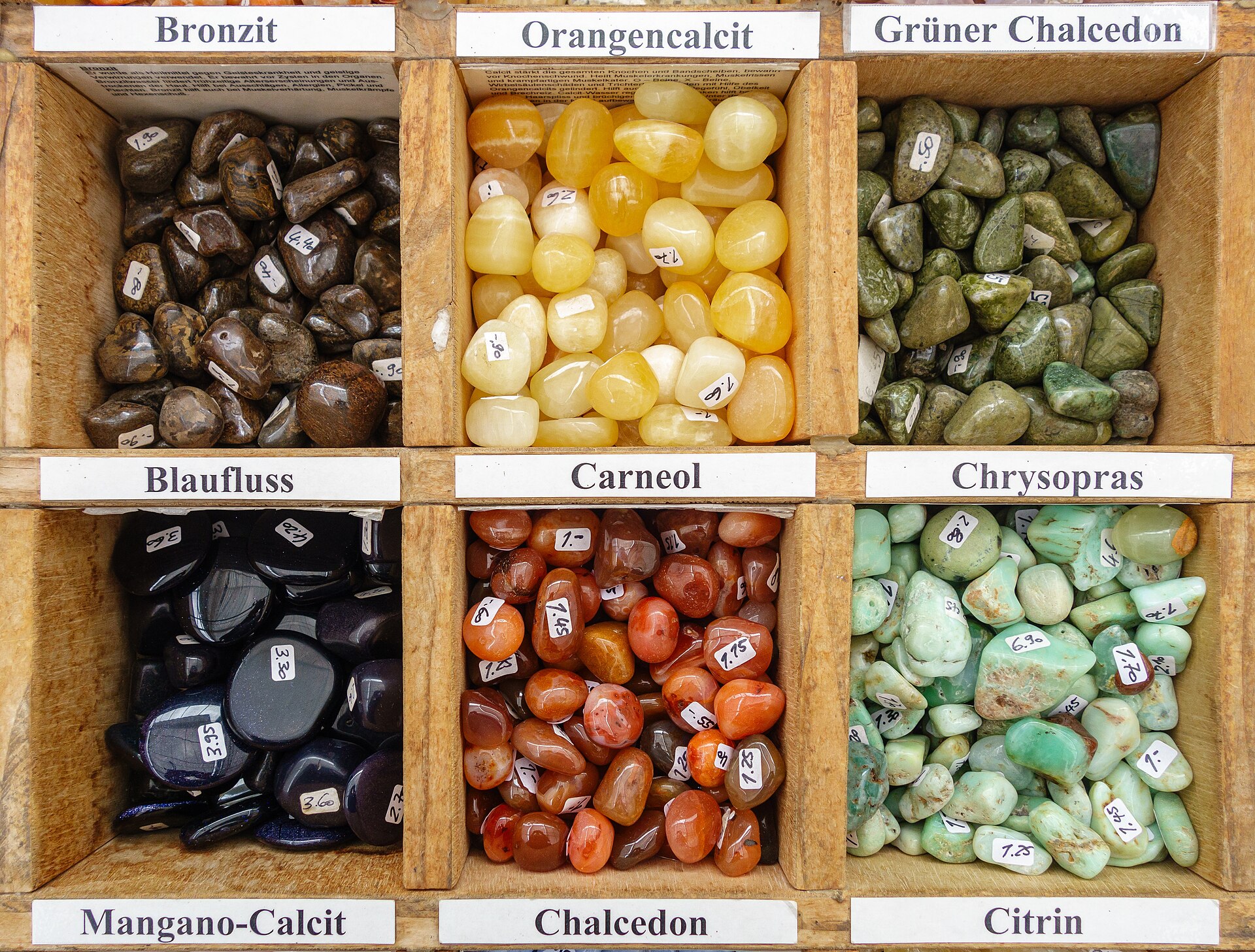
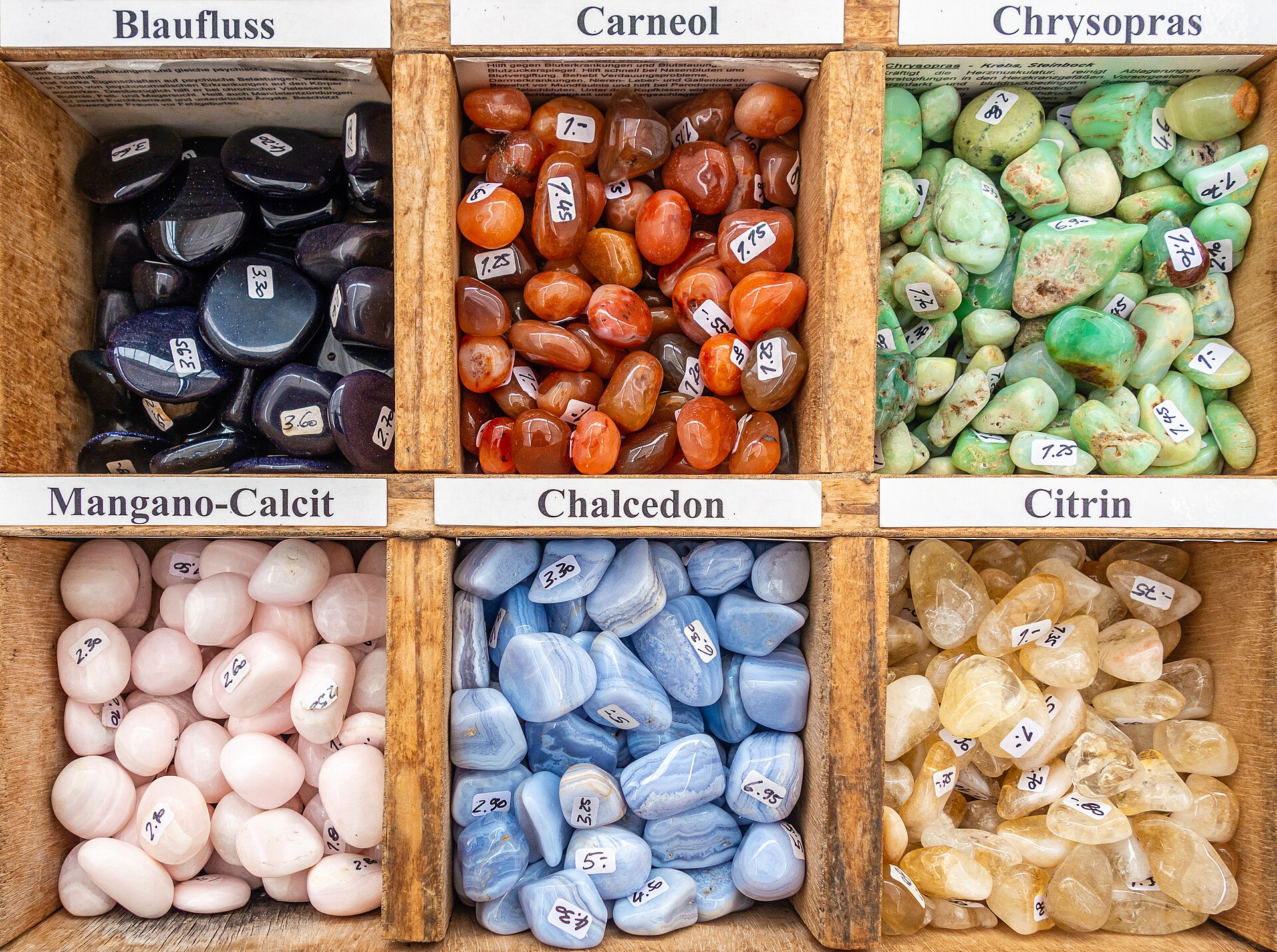
Carnelian is the orange to red-brown translucent variety of chalcedony (microcrystalline quartz), coloured by trace iron oxide impurities. The name derives from Latin *cornum* (a cornel cherry) referring to its colour. The darker reddish-brown variety is called sard, with no firm dividing line — gemmologists distinguish by tone rather than chemistry.
Carnelian is among the oldest gemstones used by humanity — beads dating to 3000 BCE are common in Sumerian, Egyptian and Indus Valley archaeological sites. The Cambay region of Gujarat, India has been the world's primary carnelian source for over 4,000 years; Roman and medieval European supplies all traced back to Cambay miners. The technique of heat-enhancing pale chalcedony into vibrant orange-red carnelian was developed in Cambay over millennia and remains the dominant treatment today.
In Egyptian funerary practice, carnelian was sacred to Isis and used in amulets buried with the dead — the "Tjet" knot amulet protecting the deceased was traditionally carved from carnelian.
Formation
Carnelian forms by precipitation from silica-rich water in cavities of basaltic and volcanic rocks, or as replacement in sedimentary rocks. The silica gel cools slowly and crystallises into the microcrystalline quartz structure that defines chalcedony. Iron oxide is incorporated during precipitation, producing the orange-red colour.
The Cambay deposits formed in Cretaceous-Tertiary basalt flows of the Deccan Traps; nodules eroded out of the basalt and concentrated in stream and ocean gravels, where they have been collected and heat-treated for export since at least the Bronze Age.
Brazilian and Uruguayan carnelian forms in similar volcanic gas cavities; both deposits produce abundant commercial material at affordable prices.
Varieties
Carnelian — orange to red-orange chalcedony.
Sard — darker brown to red-brown variety; less common in modern market.
Sardonyx — carnelian/sard with parallel white bands; used for cameo carving for over 2,500 years.
Mtorolite — green chalcedony from Zimbabwe; not technically carnelian but related microcrystalline quartz.
Heat-treated carnelian — pale chalcedony heated to develop deep orange-red colour; ~95% of commercial carnelian is heat-treated. Treatment is permanent and undisclosed in most retail.
How to identify
Carnelian identification:
- Microcrystalline structure — no individual visible crystals.
- Translucent orange to red-brown body — diagnostic of the variety.
- Hardness 7 — scratches glass; cannot be scratched by steel.
- Specific gravity 2.58–2.64 — same as other chalcedony.
- Vitreous to waxy luster.
- Often shows "cloudy" or "banded" zones when held to light — diagnostic vs glass.
Distinguishing carnelian from heat-treated agate: hold against strong backlight — natural carnelian shows even colour distribution; heat-treated agate may show banded colour zones revealing original agate structure.
Common confusions: red jasper (opaque, not translucent), agate (banded structure visible), orange glass (singly refractive, often shows bubbles), dyed chalcedony (colour concentrates in cracks).
Meaning & metaphysical properties
Carnelian is associated with the sacral and root chakras and is one of the foremost "stones of action, courage and creative passion" in modern metaphysical traditions. It is recommended for:
- Boosting motivation and overcoming procrastination
- Increasing sexual vitality and creative passion
- Building confidence and personal power
- Performance enhancement (worn by athletes, performers, speakers)
In ancient Egypt the Tjet knot amulet of carnelian was buried with the deceased to channel the protective blood of Isis. Roman orators wore carnelian to enhance public speaking. Islamic tradition holds that the Prophet Muhammad wore a carnelian seal-ring; carnelian remains an important stone in Islamic jewellery and amulet practice.
Care & cleaning
Carnelian is durable and easy to care for:
- Hardness 7 + no cleavage = suitable for daily wear.
- Clean with warm soapy water and soft brush.
- Ultrasonic and steam cleaners are safe for most pieces.
- Avoid prolonged direct sunlight — heat-treated carnelian colour can fade slightly with extended UV.
- Avoid acid contact.
- Store separately to avoid scratching softer stones.
Carnelian is one of the most user-friendly gemstones — durable, affordable, easy to clean.
Gallery
Looking to buy a carnelian specimen?
Our small curated catalogue of carnelian specimens is published on Etsy with worldwide shipping.
Browse Gemsprings on Etsy