Overview
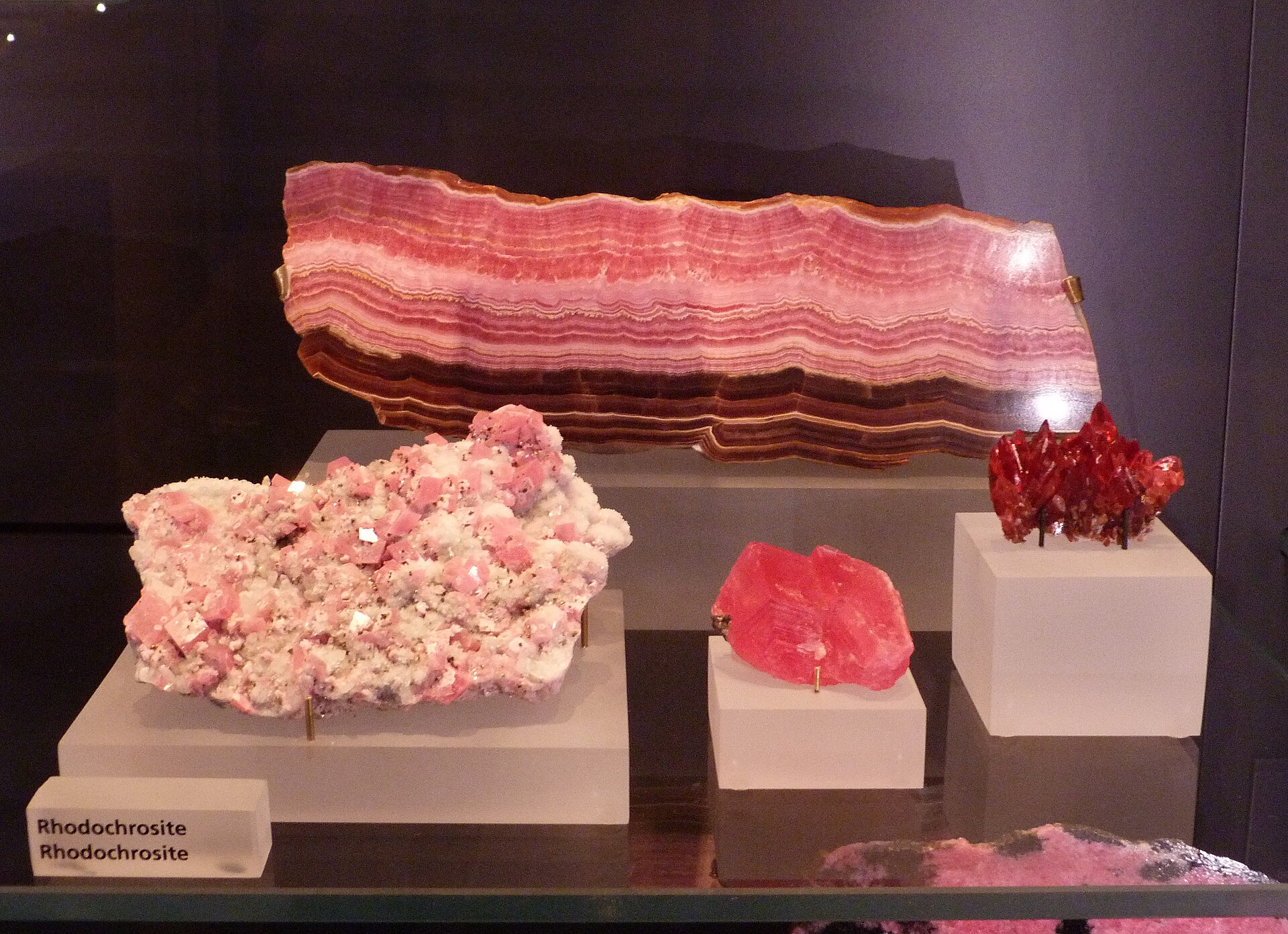
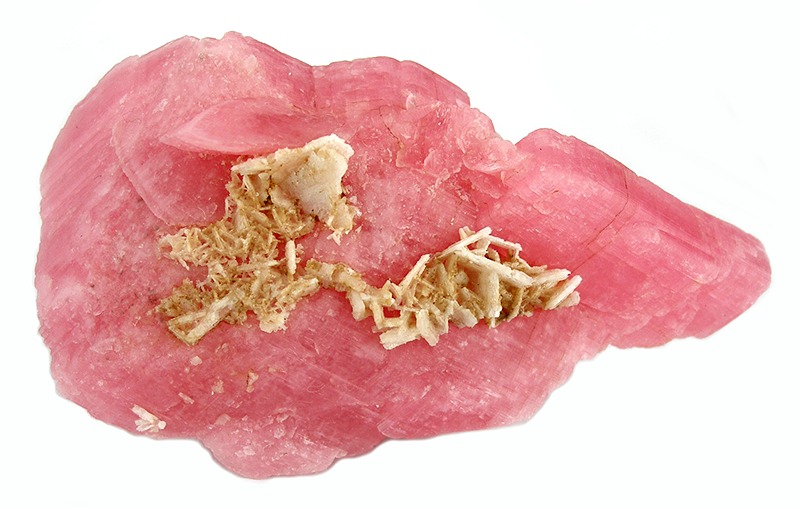
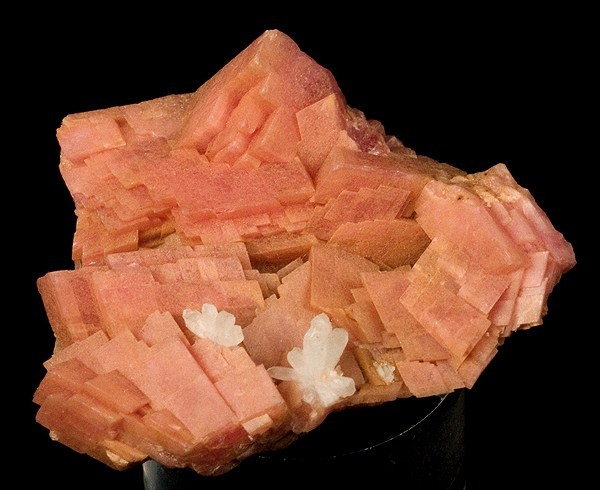
Rhodochrosite is a carbonate mineral of pure manganese (MnCO₃) and one of the most striking red minerals on Earth. Its colour ranges from intense raspberry-red to pale rose pink, with vibrancy depending on the purity of the manganese (any substituting iron or calcium dulls the saturation). The name derives from the Greek *rhodon* (rose) + *chrosis* (colouring) — "rose-coloured".
The world's most spectacular rhodochrosite crystals came from the Sweet Home Mine near Alma, Colorado (closed 2004), which produced sharp ruby-red rhombs up to 12 cm — among the most valuable single mineral specimens ever sold (the "Alma King" crystal sold for over $1M). Argentine rhodochrosite from Catamarca forms stalactitic ribbons of pink and white, carved into ornamental "Inca Rose" objects since pre-Columbian times.
Formation
Rhodochrosite forms in low-to-medium temperature hydrothermal vein systems associated with manganese deposits. The most spectacular crystals grow in vugs within ore bodies where manganese-rich fluids precipitate calcium-poor carbonate. The Sweet Home Mine crystals formed at ~250 °C in cavities within a hydrothermal vein cutting through Precambrian gneiss; the famous Argentine stalactitic material formed at much lower temperatures (~80 °C) in karst cave systems within manganese-rich limestone.
Rhodochrosite also forms as sedimentary deposits in some manganese-rich basins (Ukraine, Brazil), where it is mined as manganese ore rather than as a specimen mineral.
Varieties
Sweet Home rhodochrosite — sharp ruby-red rhombs on quartz/fluorite matrix; the world standard.
Stalactitic rhodochrosite (Inca Rose) — concentric pink and white banding in cut slices; from Capillitas, Catamarca, Argentina.
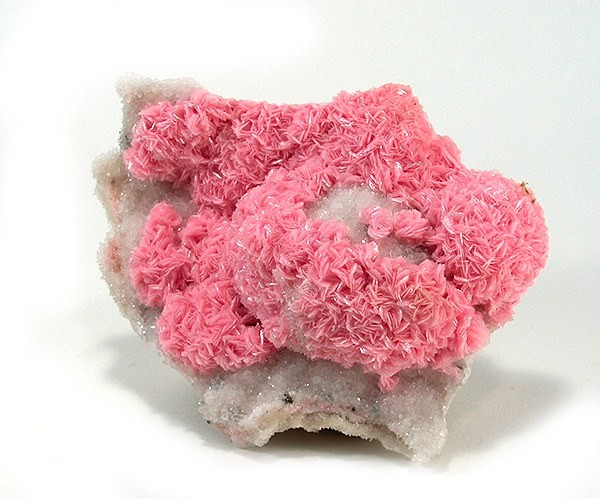
N'Chwaning rhodochrosite — bright red rhombs from the Kalahari manganese field, South Africa.
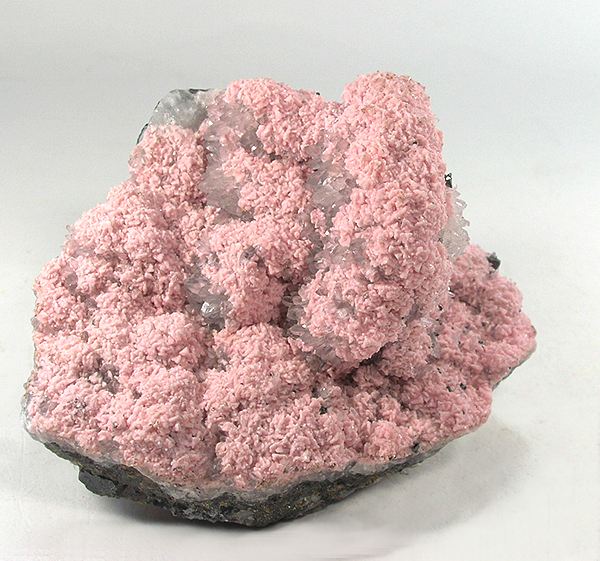
Chinese rhodochrosite (Wudong) — pink to red rhombs on dark matrix; more recent commercial source.
Manganocalcite — pale pink calcium-rich variety, much paler colour but often confused on labels.
How to identify
Rhodochrosite is identified by:
- Raspberry-red to pink colour with vitreous luster.
- Perfect rhombohedral cleavage producing parallelogram fragments.
- Hardness 3.5–4 — scratches with a copper coin or steel knife.
- Specific gravity 3.7 — heavier than calcite.
- Effervesces in warm dilute hydrochloric acid (carbonate reaction).
Common confusions: rhodonite (Mn silicate, harder at 5.5–6.5, often with black manganese oxide veins, no acid reaction), pink calcite (much paler, lower SG 2.7), pink topaz (much harder at 8, perfect basal cleavage).
Meaning & metaphysical properties
Rhodochrosite is the "stone of the compassionate heart" in modern metaphysical traditions — associated with both the heart and solar plexus chakras and used for emotional healing, particularly recovery from childhood trauma and self-acceptance work. It is considered a gentler companion to rose quartz, with a more active emotional-processing energy.
The Incas knew rhodochrosite as "rosa del Inca" and believed it carried the blood of their slain kings; ancient Inca tools and ornaments carved from rhodochrosite have been found in Andean tombs.
Care & cleaning
Soft and reactive: rhodochrosite scratches easily (hardness 4) and dissolves slowly in acids — never use acidic cleaners, lemon juice, or vinegar. Clean only with a damp cloth and mild neutral soap. Avoid ultrasonic and steam cleaners — they can chip the perfect cleavage. Store away from sunlight (colour fades slowly over years of direct UV).
Rhodochrosite is not durable enough for daily-wear ring stones; reserve for pendant and earring use in protective settings.
Gallery
Looking to buy a rhodochrosite specimen?
Our small curated catalogue of rhodochrosite specimens is published on Etsy with worldwide shipping.
Browse Gemsprings on Etsy