Overview
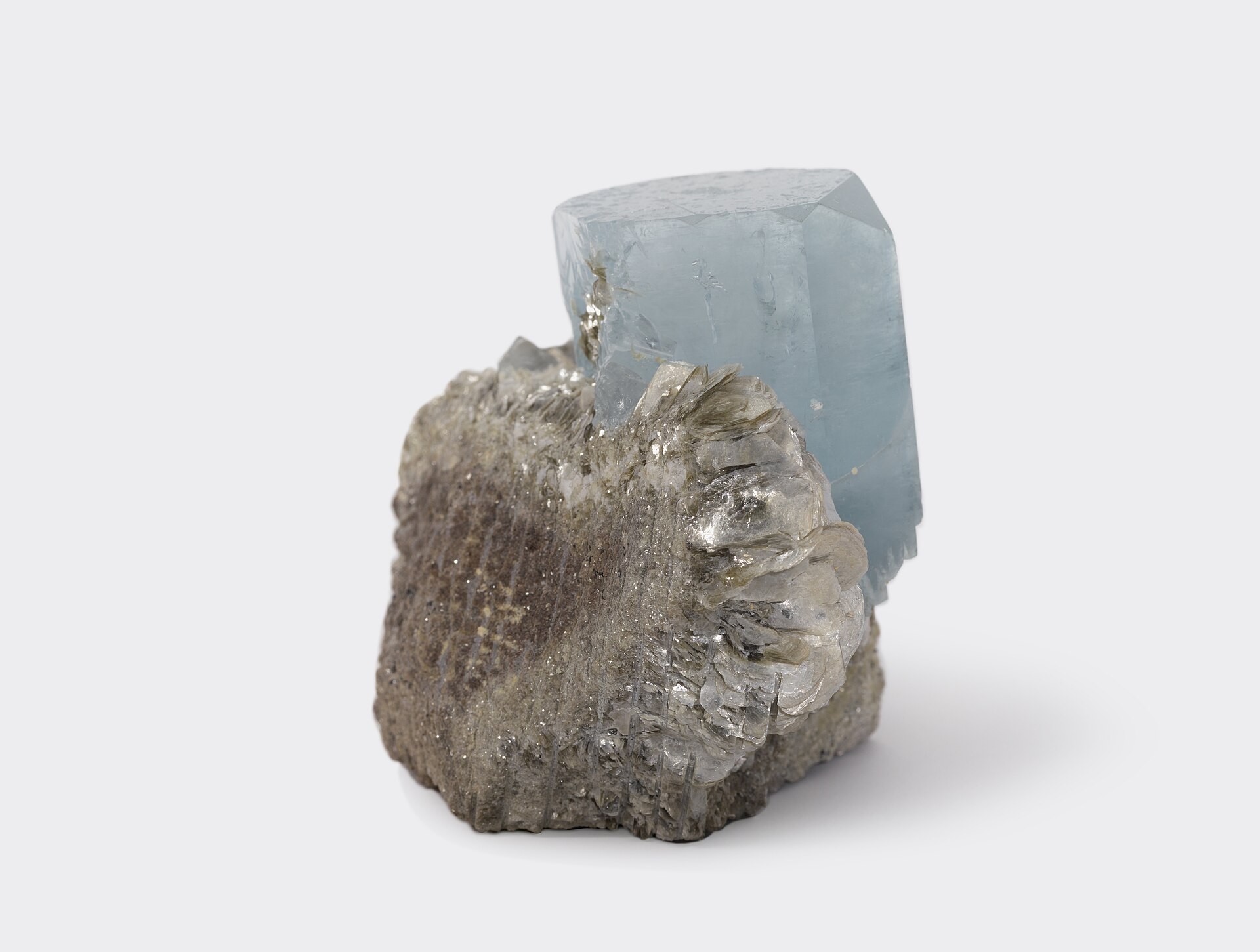
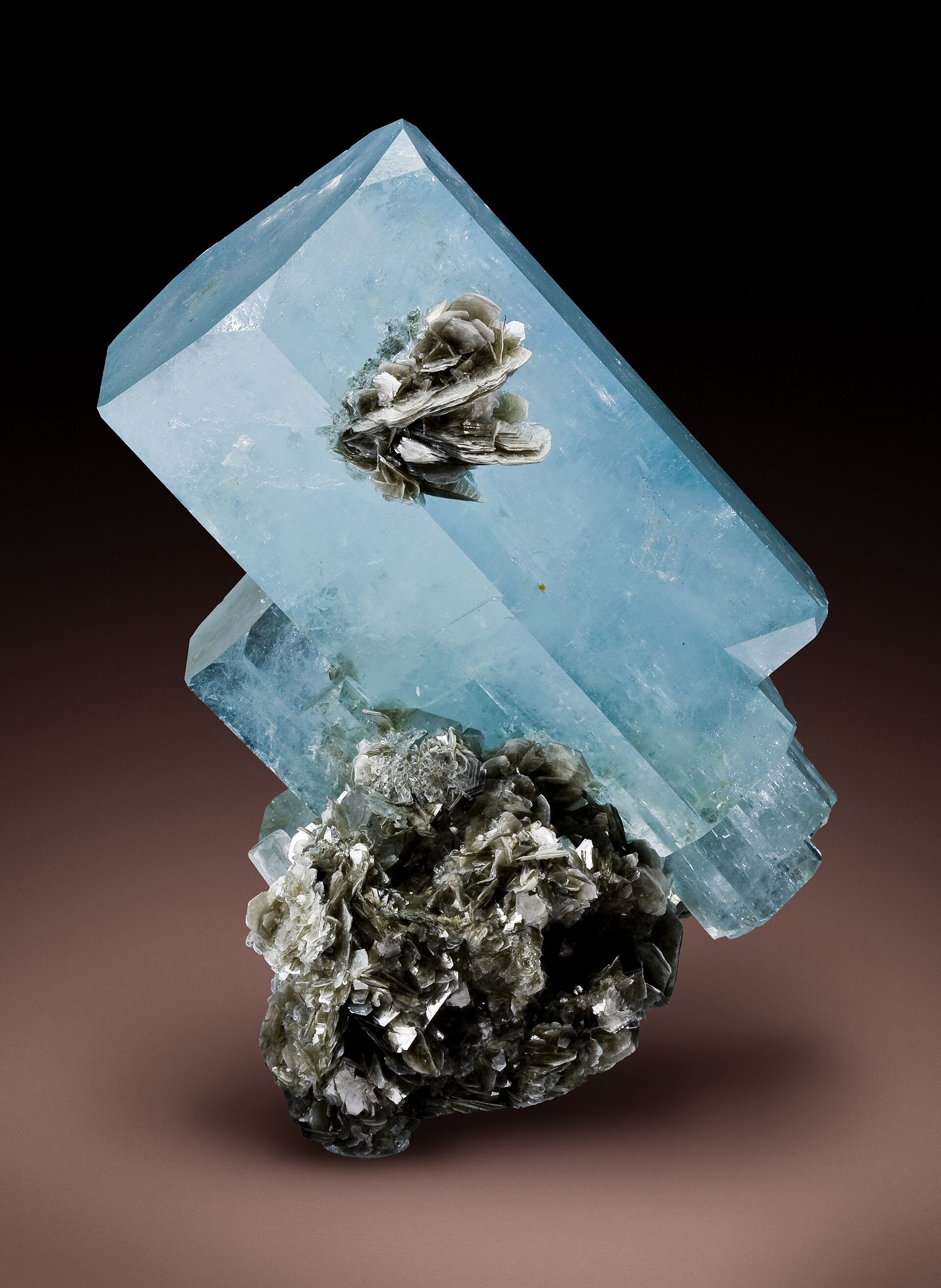
Aquamarine is the pale blue to deep blue gem variety of beryl, coloured by trace iron (Fe²⁺/Fe³⁺) in the crystal lattice. The name derives from Latin *aqua marina* — "sea water" — referring to the characteristic cool blue-green tone. It is the same chemical species as emerald (Be₃Al₂Si₆O₁₈) but coloured by iron rather than chromium, and unlike emerald it is usually exceptionally clean and forms much larger gem-quality crystals.
The aquamarine market is dominated by Brazilian production from Minas Gerais, which has supplied the world for over a century. The most coveted variety is Santa Maria aquamarine — saturated deep blue from the Santa Maria de Itabira mine — though most Santa Maria–quality stones today come from the Mozambique extension of the same gem belt rather than the original Brazilian mine, which is largely exhausted.
Formation
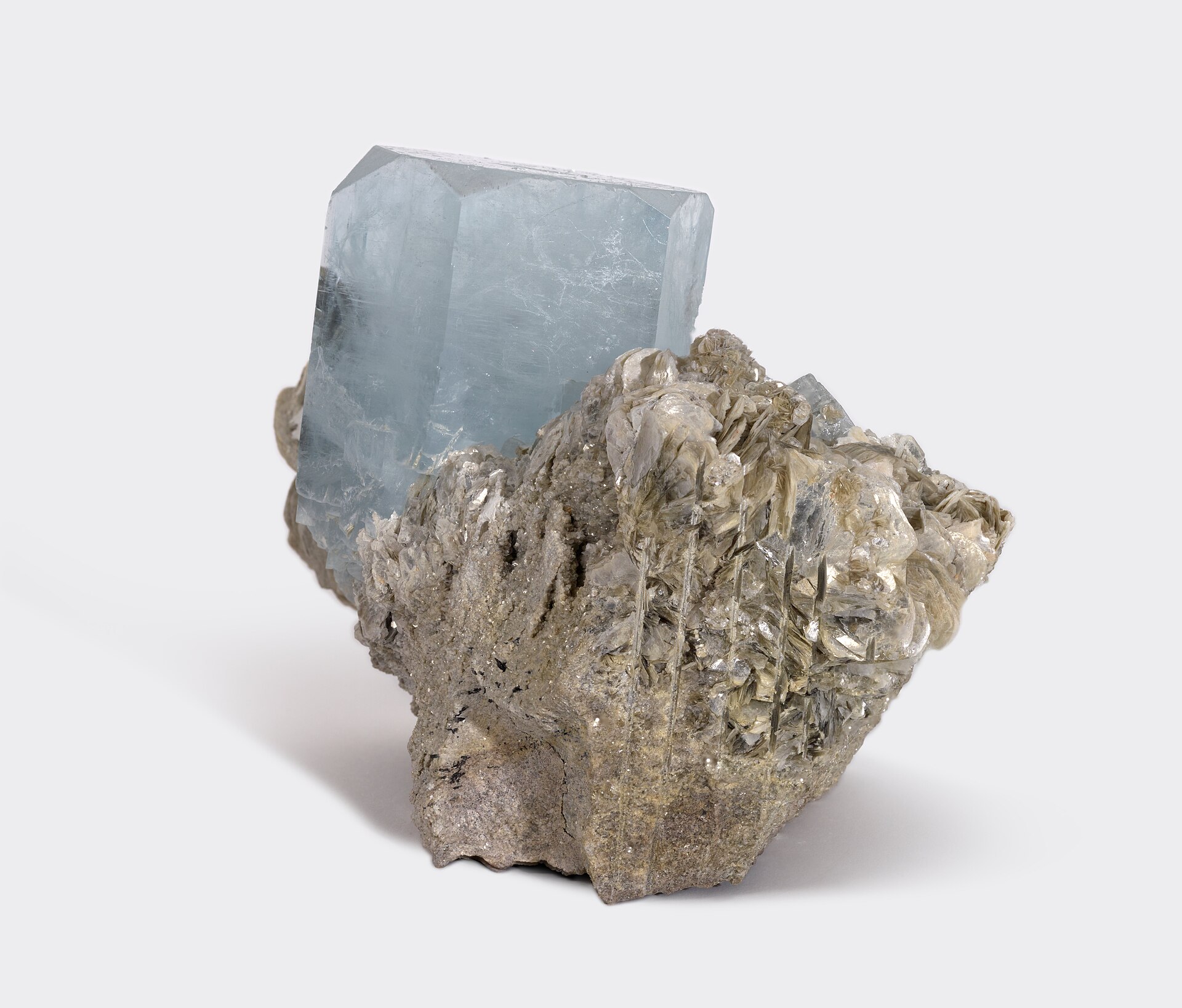
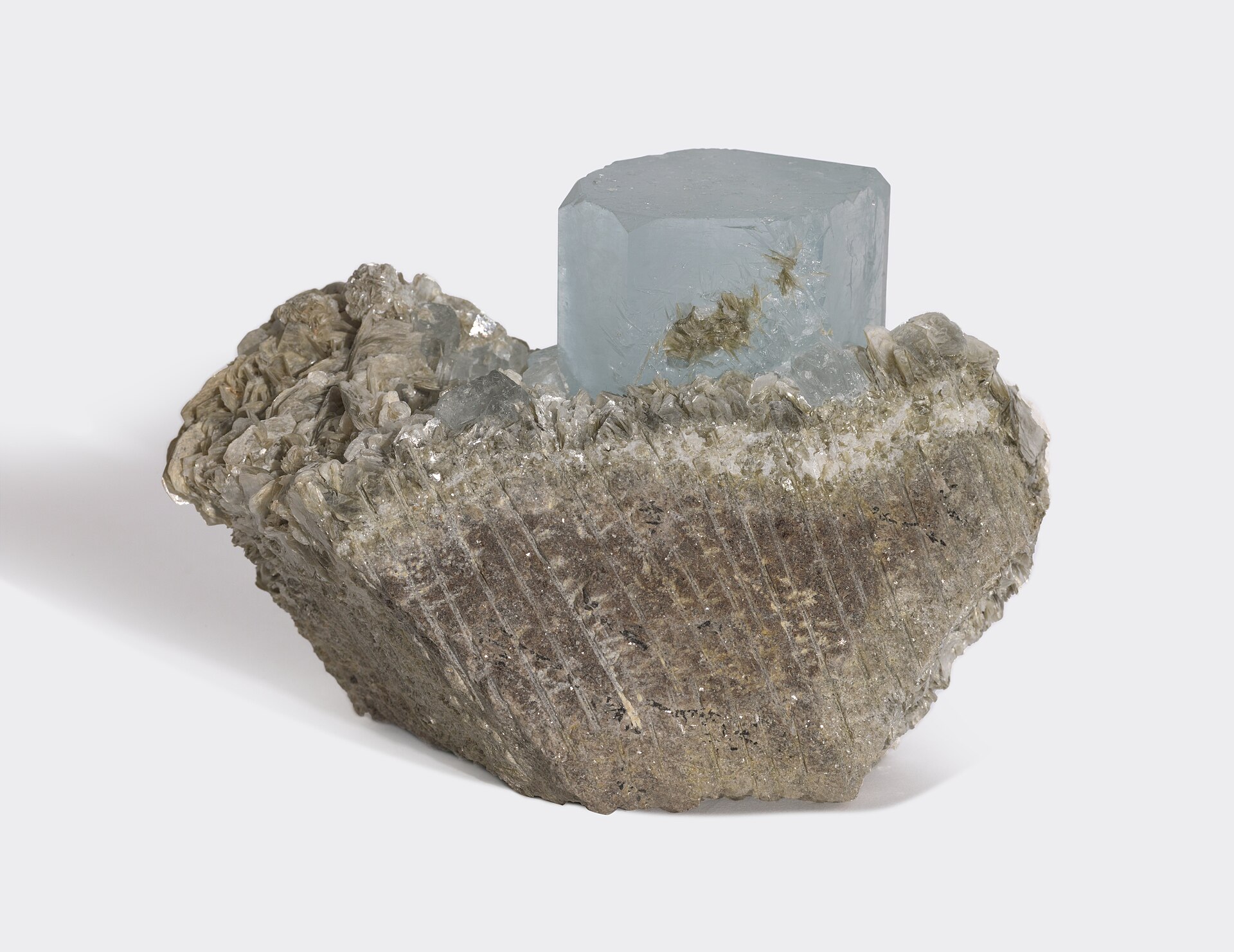
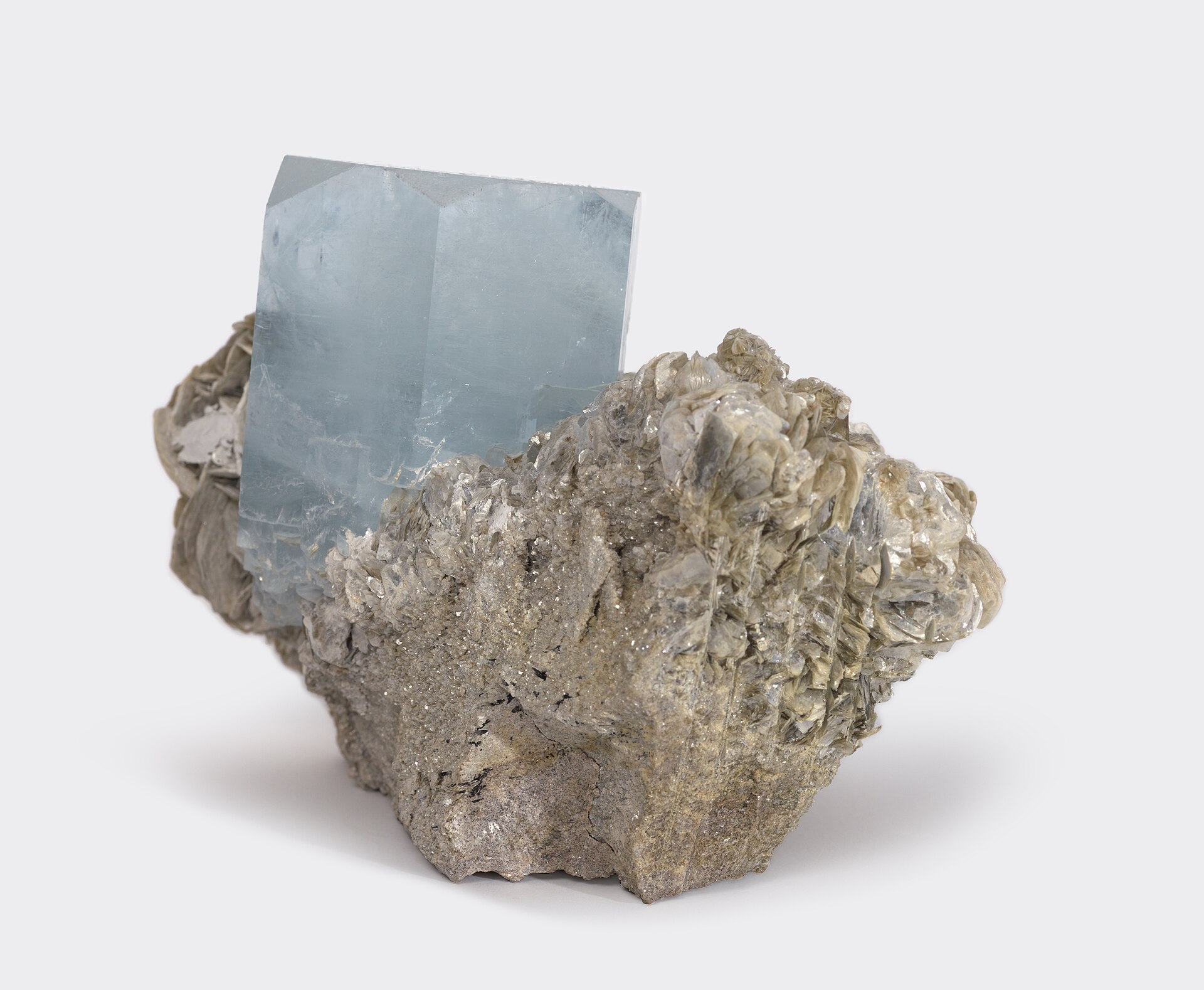
Aquamarine forms in granitic pegmatites — extreme silica-rich pegmatite melts that cool slowly and concentrate beryllium, fluorine, lithium and other "incompatible" elements. As the pegmatite crystallises, beryl precipitates in cavities (pockets, miarolitic cavities) where it can grow large euhedral hexagonal prisms with terminated bipyramids.
Famous gem pockets in Brazilian, Pakistani and Madagascan pegmatites have produced individual aquamarine crystals exceeding 100 kg — including the Marambaia aquamarine (1910 Brazil, 100 kg rough, faceted into thousands of carats) and the Dom Pedro aquamarine (the largest faceted aquamarine ever cut, 10,363 carats, on display at the Smithsonian).
Most natural aquamarine is heat-treated above 400 °C to remove the greenish secondary tone (caused by Fe³⁺) and produce pure blue (Fe²⁺ dominant). Treatment is permanent, undetectable, and universally accepted in the trade.
Varieties
Santa Maria aquamarine — deep saturated blue, originally from Santa Maria de Itabira (Brazil), now mostly from Mozambique. The benchmark colour.
Espirito Santo aquamarine — medium blue, eye-clean, from Brazilian state of Espirito Santo.
Maxixe aquamarine — deep blue from natural irradiation; rare and unstable in light (fades).
Cat's eye aquamarine — chatoyant variety with parallel inclusions; cut as cabochons.
Trapiche aquamarine — extremely rare hexagonal pattern variety (like trapiche emerald but blue).
Pakistani / Nagar aquamarine — pale to medium blue from Hunza-Nagar valley; bright clarity but typically smaller stones.
Russian (Ural) aquamarine — historic source; sea-blue to greenish-blue, famously included in Romanov jewellery.
How to identify
Aquamarine identification:
- Hardness 7.5–8 — scratches glass and quartz; cannot be scratched by topaz.
- Refractive index 1.567–1.590 — birefringence 0.005–0.009 (uniaxial negative).
- Specific gravity 2.68–2.74 — distinguishable from heavier blue gems like sapphire (4.0) or topaz (3.5).
- Pleochroism: distinct — strong blue along c-axis vs colourless or pale blue perpendicular.
- Inclusions: long thin tubes parallel to c-axis (negative growth tubes), sometimes "rain" of fluid inclusions.
Common confusions: blue topaz (heavier SG 3.5, perfect cleavage), blue zircon (much higher RI 1.93+, strong birefringence, heavier SG 4.6), blue spinel (singly refractive, no pleochroism), synthetic spinel (singly refractive), glass (lower SG, lower hardness, often shows bubbles).
Heat treatment is not currently detectable on certificates — assume any aquamarine has been heated unless explicitly stated as "untreated" on a GIA/GRS report.
Meaning & metaphysical properties
Aquamarine is the March birthstone in modern Western tradition and is associated with the throat chakra. It is considered a stone of calm communication, courage, emotional truth and sea-related protection (carried by sailors since antiquity as a talisman against drowning and seasickness).
In Roman lore aquamarine was sacred to Neptune and engraved with the sea god's figure for safe voyages. Medieval scholars believed it was carried in jewellery by sailors and prescribed it for stomach ailments. In Vedic astrology aquamarine is sometimes substituted for blue sapphire (*Nilam*) when Saturn's harsh energy needs to be softened.
Care & cleaning
Aquamarine's hardness 7.5–8 and absence of severe cleavage make it suitable for most jewellery use. Care guidelines:
- Clean with warm soapy water and soft brush — most common method.
- Ultrasonic cleaners are generally safe unless the stone is heavily included.
- Avoid sudden temperature changes — beryl can crack from thermal shock.
- Avoid prolonged sunlight for Maxixe-type aquamarine (radiation-coloured stones fade); standard heat-treated aquamarine is stable in sunlight.
- Avoid acids and harsh chemicals.
Aquamarine is well-suited to ring settings and daily wear, particularly in protective bezel or halo settings.
Gallery
Looking to buy a aquamarine specimen?
Our small curated catalogue of aquamarine specimens is published on Etsy with worldwide shipping.
Browse Gemsprings on Etsy