Overview
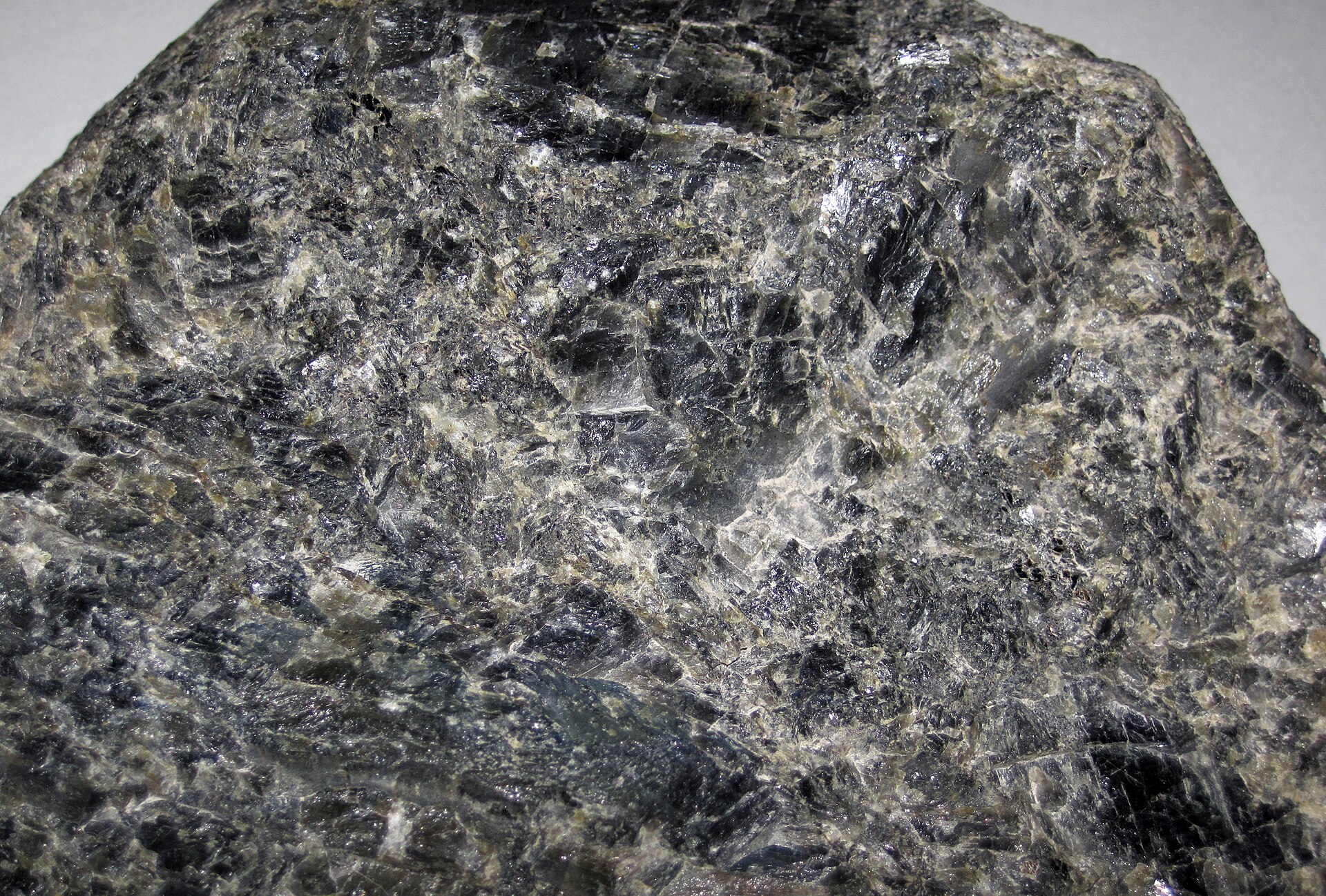
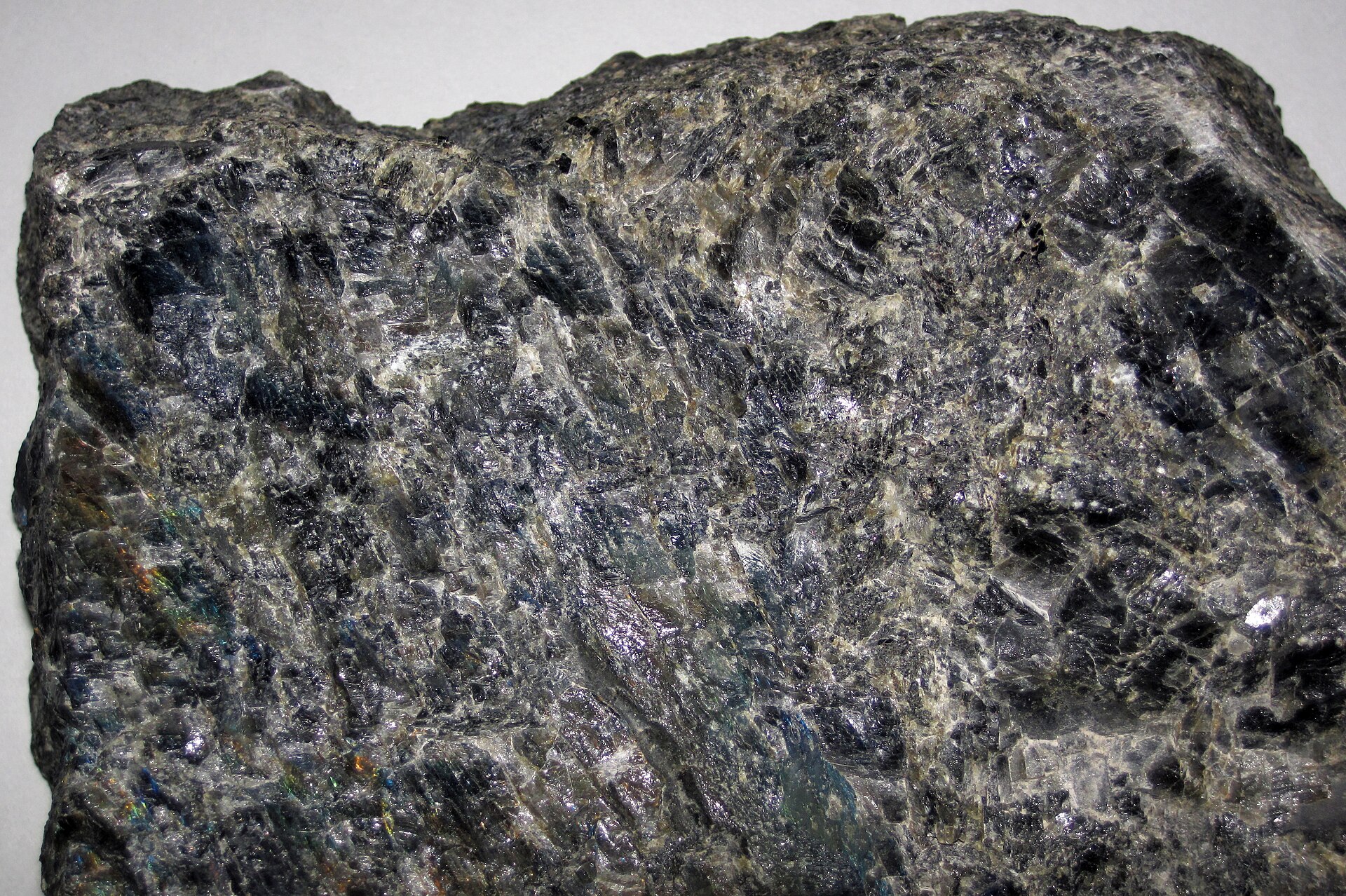
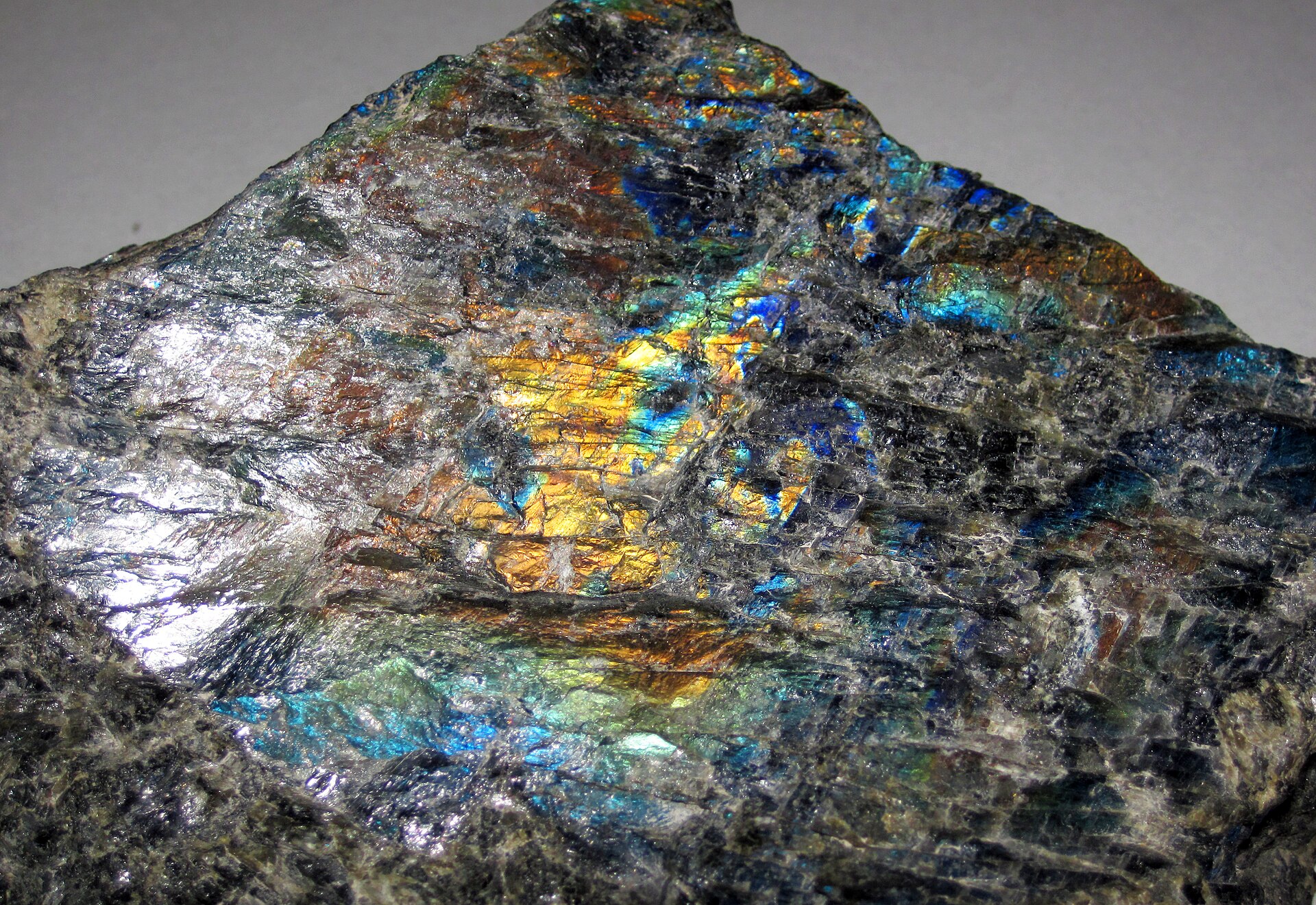
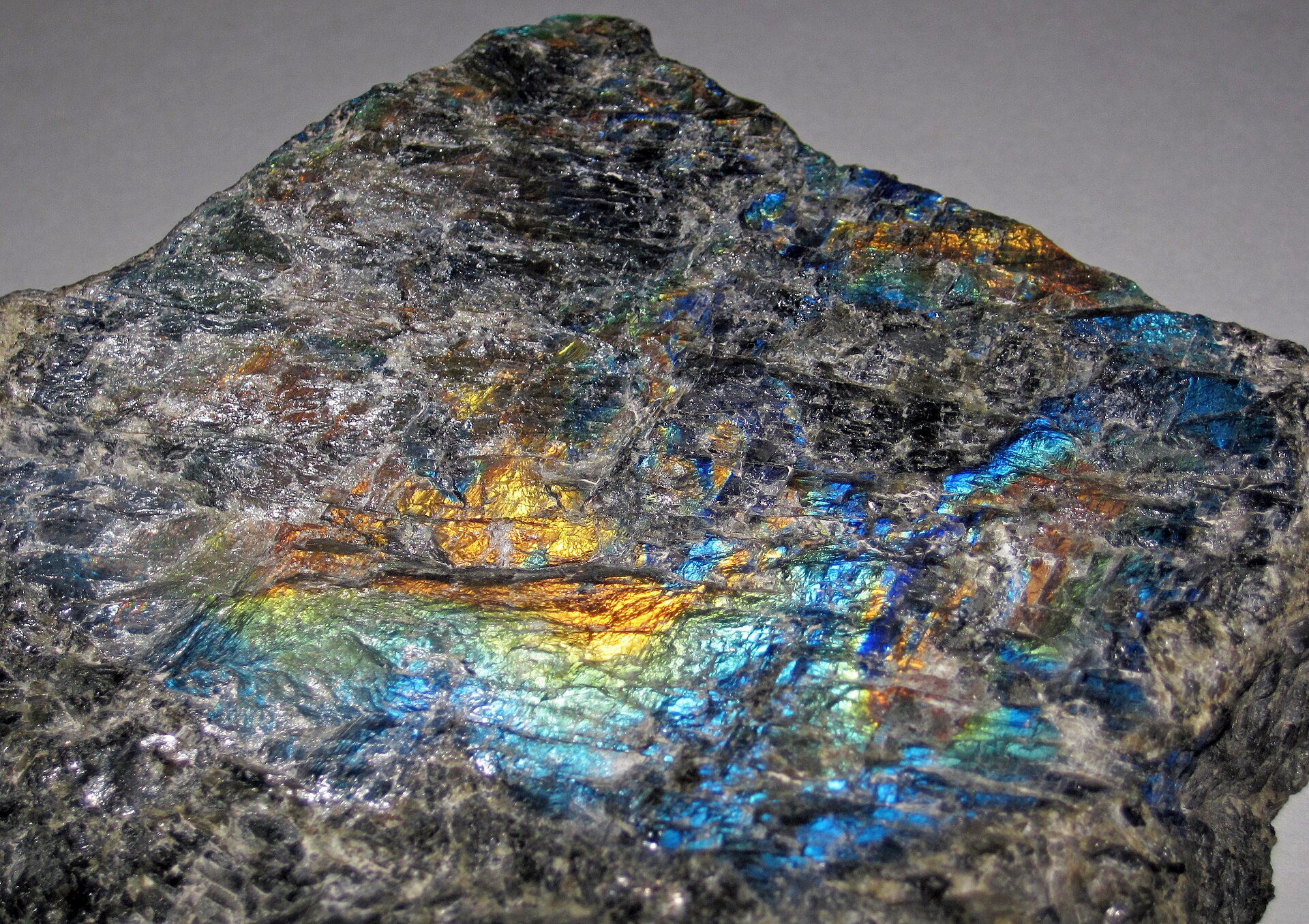
Labradorite is a calcium-sodium plagioclase feldspar (intermediate composition in the albite-anorthite series) famous for labradorescence — the intense iridescent play of colour that flashes blue, green, gold, orange, or violet as the stone is rotated under light. The effect is caused by light interference from microscopic lamellae of two different feldspar compositions exsolved at the nanoscale.
Discovered in 1770 by Moravian missionaries on the Isle of Paul, Labrador (Canada), the gem rapidly became fashionable in 18th-century Europe. The most spectacular variety is Spectrolite from Ylämaa, Finland — discovered during WWII when Finnish soldiers were digging trenches and noticed the rainbow flashes. Spectrolite shows the full spectrum of colours in the same piece, where standard labradorite usually shows blue and gold.
Indian "Rainbow Moonstone" is technically white labradorite with multi-coloured adularescence (rather than the gray-bodied dark labradorite of Canada/Finland).
Formation
Labradorite forms in mafic igneous rocks — particularly anorthosites, gabbros and basalts — where slow cooling allows plagioclase feldspar to crystallise with the perthitic exsolution lamellae that produce labradorescence. The lamellae are roughly 130-200 nm thick, just right to scatter visible light.
The original Labrador deposit (Tabor Island, Nain) is part of a massive 1.3-billion-year-old anorthosite complex. The Finnish Ylämaa Spectrolite comes from a similar Proterozoic anorthosite massif. Madagascan labradorite forms in younger gabbroic intrusions and produces the cheaper commercial market supply.
Indian "rainbow moonstone" forms in shallower pegmatites and is generally translucent white rather than dark gray.
Varieties
Standard labradorite — gray to dark gray base with blue, green, or gold flashes.
Spectrolite — Finnish variety from Ylämaa with full-spectrum labradorescence (multiple colours in the same piece). Premium tier.
Rainbow moonstone — Indian white labradorite with multi-coloured adularescence; marketed as moonstone.
Andesine — variety with reddish coloration (some marketed as "Oregon sunstone" but technically distinct).
Black moonstone — trade name for very dark labradorite.
Larvikite — Norwegian variety found in the rock larvikite (used in architectural stone); blue-grey with subtle iridescence, less intense than gem labradorite.
How to identify
Labradorite identification:
- Labradorescence: the diagnostic colour flashes that appear at specific angles; cannot be faked convincingly.
- Hardness 6–6.5 — softer than quartz.
- Specific gravity 2.68–2.72.
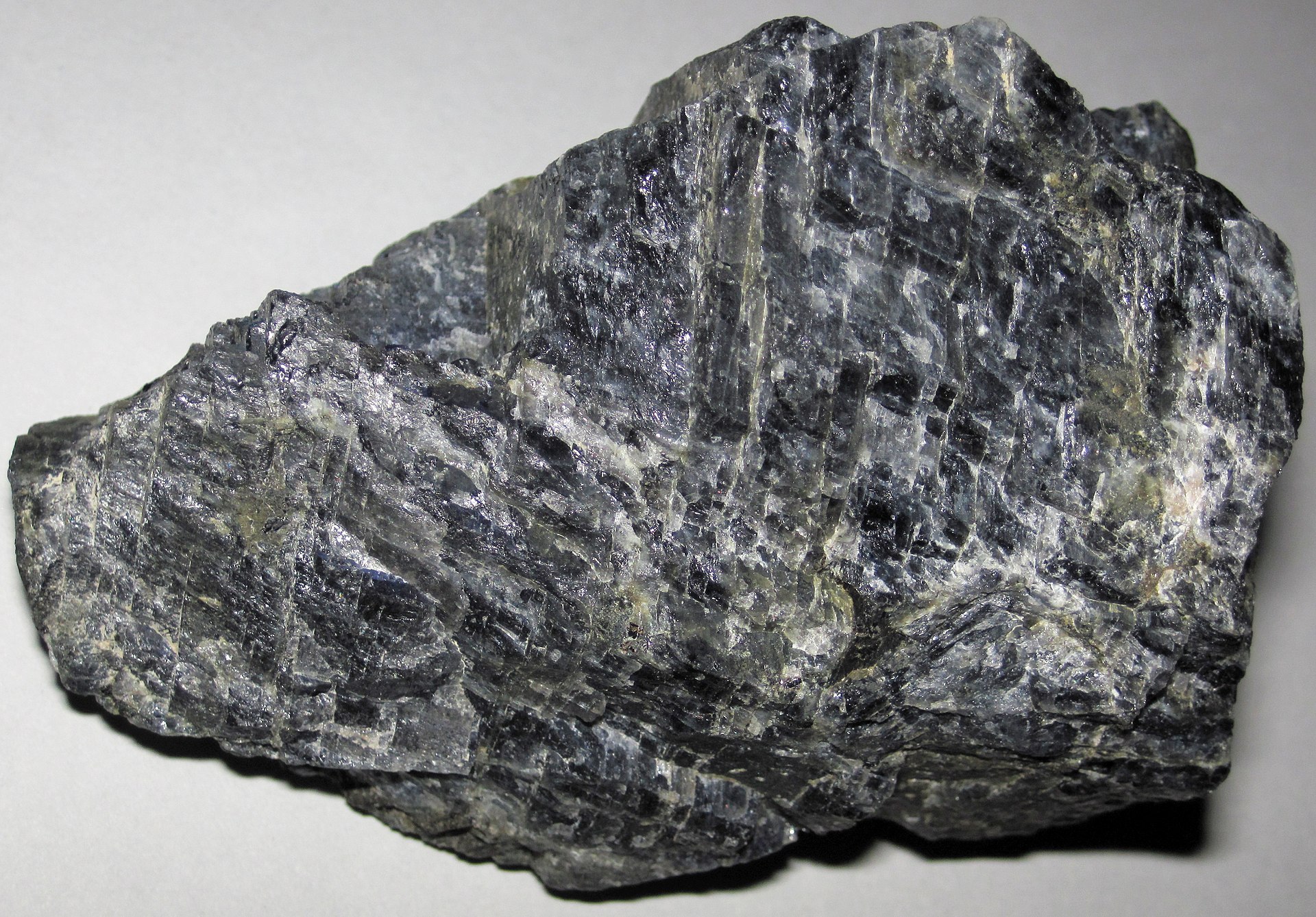
- Perfect two-direction cleavage at ~86° — diagnostic for plagioclase.
- Often shows "twinning striations" parallel to crystal faces — diagnostic.
- Translucent dark grey body distinguishes from moonstone (translucent light body).
Common confusions: bytownite/andesine (related plagioclases, similar look but different chemistry); larvikite (similar effect but in coarser-grained rock with feldspar phenocrysts); glass imitations (no real labradorescence, only flat printed iridescence); synthetic plastic/resin labradorite (very lightweight, cool to touch).
Meaning & metaphysical properties
Labradorite is one of the most popular metaphysical stones of the 21st century — associated with the third-eye and throat chakras and considered a master "stone of transformation". It is recommended for:
- Magical and shamanic work
- Awakening intuition and psychic abilities
- Protection during spiritual journeys
- Connecting to higher self
- Preserving energy from being drained by others (energy shield)
Inuit legend says the Northern Lights were once trapped in stones along the Labrador coast and that a warrior struck the rocks with his spear, releasing most of the lights into the sky but leaving some forever inside the stones.
Care & cleaning
Labradorite requires careful handling:
- Hardness 6–6.5 with perfect cleavage — fragile.
- Avoid ultrasonic and steam cleaners — vibrations crack labradorite easily.
- Clean only with warm soapy water + soft brush.
- Avoid sudden temperature changes and acid contact.
- Set in protective settings (bezel preferred) for ring use.
- Store separately to prevent surface scratches from harder stones.
Labradorite is well-suited to pendant and earring use; ring use should be in protected settings or reserved for occasional wear.
Gallery
Looking to buy a labradorite specimen?
Our small curated catalogue of labradorite specimens is published on Etsy with worldwide shipping.
Browse Gemsprings on Etsy