Overview
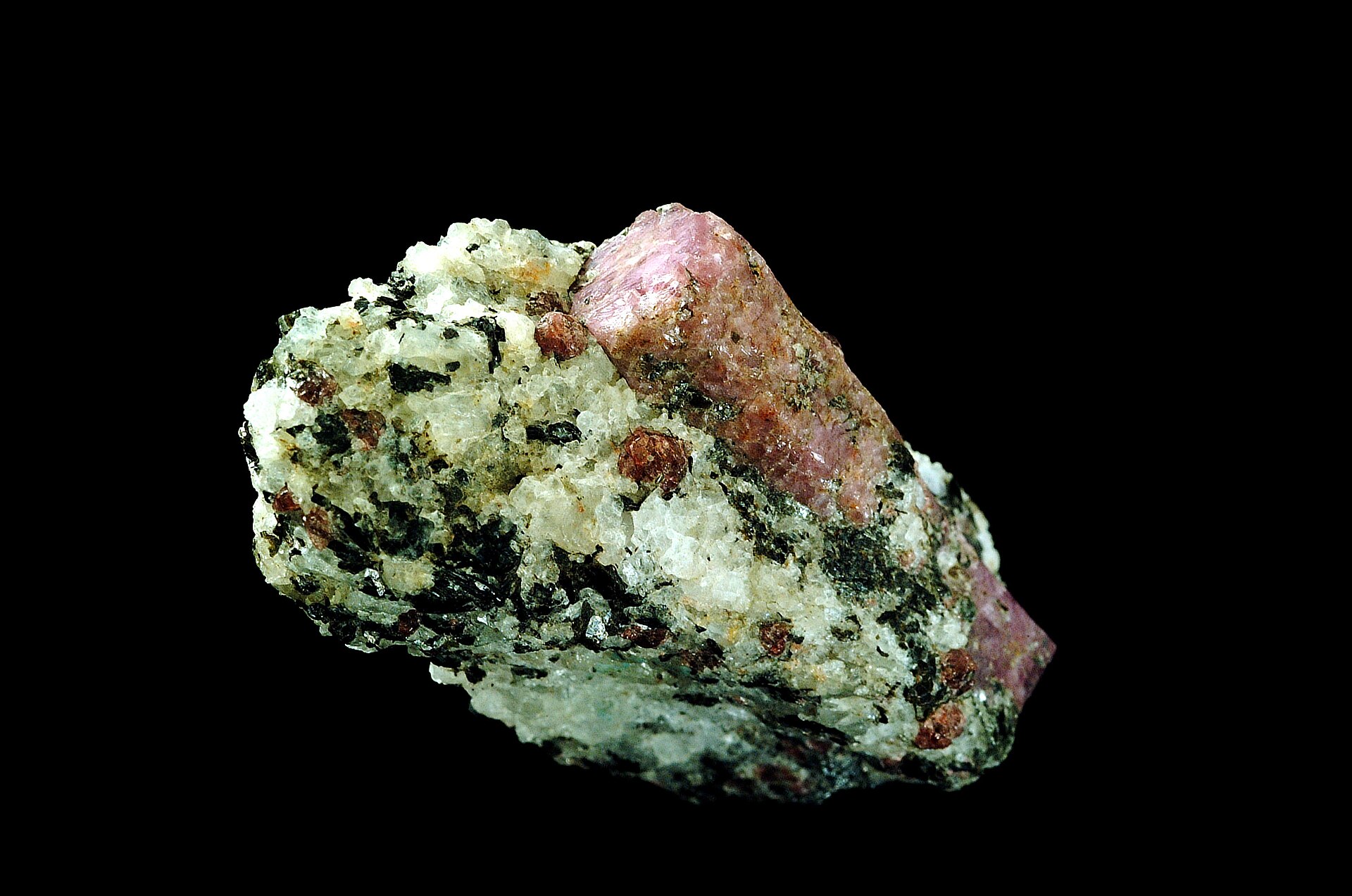
Ruby is the red gem variety of corundum (aluminium oxide), coloured by trace amounts of chromium (Cr³⁺) substituting for aluminium. It is the second-hardest natural mineral (Mohs 9, surpassed only by diamond) and one of the four traditional "cardinal" gemstones along with diamond, emerald and sapphire — every other variety of corundum (blue, yellow, pink, padparadscha) is classed as sapphire.
The benchmark colour is pigeon-blood red — a saturated pure red with a slight bluish secondary tone and strong fluorescence under daylight UV. Historically this colour was associated almost exclusively with the Mogok Stone Tract of Burma (modern Myanmar), where rubies have been mined since at least the 6th century CE. Burmese ruby remains the most coveted variety despite Mozambique's massive Montepuez deposit (discovered 2009) now dominating production volume.
Formation
Ruby forms in two main geological environments:
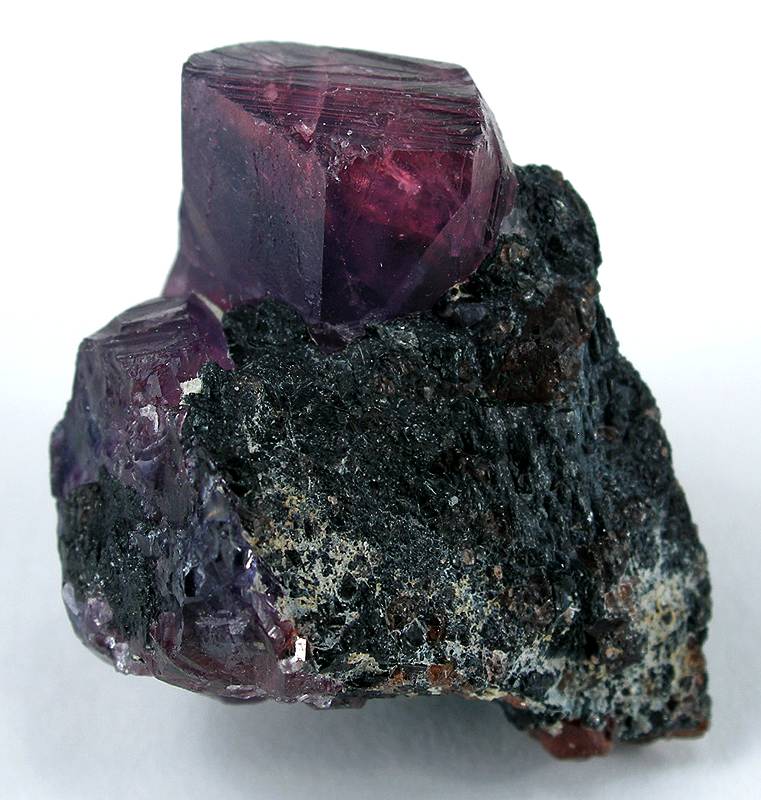
Marble-hosted deposits (Mogok, Hunza valley Pakistan, Vietnam) — corundum crystallises in metamorphosed limestone where boron-bearing fluids reduce iron content (allowing chromium to dominate the colour), producing pure red stones with strong fluorescence. These deposits formed during the Himalayan collision orogeny.
Basalt-hosted deposits (Mong Hsu Myanmar, Thailand, eastern Australia) — ruby occurs in alkali basalts and is transported to surface in volcanic eruptions. These stones typically contain more iron, which dulls fluorescence and produces darker, less "alive" red.
Amphibolite/gneiss deposits (Montepuez Mozambique, Winza Tanzania) — high-pressure metamorphic rocks containing chromium-rich amphibolites. Montepuez is unusual for producing both Mogok-type unheated rubies and large commercial stones.
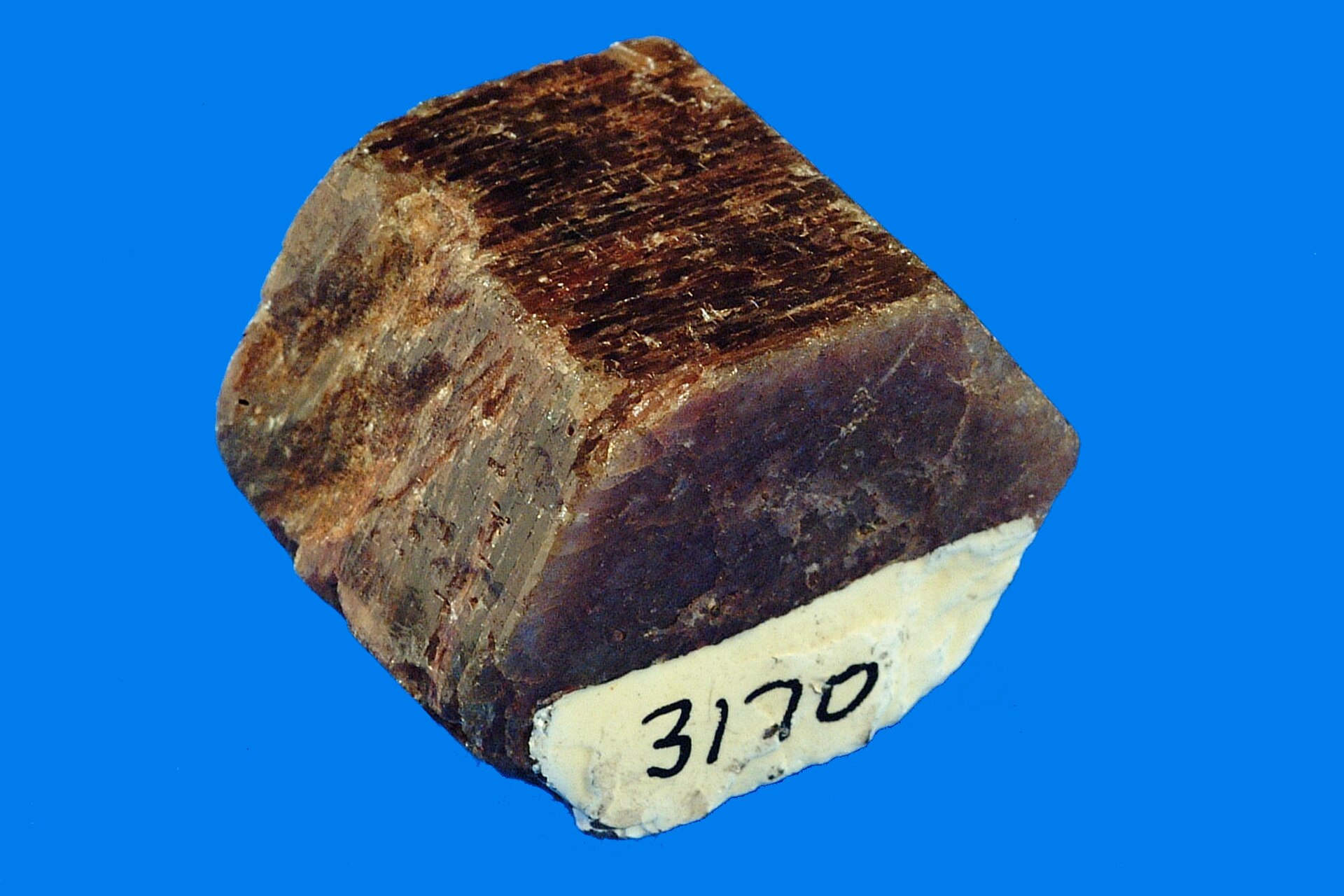
The world's largest gem ruby crystals come from Mogok's marble — the famous "Mogok Star" rough was over 600 ct.
Varieties
Burmese (Mogok) ruby — the global benchmark; pigeon-blood red with strong fluorescence, traditionally from marble-hosted deposits. Almost always unheated when fine quality.
Mozambican ruby (Montepuez) — dominant commercial production since 2012; ranges from pinkish-red to deep blood-red, often unheated, larger sizes available.
Mong Hsu (Myanmar) ruby — basalt-related, typically smaller stones, usually heat-treated.
Thai ruby — historically important from Chanthaburi; darker brownish-red, almost always heated.
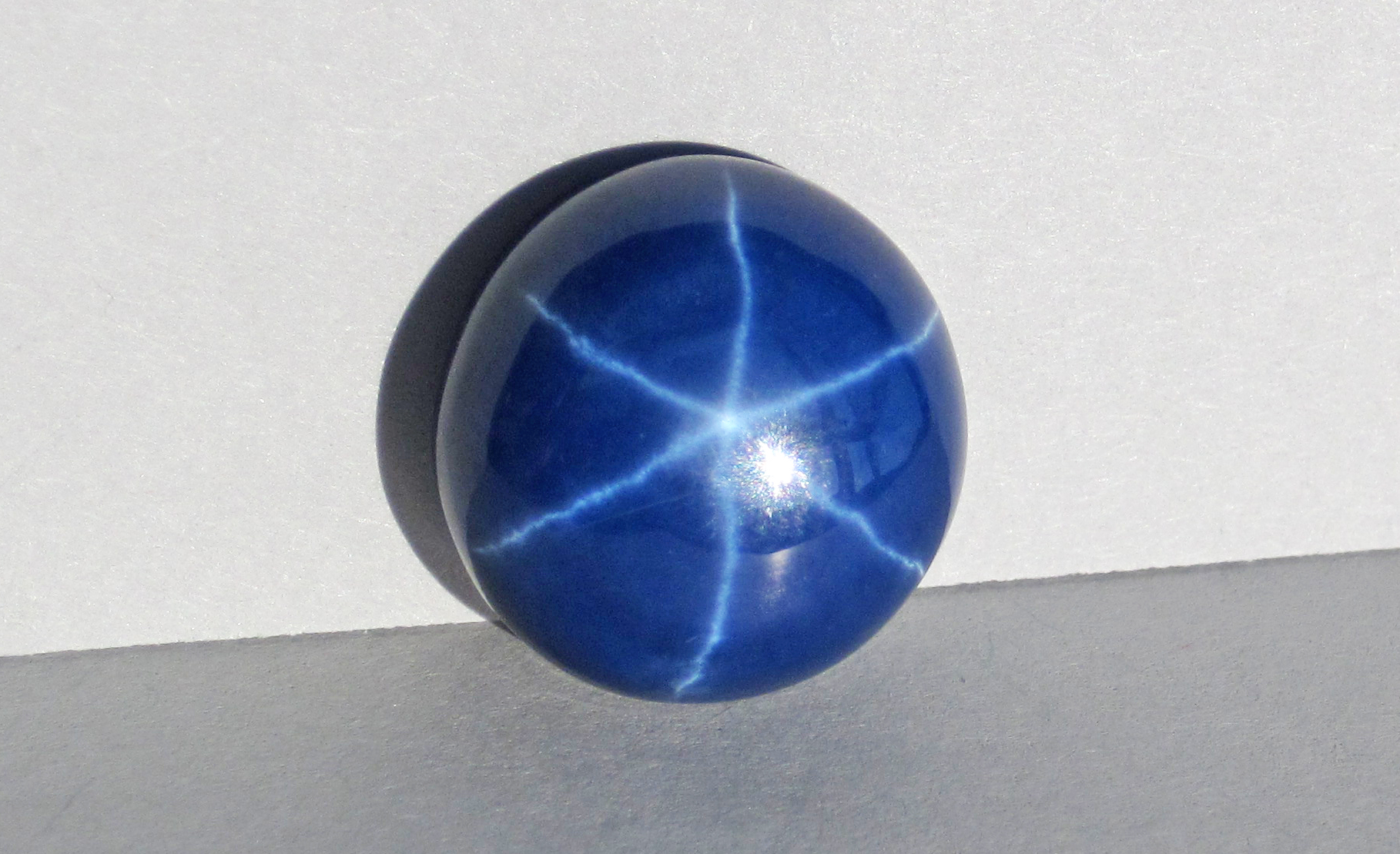
Star ruby — six-rayed asterism caused by rutile silk inclusions; cut as cabochons.
Synthetic ruby — first lab-grown gemstone (Verneuil 1902); identified by curved growth lines and lack of natural inclusions. Today flame-fusion and flux-grown rubies are widely used in industrial and decorative applications.
How to identify
Ruby identification (vs imitation and synthetic):
- Hardness 9 — only diamond, moissanite and synthetic corundum scratch ruby.
- Refractive index 1.762–1.770 — birefringence 0.008 (uniaxial negative).
- Specific gravity 4.0 — heavier than red garnet (3.6–4.3 range), red spinel (3.6).
- Strong red fluorescence under longwave UV (especially Burma/Mogok stones).
- Pleochroism: purplish-red vs orange-red visible.
- Inclusions: silk (fine rutile needles) in natural stones; curved growth lines in flame-fusion synthetics.
Common confusions:
- Spinel — until 1783 confused with ruby (the "Black Prince's Ruby" in the British crown jewels is actually a 170 ct spinel). Singly refractive, no pleochroism, slightly lower hardness 8.
- Pyrope/almandine garnet — singly refractive, no pleochroism, slightly different colour.
- Red glass / paste — much lower hardness, single refraction.
- Synthetic ruby — chemically identical; identified by inclusion patterns (curved growth lines in Verneuil, breadcrumb flux residue in flux-grown).
Always require a GRS, GIA, SSEF or AGL certificate for stones over 0.5 ct — these report origin and treatments (>90% of commercial ruby is heat-treated; rare unheated examples command 2-5x premium).
Meaning & metaphysical properties
Ruby is the foremost stone of vitality, passion and courage in modern metaphysical traditions, associated with the root and heart chakras. It is considered the king of gemstones in Vedic astrology (the gem of the Sun, *Surya*) and is recommended for leadership, motivation, life-force enhancement and protection from psychic attack.
Historically ruby was worn by warriors for battle protection — Burmese soldiers inserted rubies under their skin believing they conferred invulnerability. In medieval Europe ruby was the stone of nobility and prosperity, set into crowns and sword pommels. The Chinese laid rubies under building foundations for good fortune.
Care & cleaning
Ruby's hardness 9 and lack of cleavage make it one of the most durable gemstones — suitable for daily-wear rings and bracelets. Care guidelines:
- Clean with warm soapy water + soft brush.
- Ultrasonic and steam cleaners are generally safe unless the stone is fracture-filled (glass-filled ruby is common in the budget market and is destroyed by ultrasonic — always disclose treatment).
- Store separately from softer stones to avoid scratching them.
- Avoid sudden temperature changes for fracture-filled or oiled stones.
Note on glass-filled ruby: a significant portion of commercial ruby sold at <$50/ct is heavily glass-filled (lead glass fills fractures to improve transparency). These are technically corundum but should be priced and cared for accordingly. GIA and AGL identify and disclose this clearly.
Gallery
Looking to buy a ruby specimen?
Our small curated catalogue of ruby specimens is published on Etsy with worldwide shipping.
Browse Gemsprings on Etsy