Overview
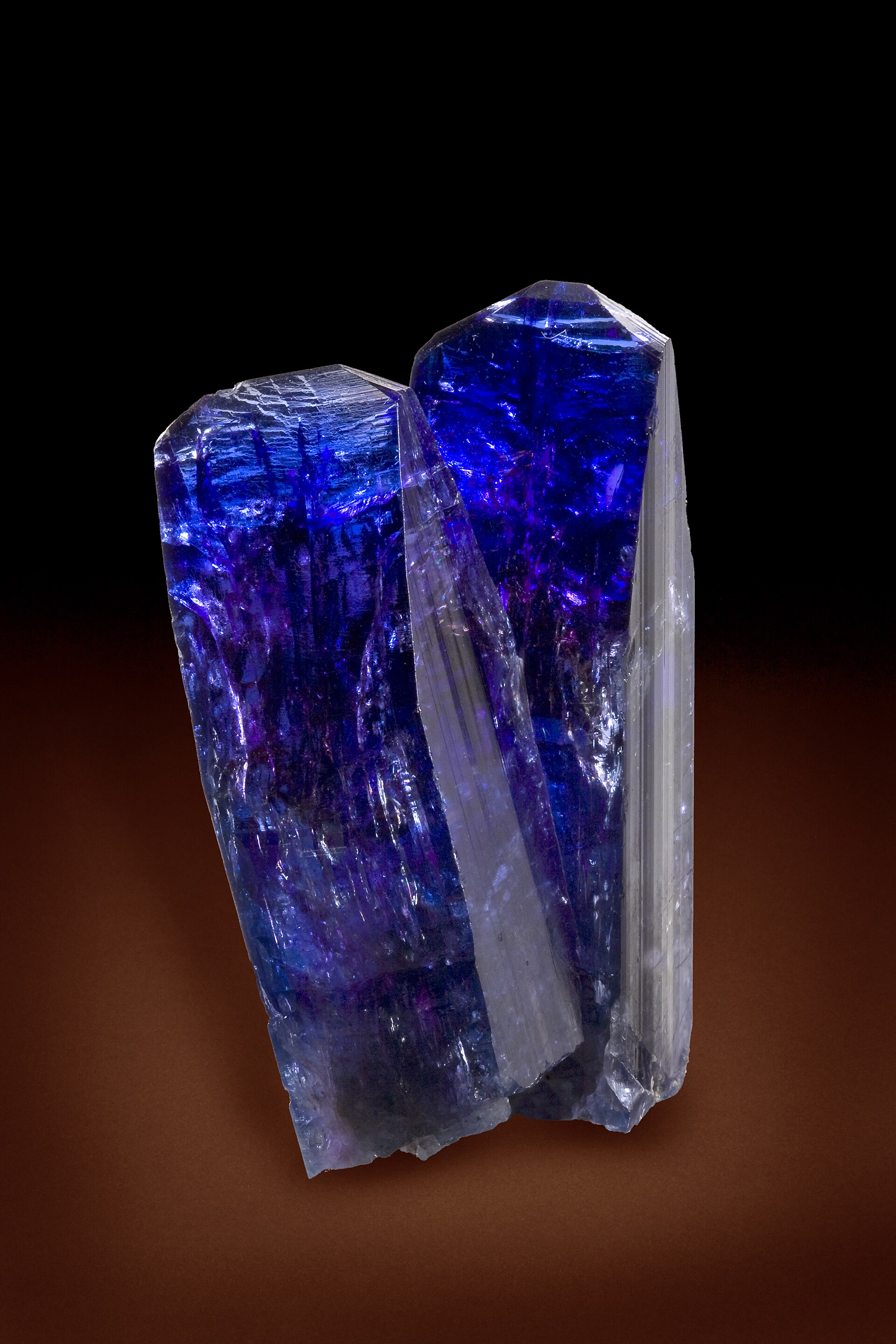
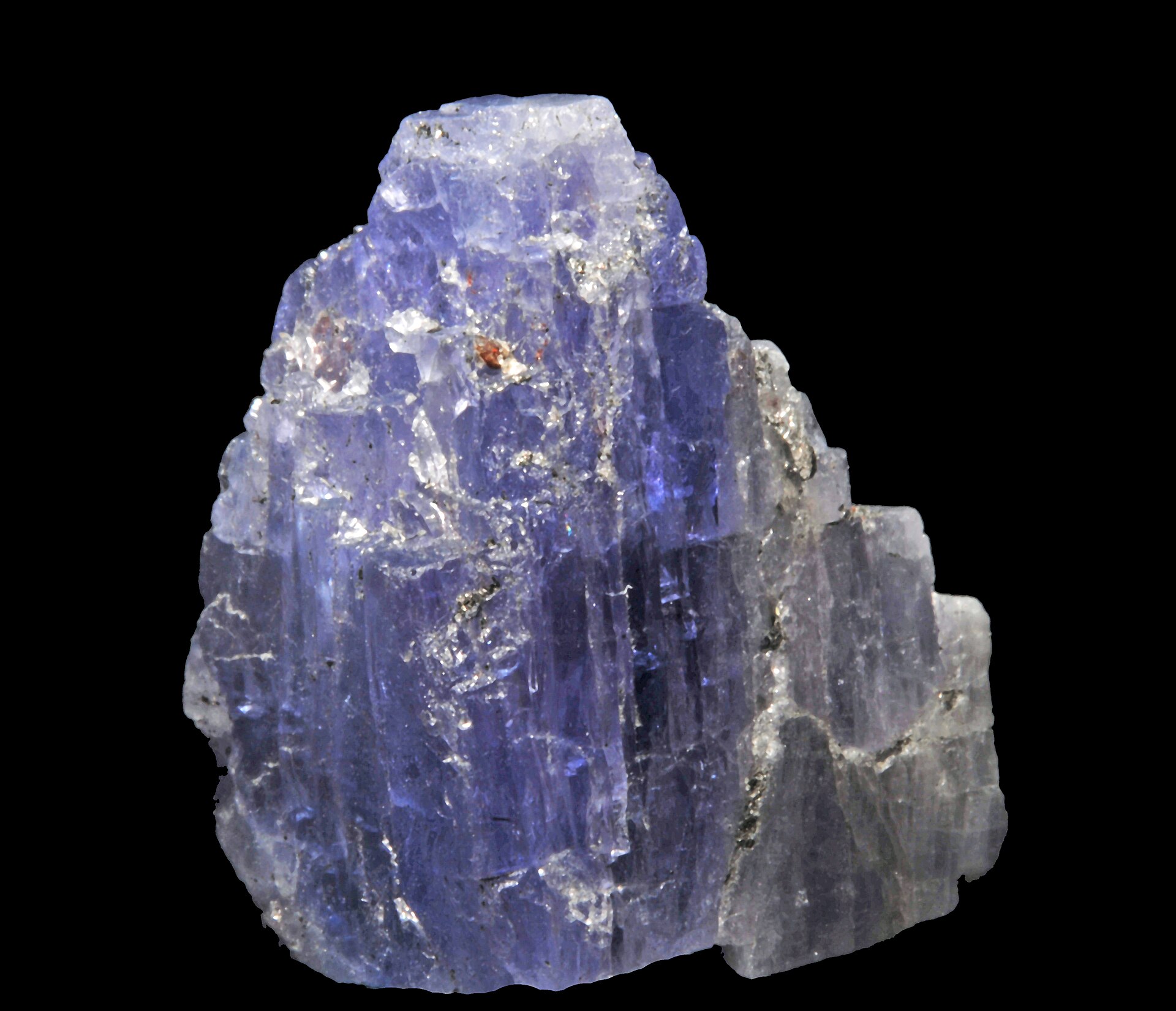
Tanzanite is the trade name for the violet-blue gem variety of the mineral zoisite (calcium aluminium silicate), and is one of the most geographically restricted gemstones ever discovered: it occurs commercially only at the Merelani Hills in northern Tanzania, within a single mineralised zone roughly 4 km long. Tiffany & Co. named and popularised the gem in 1968, declaring it "the most beautiful blue stone discovered in 2000 years" and one of only two new gemstones added to the international jewellery market in the 20th century.
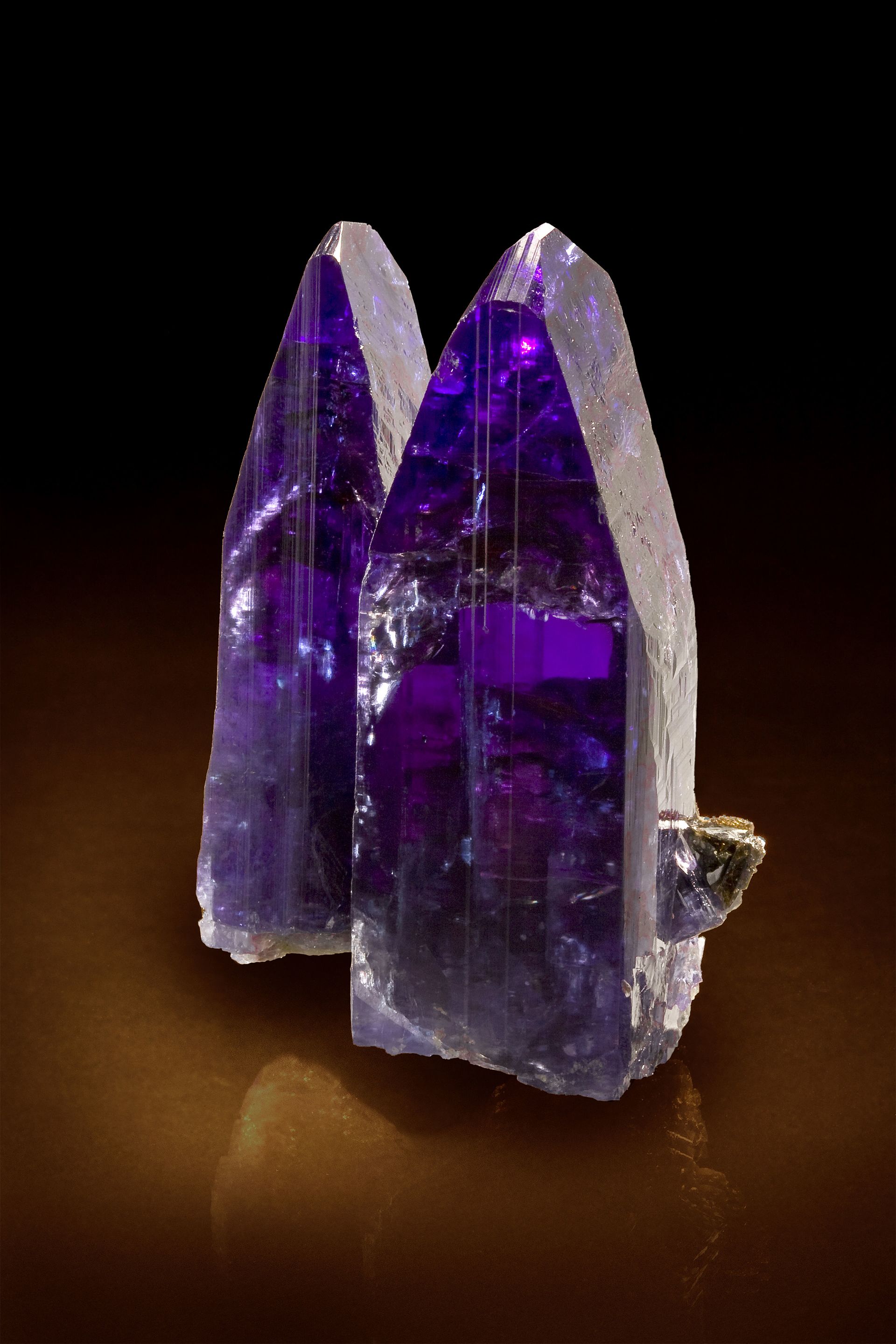
A defining property of tanzanite is its strong trichroism — depending on the viewing angle, a single crystal shows three distinct colours: blue, violet and red-brown. Most rough tanzanite is heat-treated at ~500 °C to enhance the blue–violet hue at the expense of the brown tone; in nature, untreated crystals are typically brownish-yellow with a violet hint.
Formation
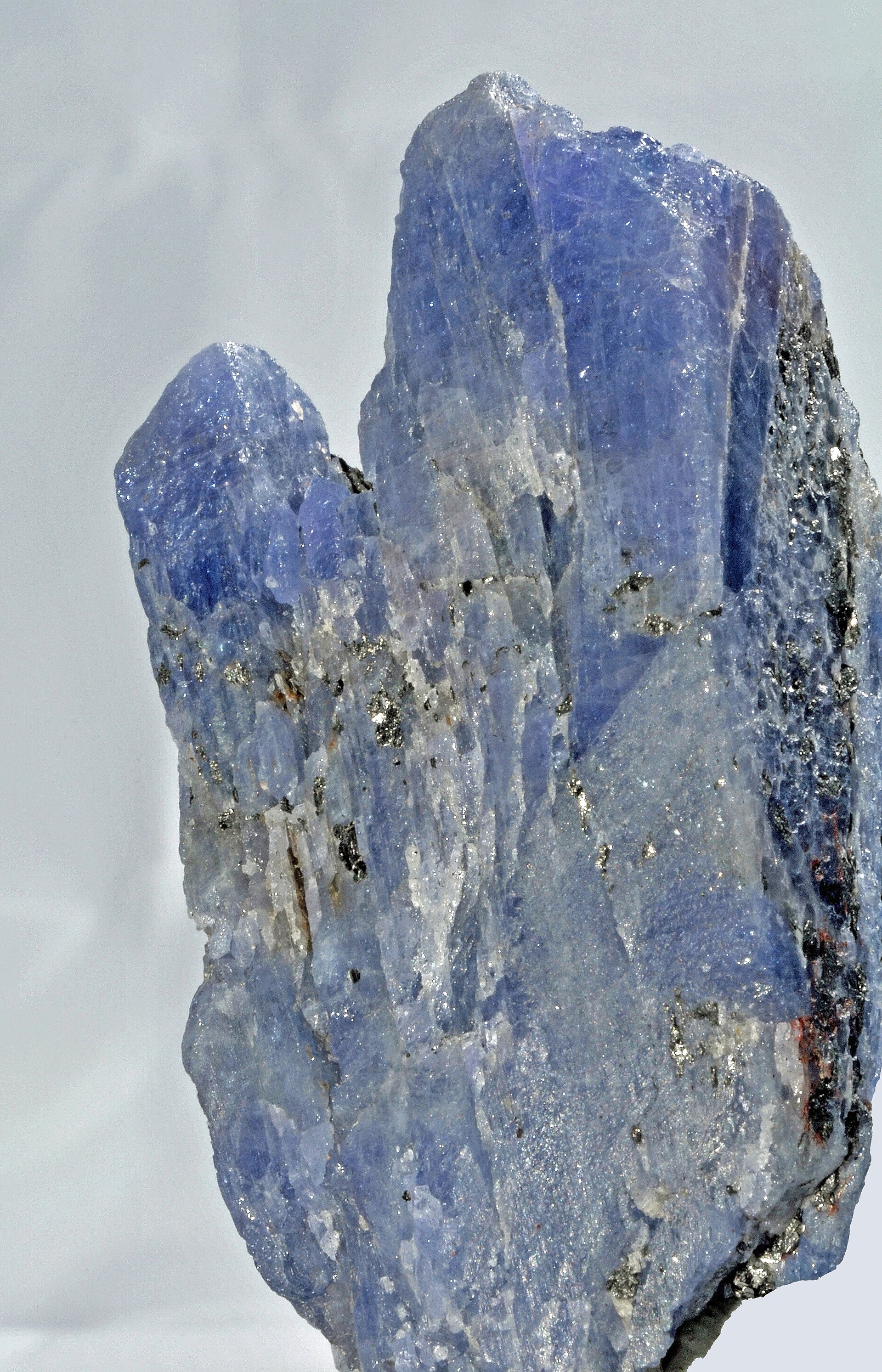
Tanzanite formed about 585 million years ago during the Pan-African orogeny, when fluids enriched in vanadium percolated through high-grade metamorphic rocks (graphitic gneisses and calc-silicates) along a shear zone. Tanzanite crystals grew slowly within boudin necks — tension fractures in folded metamorphic layers — alongside diopside, graphite and tremolite.
The vanadium content (typically 0.01–0.1% V) is responsible for the unique violet-blue colour after heating. Because the geological conditions that produced tanzanite — specific fluid chemistry, pressure, temperature, host rocks, time — are so narrowly constrained, no second tanzanite deposit has been found anywhere on Earth despite decades of exploration.
Varieties
Blue tanzanite — the standard heat-treated commercial gem.
Violet tanzanite — strongly violet stones, sometimes called "Bichromatic" tanzanite when both blue and violet appear in the same gem.
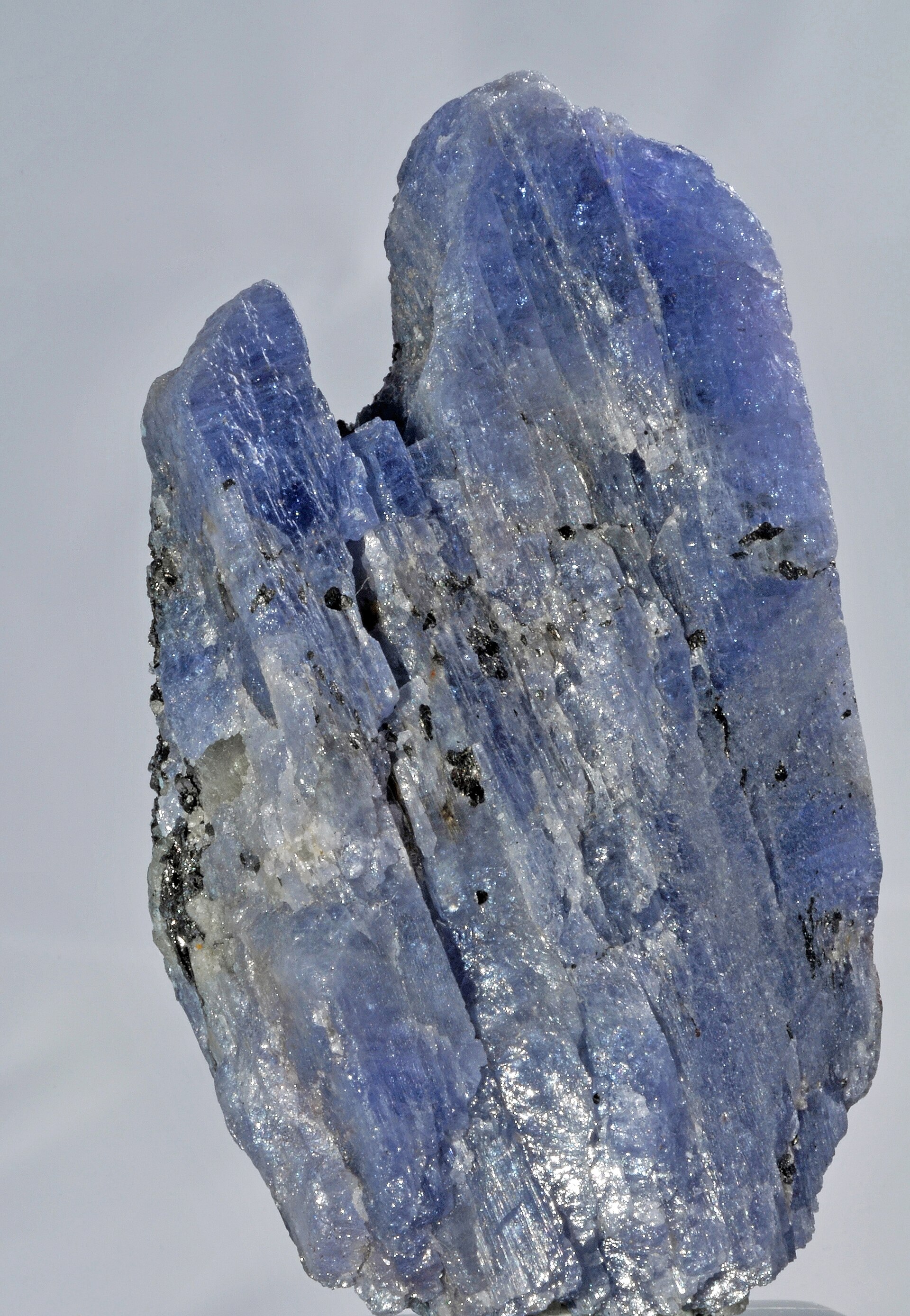
Untreated brown zoisite — the natural unheated colour; rarely sold as gem-grade but collected for mineralogical interest.
Anyolite — green chromium-bearing zoisite with red ruby inclusions and black hornblende, from neighbouring Tanzanian deposits; carved into ornamental objects.
How to identify
Tanzanite is identified by:
- Strong trichroism — rotate a cut stone in light and you should see distinct blue, violet and red-brown directions.
- Hardness 6–7 — softer than sapphire (9) and topaz (8).
- Refractive index 1.691–1.700 — higher than quartz, distinguishable on a refractometer.
- Specific gravity 3.35 — heavier than quartz.
Common confusions: sapphire (harder, no trichroism, much rarer in violet), iolite (lower SG 2.6, weaker trichroism, slightly different blue tone), synthetic forsterite ("tanzanite imitations"; lower SG, different optical properties).
Buyer beware of "tanzanite" coatings on lower-grade material — request a certificate from GIA or IGI for any stone over 1 ct.
Meaning & metaphysical properties
In modern metaphysical traditions tanzanite is associated with the throat and third-eye chakras and is considered a stone of communication, intuition and spiritual awakening. Because of its single-source rarity it is sometimes called the "stone of transmutation" or "stone of magic" and is recommended for those undergoing major life transitions.
It has no ancient lore — the gem was unknown to commerce until 1967.
Care & cleaning
Tanzanite is brittle despite its hardness — the perfect cleavage on one direction makes it vulnerable to chipping if struck on an edge. Avoid ultrasonic and steam cleaners (especially on heat-treated stones, which may have internal stress). Clean with warm soapy water and a soft brush.
Reserve tanzanite for occasional-wear jewellery (pendants, earrings) rather than daily-wear rings unless mounted in a protective setting. Store separately from harder stones.
Gallery
Looking to buy a tanzanite specimen?
Our small curated catalogue of tanzanite specimens is published on Etsy with worldwide shipping.
Browse Gemsprings on Etsy