Overview
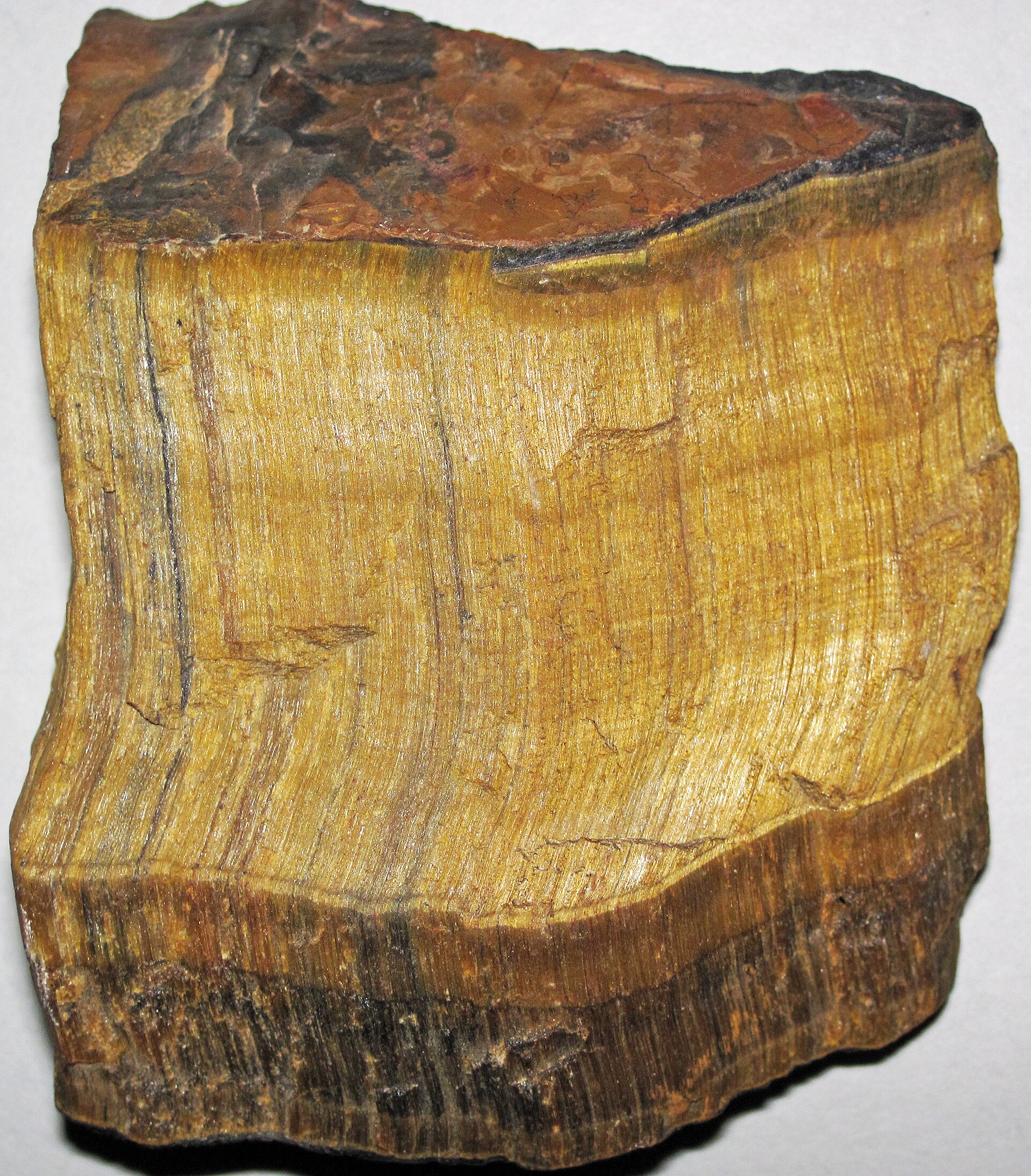
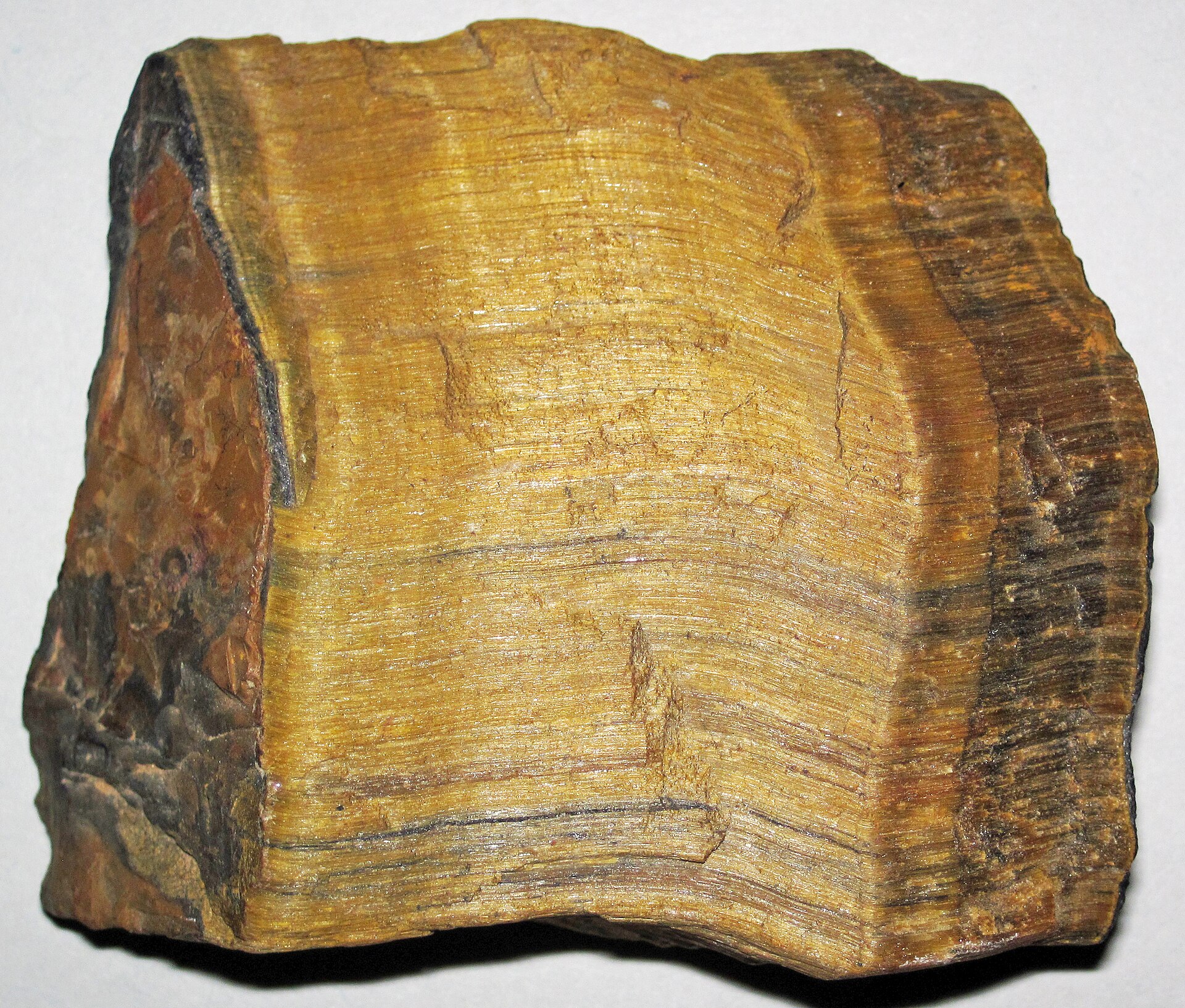
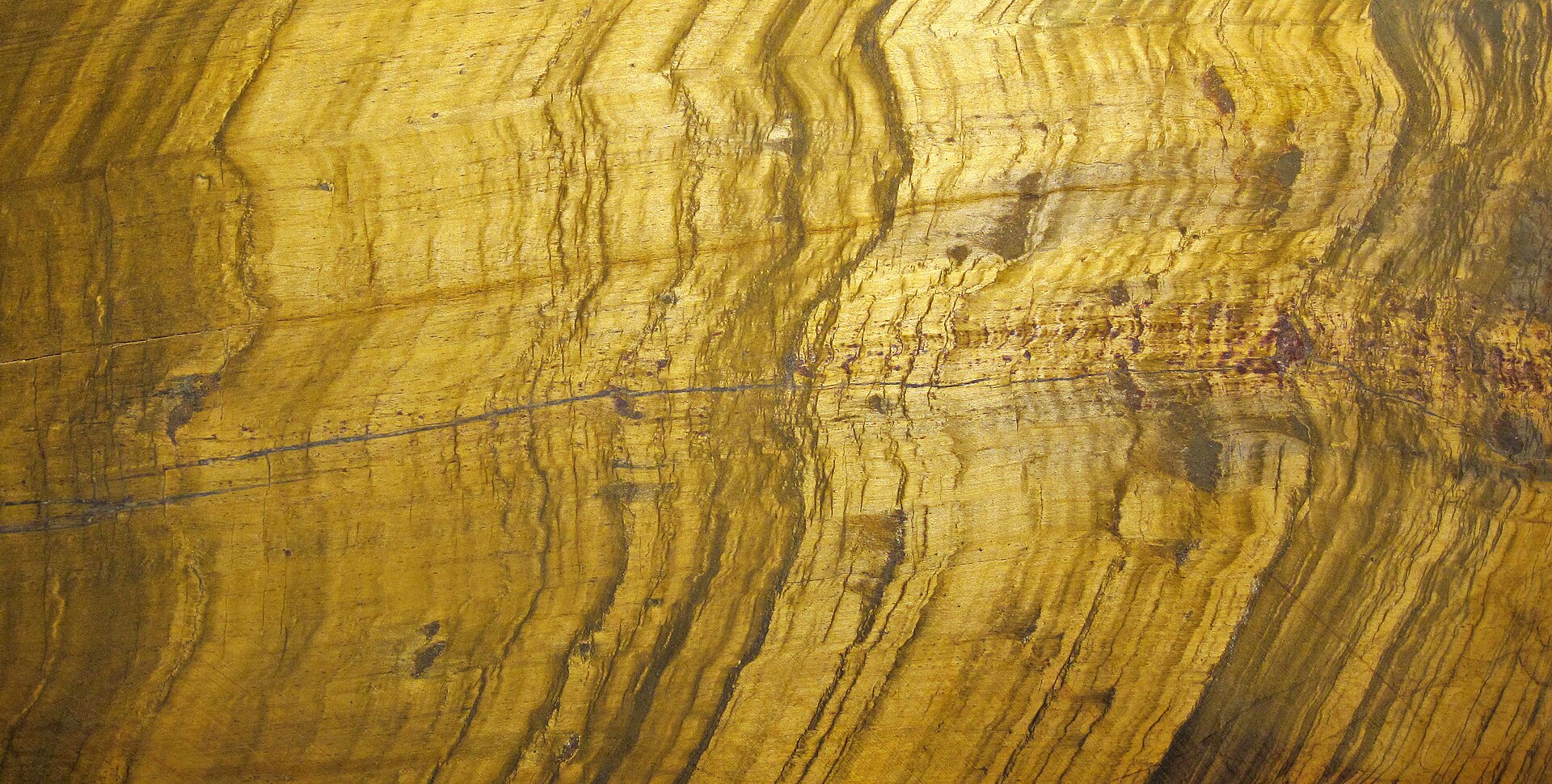
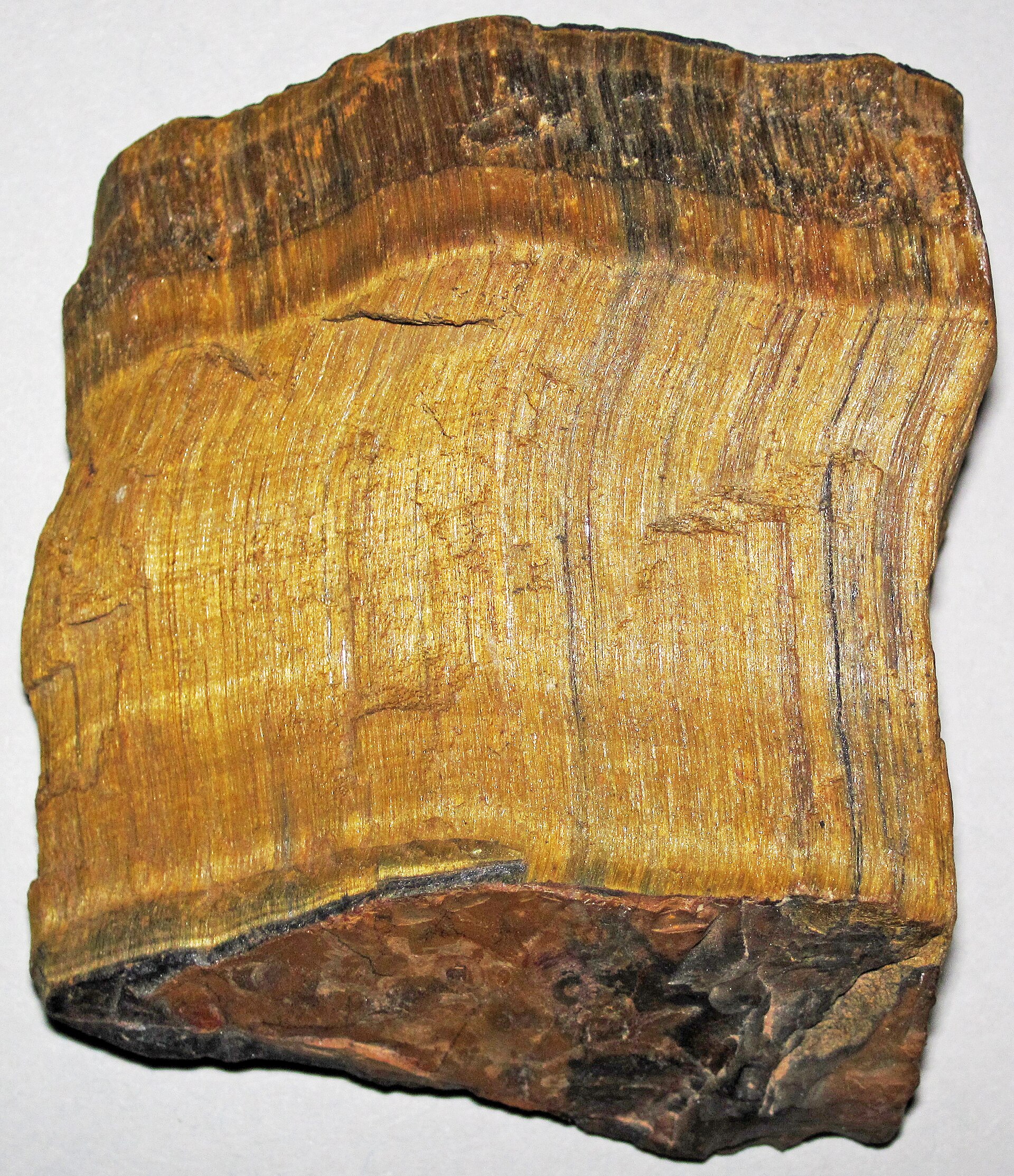
Tiger's eye is a chatoyant gemstone formed by silicification of crocidolite (a fibrous blue asbestos) — over geological time, silica replaces the original fibrous structure while preserving the parallel orientation of the fibres, producing the characteristic golden silky sheen ("chatoyancy") that resembles the eye of a tiger. Hawk's eye is the unoxidised blue-grey form; tiger's eye is the golden-brown form produced when the original iron in crocidolite has oxidised.
Tiger's eye is one of the most affordable and recognisable display stones, used since antiquity in amulets, signet rings and ceremonial objects. Modern South African production (Northern Cape, Asbestos Hills) dominates the commercial market.
Formation
Tiger's eye forms through two main mechanisms:
1. Classical pseudomorph — silica-rich groundwater slowly replaces crocidolite fibres atom-by-atom while preserving the original orientation, fibre by fibre. The replacement happens at low temperatures (<200 °C) over millions of years.
2. Crack-seal model — recent research suggests some tiger's eye forms by repeated brittle fracturing and silica precipitation in tension cracks, with the fibrous "asbestos" being secondary quartz fibres rather than replaced crocidolite. The chatoyancy is real regardless of mechanism.
The Northern Cape banded ironstone formations of South Africa, 2.3 billion years old, host the world's largest commercial tiger's eye deposits, mined in open pits alongside iron ore.
Varieties
Golden tiger's eye — the standard form, golden-brown chatoyant.
Red tiger's eye — produced by heating golden tiger's eye to oxidise iron; deeper red-brown.
Blue tiger's eye (Hawk's eye) — unoxidised blue-grey to greyish-blue form; rarer than golden.
Multicolour tiger iron — banded tiger's eye + red jasper + black hematite; popular for carving.
Pietersite — chaotic tiger's eye with multiple flow directions of chatoyancy, from Namibia and China; highly prized.
Cat's eye quartz — single-direction chatoyancy quartz, sometimes confused with tiger's eye.
How to identify
Tiger's eye is identified by:
- Strong silky chatoyancy parallel to the fibres — moves as you tilt the stone under light.
- Hardness 7 — scratches glass.
- Specific gravity 2.65 — same as all quartz.
- Banded golden-brown colour in single direction.
Common confusions: dyed tiger's eye (artificial colours like green and blue without natural transition), cat's eye chrysoberyl (much rarer and harder, single bright eye-line on cabochon), moldavite (not chatoyant, glassy texture).
Meaning & metaphysical properties
Tiger's eye is considered the "stone of courage and protection" — associated with the solar plexus and root chakras and used to dispel fear, sharpen mental focus, and bring out personal will. It is one of the most commonly recommended stones for those beginning crystal practice and is often paired with citrine for confidence work.
The ancient Egyptians inlaid tiger's eye in funeral statuary as protective "all-seeing eyes" of the gods. Roman soldiers carried tiger's eye in battle as a talisman against death.
Care & cleaning
Tiger's eye is durable (hardness 7, no cleavage) and suitable for daily-wear jewellery. Clean with warm soapy water and a soft brush; ultrasonic cleaners are safe. Avoid prolonged direct sunlight only for dyed material. Store separately from harder stones.
Gallery
Looking to buy a tiger's eye specimen?
Our small curated catalogue of tiger's eye specimens is published on Etsy with worldwide shipping.
Browse Gemsprings on Etsy